0%

Choosing the best smart ring factory in China is not simply a matter of comparing prices or polished product photos. A ring may look flawless on a desk and still struggle with sensor accuracy, battery life, comfort, or charging consistency. Small details matter. Sensor placement, inner-surface finishing, and sealing quality can affect daily wear and product reliability. The right partner should explain how it controls these details, not just promise a fast delivery date.

A useful evaluation starts with evidence. Ask for relevant production samples, documented testing procedures, quality-control checkpoints, and clear answers about design changes and minimum order quantities. If possible, compare sample performance under repeatable conditions, including fit, charging, and connectivity. Factory visits or independent audits can help verify production capabilities, though one visit cannot reveal everything. That is worth remembering. A smart ring factory may outsource components or testing, so ask who handles each stage and how issues are tracked. Also discuss communication, tooling ownership, production timelines, and support after delivery. These topics can expose practical risks before a large order is placed.

This guide outlines the questions and checks that help buyers assess a factory with care. It considers engineering support, manufacturing capacity, quality systems, and transparent communication. No supplier is perfect, and the lowest quote may not be the best value. Some points may still need careful judgment. A dependable choice comes from comparing verifiable details, testing samples, and setting expectations in writing—not from relying on confident sales claims alone.
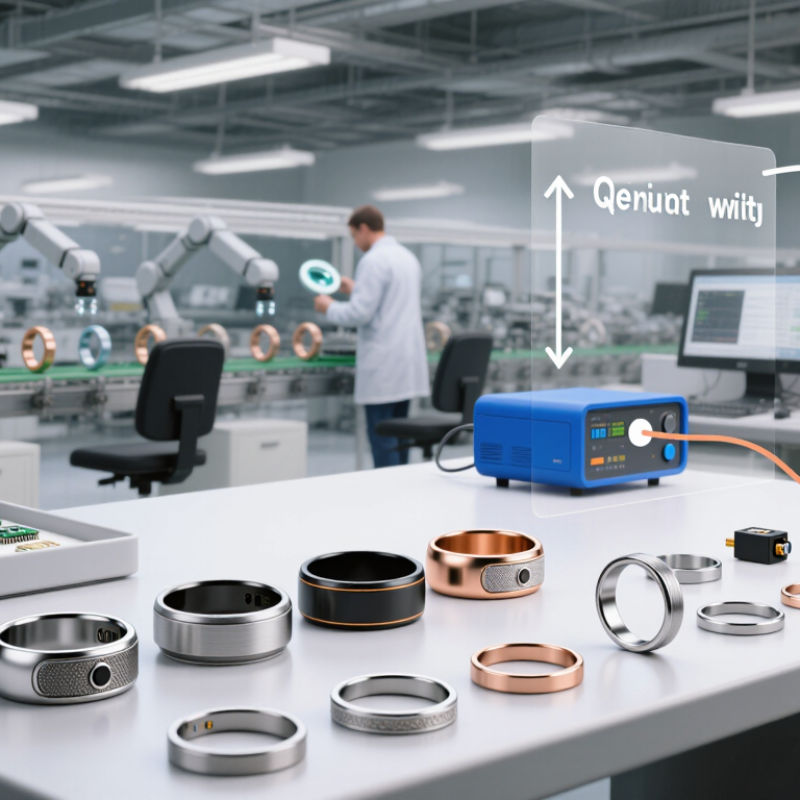
How to Choose the Best Smart Ring Factory in China?

Define Smart Ring Specifications: BLE, Battery Life, and Sensor Accuracy

Before comparing smart ring factories in China, define the conditions your ring must handle. Specify supported BLE versions, phone compatibility, and how often the ring sends data. BLE performance depends on more than a specification sheet. Ask the factory to demonstrate pairing, reconnection, and data transfer with the ring worn during movement. Check logs, not just a successful demo. Tiny details matter.

Battery life should be measured under stated conditions, including sampling frequency, BLE connection time, and notification use. Request test results from several devices, not a single polished sample. A small battery can perform differently when sensors run continuously or the connection drops and reconnects. Compare the factory’s quoted runtime with your intended settings, then repeat the test on production-intent hardware. The estimate may change.

Sensor accuracy needs a clear test method. For heart rate or skin temperature, define the reference device, wearing position, activity, and acceptable error range before sampling. Ask for raw readings as well as averaged results; smoothing can hide brief failures. A factory should explain calibration, sensor placement, and how it checks unit-to-unit variation. If its answers stay vague, pause and request a written test plan. No single lab result proves every user will get the same reading, so leave room to revise the specification after real-world trials.

Verify Factory Quality Systems: ISO 9001 and ISO 13485

When choosing a smart ring factory in China, inspect its quality systems, not just its product samples. ISO’s 2022 Survey reported 1,265,216 valid ISO 9001 certificates and 38,057 ISO 13485 certificates worldwide. These are certificate counts, not factory counts, but they show how widely the standards are used. ISO 9001 supports consistent processes, from incoming sensor checks to final assembly and complaint handling. ISO 13485 adds controls designed for medical-device quality management. It may be relevant when a ring is developed or marketed for medical use.

Ask for the current certificate and check that its site address and scope match the factory making your rings. Then request evidence: calibration records for test equipment, batch traceability for batteries and sensors, and documented handling of defects. A certificate is useful, but it is not the factory. For example, ask how a failed water-resistance test is recorded, investigated, and retested. If the answer is vague, keep asking. I would also review a recent audit finding and its corrective action; this can reveal more than a polished presentation. Even strong systems need checking. ISO certification does not prove that every ring will perform perfectly.

Assess Water Resistance Using IEC 60529 IP Ratings

How to Choose the Best Smart Ring Factory in China?
Assess Water Resistance Using IEC 60529 IP Ratings

A smart ring faces water at its seams, sensor window, and charging contacts. IEC 60529 IP ratings help buyers compare how well an enclosure resists dust and water. The first digit refers to solid-particle protection; the second describes water protection. That detail matters. An IPX7 rating indicates testing under specified temporary immersion conditions, not guaranteed safety during every swim or shower.

Ask the factory for the full test report, not just a rating on a product sheet. Check the tested ring model, sample quantity, test conditions, and report date. Confirm that production units use the same housing, seals, and assembly process as the samples. A small change around a sensor opening can affect water resistance. So can repeated charging or everyday wear.

Lab testing is useful, but it has limits. Salt water, soap, hot showers, and knocks may create conditions the rating does not cover. Not enough. I would also request checks on finished production rings and ask how failures are tracked. A neat certificate can still leave gaps. Compare the documented test scope with how customers will actually wear the ring, and treat any unclear claim as a question for the factory.

How to Choose the Best Smart Ring Factory in China: Assess Water Resistance Using IEC 60529 IP Ratings

How to use this chart: Ask a factory which IEC 60529 water tests its smart ring has passed, and request test reports for the finished product. IPX5 and IPX6 use water jets; IPX7 tests temporary immersion (typically 1 metre for 30 minutes); IPX8 covers immersion under conditions specified by the manufacturer. IPX7 or IPX8 does not automatically mean the product has passed IPX5 or IPX6 jet tests. Confirm the exact test conditions and the complete IP rating, including its dust-protection digit.

Review Pilot-Run Quality with ISO 2859-1 AQL Sampling

How to Choose the Best Smart Ring Factory in China?
Review Pilot-Run Quality with ISO 2859-1 AQL Sampling

A pilot run reveals whether a factory can repeat quality, not just build one impressive sample. Ask for the lot size, inspection level, AQL, and defect categories before sampling begins. Under ISO 2859-1, these inputs determine the sample size and acceptance criteria. AQL is a decision rule, not a promise that every shipment stays below that defect rate. Small sample. Real consequences.

Make the checks specific to a ring’s real use. Inspect charging contacts for alignment, measure inner diameter, and test touch response after repeated handling. Record cosmetic marks separately from functional failures; a faint seam and a ring that will not charge should not count equally. IDC’s Worldwide Quarterly Wearable Device Tracker forecast 537.9 million wearable-device shipments globally in 2024, highlighting the scale of the wider category. That figure covers wearables broadly, not smart rings alone.

Ask the factory to provide dated inspection records, defect photos, and traceability by production batch. Review rejected units in person when possible, then compare the findings with the agreed sampling plan. Numbers help. But pilot lots can be unusually controlled, and one clean result may flatter a factory’s routine process. Request a follow-up check during a less closely supervised run, and note any mismatch between the report and the physical samples.

How to Choose the Best Smart Ring Factory in China? — Review Pilot-Run Quality with ISO 2859-1 AQL Sampling

Review Dimension Pilot-Run Check Sampling or Evidence What to Confirm Before Approval
Inspection plan Use a documented, random sample from a completed and identified pilot lot. Example: for a lot of 1,000 units using ISO 2859-1, normal inspection, single sampling, and General Inspection Level II, the sample-size code is J and the sample size is 80. Record the lot size, inspection level, normal/tightened/reduced status, AQL values, and the corresponding acceptance and rejection numbers from the applicable standard tables.
Critical defects Check for hazards such as sharp edges, exposed conductive parts, or a battery condition that presents a safety risk. Define the defect list and inspection method in the quality agreement; apply any legally required safety tests separately. Set a clear stop-and-escalate rule. AQL sampling does not replace product-safety assessment or required regulatory testing.
Major functional defects Test agreed core functions, such as power-on, charging, sensor operation, Bluetooth connection, and data transfer. Run the defined functional test on sampled units and retain pass/fail records, test conditions, and failure codes. Agree which failures count as major defects and specify the AQL and acceptance/rejection numbers before inspection.
Battery and charging Check charging recognition, charge completion indication, abnormal heating, and battery performance against the approved specification. Use the agreed charger, firmware, test duration, and battery-performance method; keep instrument and test records. Compare results with the product specification. Do not treat a sampling inspection as a substitute for battery-safety or transport testing.
Fit and dimensions Measure ring size, inner diameter, width, and other drawing-controlled dimensions. Use calibrated measuring tools and the approved drawing; record actual readings and measurement units. Confirm tolerances, measurement locations, and the handling of borderline readings in the inspection plan.
Appearance and finish Inspect coating, color, surface marks, gaps, print or laser marking, and visible assembly defects. Use agreed lighting, viewing distance, reference samples, and defect photos so results are repeatable. Classify each defect as critical, major, or minor in the agreed quality standard; do not rely on undefined terms such as “acceptable finish.”
Water-resistance claim Verify the claimed rating using the specified test method and test conditions. Review the test report and traceability to the tested sample and configuration. Confirm that the rating, test method, and product configuration match the approved specification. Visual inspection alone cannot verify water resistance.
Firmware and app compatibility Check firmware version, setup flow, synchronization, and the agreed phone and operating-system test matrix. Record firmware build, device and operating-system versions, test cases, and reproducible errors. Approve a version-controlled release and written acceptance criteria before mass production.
Traceability and process control Review lot identification, component records, inspection logs, and handling of nonconforming units. Request a sample batch record and verify that inspected units can be linked to the pilot lot and relevant process records. Confirm who authorizes rework, how reworked units are reinspected, and how corrective actions are documented.
Final pilot-run decision Compare the inspection results with the agreed specification and the selected ISO 2859-1 plan. Report sample size, defect counts by class, applicable Ac/Re numbers, photographs, and open corrective actions. Approve, reject, or request corrective action based on the predefined plan. Recalculate the plan when lot size or inspection status changes.

Note: ISO 2859-1 provides sampling procedures and plan tables; it does not prescribe universal AQL limits for smart rings. The example lot and sample size illustrate plan selection only. Agree defect classifications, AQL values, inspection status, and acceptance/rejection numbers with the supplier and inspector before the pilot run.

Confirm RoHS, REACH, and UN 38.3 Battery Compliance

When evaluating a smart ring factory in China, treat compliance as a document-and-product check, not a sales-page claim. Ask for current RoHS test reports and REACH substance information covering the ring’s actual materials, including its metal shell, coating, circuit board, and charging contacts. Check the product model, sample date, and laboratory details. Small mismatches matter.

RoHS and REACH are not interchangeable. RoHS restricts specified substances in electrical and electronic equipment, while REACH addresses chemicals and related obligations that may change as candidate lists are updated. Ask how the factory tracks material changes and whether its documents match the version you plan to order. A report for a similar ring is not enough. Where appropriate, request supplier declarations and verify key claims with the issuing laboratory or an independent compliance specialist.

For the lithium battery, request the UN 38.3 test summary and confirm that it identifies the battery type used in your ring. Compare the battery model, cell supplier, and configuration with production samples; substitutions can undermine earlier checks. Also ask who manages shipment documents and packaging. Tiny batteries still need careful records. A tidy file can still miss a physical mismatch, so inspect a production sample before approval.

FAQS

Which BLE details should a factory demonstrate?

Ask about supported BLE versions, phone compatibility, and data-sending frequency. Test pairing, reconnection, and data transfer while the ring is moving. Check logs. A smooth demo proves little.

How should battery life be compared?

Request results from several production-intent rings. Record sensor sampling frequency, connection time, and notification use. Repeat tests with your intended settings; runtime may change.

How can sensor accuracy be tested fairly?

Define the reference device, wearing position, activity, and acceptable error range before testing. Request raw readings as well as averages. Smoothing can hide brief failures.

What should the factory explain about its sensors?

Ask how sensors are placed and calibrated, and how unit-to-unit variation is checked. No single lab result represents every wearer. Real-world trials may change your specifications.

What quality records should buyers request?

Check current quality certificates and confirm their site addresses and scopes match the factory. Request calibration records, batch traceability, and defect-handling documents. Paperwork alone is not proof.

How can a factory’s defect process be evaluated?

Ask how it records, investigates, and retests a failed water-resistance test. Review a recent audit finding and its corrective action. Vague answers deserve follow-up.

What does an IP water-resistance rating tell buyers?

It describes tested dust or water protection under specified conditions. An IPX7 rating does not guarantee safety during every shower or swim. That distinction matters.

What should a water-resistance test report include?

Check the tested model, sample quantity, test conditions, and report date. Confirm production rings use the same housing, seals, and assembly process. Small openings matter.

Do laboratory tests cover everyday wear?

Not completely. Salt water, soap, hot showers, charging, and knocks may create different conditions. I may be cautious, but one tidy report can leave gaps.

Conclusion

Choosing the right smart ring factory in China begins with clearly defining your product requirements. Specify Bluetooth Low Energy performance, expected battery life, and the accuracy needed from each sensor, then confirm that the factory can support these targets through design, testing, and production. Review its quality systems, including relevant ISO 9001 or ISO 13485 processes, and ask how it controls materials, assembly, and traceability.

Evaluate water resistance against the appropriate IEC 60529 IP rating, and request evidence from product testing rather than relying on a rating alone. Before scaling up, inspect pilot-run results and agree on an ISO 2859-1 AQL sampling plan for consistent quality checks. Finally, verify that materials and batteries meet applicable RoHS and REACH requirements and that battery transport testing follows UN 38.3. A capable factory should provide clear documentation, communicate risks promptly, and demonstrate that its production process can reliably meet your specifications.

Ethan

Ethan

Ethan is a professional marketing specialist with a deep understanding of the company’s products, customer needs, and the practical challenges its solutions are designed to address. He regularly contributes expert articles to the company website, offering clear product guidance, useful industry......
Chat with Sales