Choosing a smart ring supplier in China can shape more than your unit price. It affects product reliability, development speed, and the experience customers have after purchase. A sleek sample may look convincing under showroom lights. Real performance needs closer inspection.
Start by defining the ring you want to build. List its core functions, such as sleep tracking, heart-rate monitoring, NFC, or app connectivity. Specify materials, ring sizes, battery expectations, water-resistance requirements, and packaging. Clear requirements help suppliers give comparable quotes. They also reveal who understands your product and who is simply repeating a catalog.
Small details matter. Ask whether the company manufactures rings directly or coordinates production through partners. Request a working sample, written specifications, and a realistic production timeline. Test comfort, charging, sensor consistency, and app behavior over several days. Looks can mislead. A single sample cannot prove that every production batch will perform equally well.
A reliable supplier should explain its quality-control steps and provide relevant testing records without making vague promises. Check how defects are handled, what customization is included, and whether tooling or software changes affect cost and lead time. Compare minimum order quantities, communication quality, and payment milestones—not just the lowest quote. That takes time. It is worth it.
No checklist removes every risk, and supplier claims still need verification. A video call or factory visit may clarify capacity, but neither replaces product testing. This guide will help buyers evaluate evidence, ask sharper questions, and choose a smart ring supplier with fewer assumptions. The best fit is not always the biggest factory. It is the partner whose capabilities match your product, budget, and launch plan.
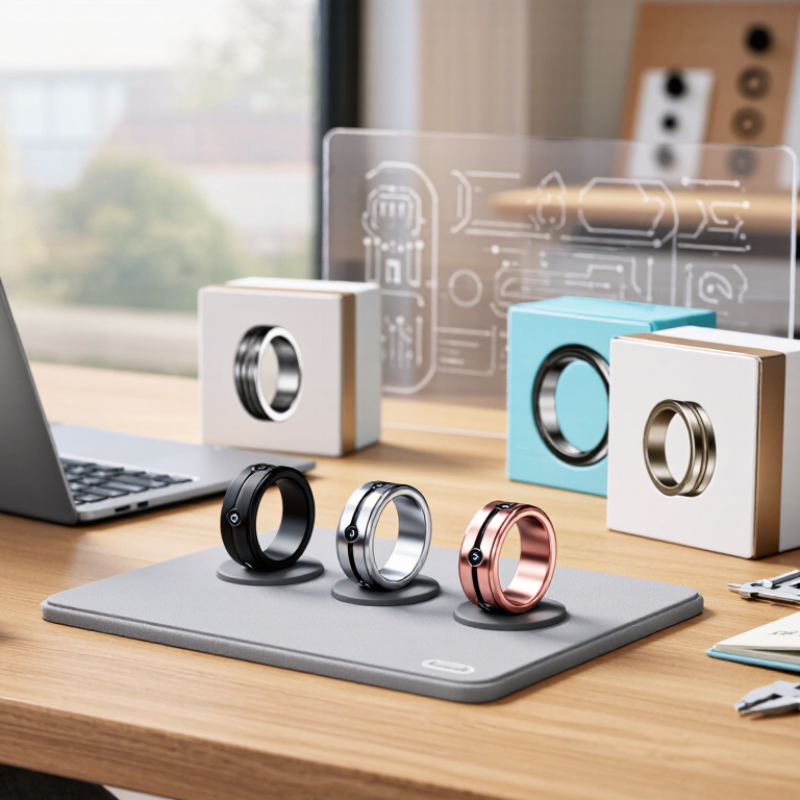
Before contacting suppliers in China, turn your idea into a measurable product brief. Specify ring sizes, shell material, sensor functions, battery life, charging method, and phone compatibility. Be precise about what “accurate” means for each reading. A vague request often produces vague quotations.
Then set supplier criteria that match your risks. Ask whether the factory handles design, tooling, assembly, or only trading, and request recent production examples. Check sample lead time, minimum order quantity, quality-control steps, and how defects are recorded. For a sample, inspect the finish under bright light, test charging, and compare readings across several wear sessions. Small details matter.
Request written answers. Confirm which tests and documents are available, and verify that they apply to the exact model being quoted. Also ask how firmware changes are controlled between samples and mass production. A low unit price can hide costly rework. I would not treat a polished presentation as proof of manufacturing strength; it is easy to overlook that. Keep a simple comparison sheet, and leave room for one supplier to disappoint you.
How to Find the Best Smart Ring Supplier in China?
Identify and Shortlist Smart Ring Suppliers in China
A useful shortlist begins with clear product requirements, not a large directory of factory names. Write down the ring size range, target battery life, sensor functions, materials, and app requirements. Details matter. Then check whether each supplier can explain its production process and show relevant test records. Ask about minimum order quantities, sample fees, production lead times, and how defects are handled. Specific answers are more useful than polished sales promises.
Tips: Request samples from two or three suppliers. Check fit, charging, finish, and measurement consistency under the same conditions. Ask for a written specification sheet and compare it with the sample. Keep questions and answers in one document. It saves time later.
Do not shortlist on price alone. A low quote may exclude tooling, packaging, or quality checks. Review the supplier’s communication carefully: do they answer technical questions directly, or keep changing the subject? I would not treat a quick sample as proof of stable mass production; that assumption is easy to make, and it can be wrong. Ask how incoming materials and finished rings are inspected, and request a small pilot order when practical. A simple scorecard covering capability, quality evidence, responsiveness, and total cost makes comparisons less subjective.
When evaluating a smart ring supplier in China, ask to see the production process, not only a capability deck. Can the team show solder-paste inspection, battery installation, sensor calibration, and final waterproof testing on the actual line? Request recent yield data and sample records, then compare them with a pilot run. Small details matter: a loose charging contact or uneven seal can cause failures after shipment. A polished audit deck can still hide a weak process.
Quality systems need evidence. The ISO Survey 2023 recorded more than 1.26 million ISO 9001 certificates worldwide, but certification alone does not prove consistent product quality. Check the certificate’s scope, site, and validity. Review corrective-action records, supplier controls, and how failed units are traced. Ask to inspect a real nonconformance report. It may be imperfect; the response and follow-up matter more.
Compliance depends on where the ring will be sold and how it works. Confirm that the supplier can support applicable radio, battery, materials, and product-safety testing, and verify reports against the exact model and components. IDC reported 534.6 million wearable-device shipments worldwide in 2024, underscoring the scale of this fast-moving category. That figure covers wearables broadly, not smart rings specifically. Build a document checklist with test reports, declarations, and component records, then have qualified labs verify key claims. Supplier promises are not test results.
A smart ring prototype should be tested on real hands, not judged from product photos. Ask the supplier for samples in several sizes and wear them during sleep, exercise, and daily tasks. Check charging alignment, app connection, surface comfort, and whether the ring stays secure when hands get wet. One sample is not enough. A polished prototype may still hide fit or battery issues. Request a written list of materials, sensors, and features that will remain unchanged in mass production.
Compare prices using the same specifications. A low quote may exclude tooling, packaging, firmware work, or shipping. Ask for separate costs and confirm what changes when order volume increases. Minimum order quantities can vary by finish, size, and packaging, so request a size-by-size breakdown. The comparison is not perfectly tidy. Suppliers may define “customization” differently, and that needs clarification before you compare totals.
Read contract terms carefully. Confirm prototype ownership, production timelines, inspection standards, payment milestones, defect handling, and replacement procedures. Put approved sample details in writing, including dimensions and charging behavior. Ask how the supplier handles a delayed component or a batch that differs from the sample. Get answers in specific terms. Vague promises are hard to verify later. A short call can reveal communication gaps, but keep key decisions in the contract. Even a careful review can miss something; have a qualified adviser check terms you do not understand.
Use this comparison as a sourcing checklist. Cost and lead-time figures are indicative planning ranges, not verified offers from specific suppliers; request written quotations for your exact design and specifications.
| Comparison Dimension | What to Request or Check | Indicative Planning Range | What a Strong Offer Should Include | Contract or Risk Check |
|---|---|---|---|---|
| Prototype stages | Ask whether the quote covers appearance samples, engineering prototypes, and production-intent samples. | Often 2–4 stages; timing and fees depend on design complexity and component availability. | A written stage plan, sample quantities, deliverables, revision limits, and approval criteria. | State who owns design files, firmware, molds, and other project-specific work products. |
| Prototype lead time | Request separate timelines for mechanical samples, electronic builds, and revised samples. | Plan for several weeks per engineering cycle; custom tooling or component sourcing can extend the schedule. | A dated schedule that identifies dependencies, review windows, and the start point for each lead time. | Define how delays are reported and how schedule changes are approved. |
| Prototype charges | Separate sample, engineering, tooling, firmware, and shipping charges. | Highly project-specific; compare itemized quotes rather than relying on a single sample price. | Clear quantities, specifications, included revisions, payment milestones, and shipping terms. | Confirm whether any prototype or tooling fee is refundable or creditable against a later order. |
| Unit pricing | Request prices at several order quantities and specify materials, sensors, battery, finish, packaging, and testing. | There is no dependable universal price: component selection, customization, yield, and order volume materially affect cost. | A quantity-based price schedule with inclusions, exclusions, currency, validity period, and shipping terms. | Document permitted price changes and require written approval for substitutions or cost increases. |
| Minimum order quantity | Ask for the minimum for a pilot run and for each color, size, or configuration. | MOQ varies by supplier, components, finish, and customization; obtain the figure in writing for each variant. | Separate minimums for initial production, repeat orders, and customized components or packaging. | Clarify whether mixed sizes or colors count toward one MOQ or require separate minimums. |
| Size and fit validation | Request the sizing method, size set, dimensional tolerances, and fit-testing process. | Validate the complete size range before mass production; fit expectations depend on the product design. | Approved reference samples and measurable specifications for inner diameter, width, and thickness. | Define the approval sample and the remedy if delivered production differs from approved specifications. |
| Testing and quality control | Ask what checks cover charging, connectivity, sensors, water resistance, finish, and final inspection. | Testing scope should be agreed for each product; water-resistance claims require an explicitly defined test method. | A written inspection plan, acceptance criteria, defect classifications, and sample test records. | Specify inspection rights, nonconformance reporting, rework or replacement responsibilities, and deadlines. |
| Payment and delivery terms | Compare deposit, balance, shipment point, packaging, freight, and delivery responsibilities. | Payment schedules and delivery terms are negotiable and vary by order and supplier. | Milestone-based payments linked to documented approvals and a clearly stated delivery term. | Identify the contracting entity, governing law, dispute process, and applicable delivery-term version. |
| Intellectual property and confidentiality | List the files and materials involved, including CAD, schematics, firmware, tooling, and test data. | Ownership and usage rights are contract-specific; do not assume they transfer automatically. | Written ownership, permitted-use, confidentiality, and return or destruction provisions. | Define restrictions on reuse, disclosure, subcontracting, and production for third parties. |
| Change control and warranty | Agree how design, component, firmware, and manufacturing-process changes are handled. | Warranty length, exclusions, and remedies depend on the negotiated agreement. | A documented change-approval process and a clear warranty claim procedure. | Specify notice periods, evidence requirements, repair or replacement remedies, and responsibility for related costs. |
Practical selection rule: Compare suppliers using the same written specification and order quantities. Before placing a production order, approve a representative sample, confirm the test and acceptance criteria, and have all pricing, MOQ, delivery, IP, and remedy terms included in the signed contract.
A smart ring combines a small enclosure with tightly packed sensors, a battery, and charging contacts. Ask a supplier to show how production is controlled, not just how the finished product looks. Review work instructions, incoming-material checks, and records for sensor calibration. Ask how rejected units are separated and how recurring defects are traced to a process step. Small details matter. During a factory visit, compare the documented procedure with the actual workbench; a checklist is useful only when staff follow it consistently.
Communication is part of production management. Send a technical question about ring size, battery performance, or test criteria, then note who replies and whether the answer includes evidence. Ask who handles engineering changes and how your approval is recorded. Ask to see records. A fast, polished response is not proof of reliable execution, and a supplier may need time to verify a detail. That is acceptable; vague promises are harder to assess.
Delivery reliability depends on capacity, component availability, and clear milestones. Request a schedule covering prototype approval, pilot production, inspection, and shipment, with named owners for delays. Compare promised lead times with recent order records, and ask how shortages affect the plan. Delays happen. A shared tracking sheet can help, but dates should be updated when assumptions change. I would still treat an attractive schedule cautiously until a pilot batch confirms the supplier’s actual pace.
Assess production management, communication, and delivery reliability
Suggested evaluation model—not measured industry data. Give delivery reliability and production management the greatest weight, then verify each area with documented evidence, sample orders, and clear performance records.
Specify ring sizes, shell material, sensors, battery life, charging method, and phone compatibility. Define what “accurate” means for each measurement.
Compare their production capabilities, relevant test records, sample fees, minimum order quantities, and lead times. Clear answers matter.
Examine the finish under bright light, test charging, and compare readings across several wear sessions. Check the fit, too.
Yes. Match the written specification sheet to the sample, and confirm it describes the exact model being quoted.
Ask whether the supplier handles design, tooling, assembly, or only trading. Request recent examples of similar production work.
No. Check whether tooling, packaging, and quality checks are included. A cheap quote can leave costly gaps.
Use a simple scorecard for capability, quality evidence, responsiveness, and total cost. Keep questions and answers in one document.
Not by itself. Ask how incoming materials and finished rings are inspected, and consider a small pilot order. I might still misread a polished sample.
Finding the best smart ring supplier in China starts with a clear definition of your product requirements, including design, materials, features, target price, and expected order volume. Use these priorities to identify potential manufacturers and create a shortlist based on relevant experience, production capacity, and responsiveness. Before choosing a partner, verify its manufacturing capabilities, quality-control processes, and ability to meet applicable product and market requirements.
Next, compare prototypes to assess fit, finish, functionality, and consistency. Review pricing alongside minimum order quantities, tooling costs, payment schedules, and contract terms so you understand the full commitment. Finally, evaluate how each supplier manages production, communicates updates, handles quality issues, and plans deliveries. A careful comparison of these factors can help you select a dependable smart ring supplier and build a practical, long-term working relationship.