The smart ring market is changing quickly, and “top” can mean different things to different buyers. Some people prioritize accurate health tracking; others want long battery life, a comfortable fit, or dependable phone compatibility. A capable smart ring manufacturer must balance these details in a device small enough to wear all day. That is no small task. A polished product page alone cannot prove that a ring performs well in everyday use.
This guide examines manufacturers shaping the market in 2026, using practical criteria such as product design, sensor capabilities, app support, materials, and manufacturing experience. It also considers how clearly companies explain their features and limitations. Health measurements can vary between devices and users, so readers should treat them as useful indicators, not medical conclusions. Details matter. The distinction between a consumer-facing brand and the company that designs or produces its hardware can also be unclear. That deserves a closer look. No ranking can capture every buyer’s needs, and product availability may change during the year. The comparisons ahead aim to offer a grounded starting point, not a permanent verdict. Use them to identify promising manufacturers, then check current specifications, independent testing, and support terms before choosing a ring.
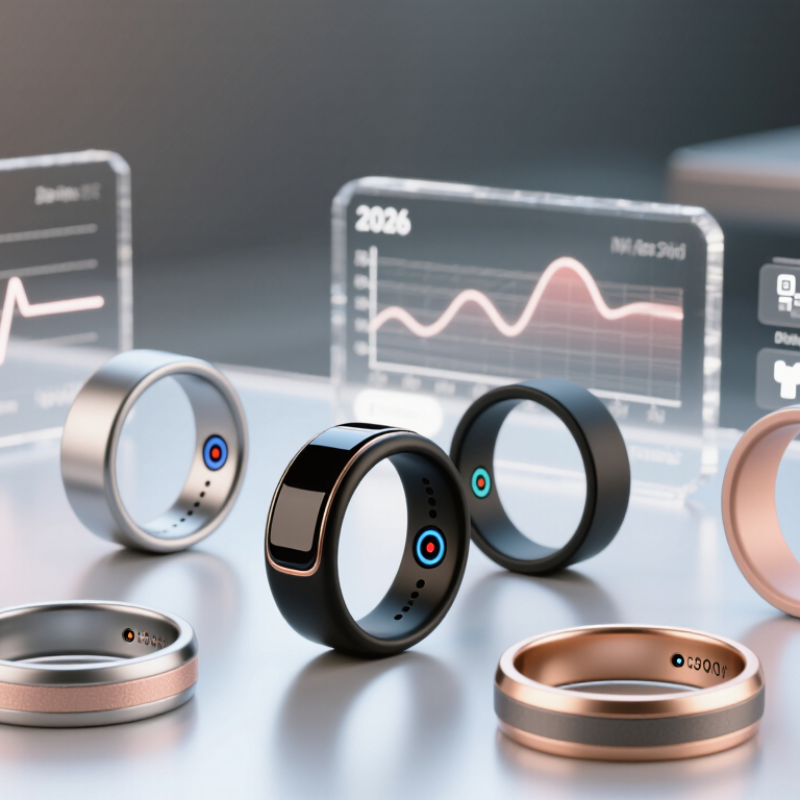
What Defines a Leading Smart Ring Manufacturer in 2026?
A leading smart ring manufacturer starts with dependable measurement, not a long feature list. Sensors must collect useful signals during sleep, exercise, and ordinary movement. Clear testing methods matter: readers should be able to see how accuracy was evaluated and where readings may vary. No ring gets every detail right.
Comfort is part of performance. A ring that feels tight at night or shifts during a walk can produce inconsistent readings. Good sizing guidance, smooth inner edges, and practical battery life make daily use easier. Small details count. Charging should be simple, and the ring should not need constant attention.
Trust also depends on honest software and data practices. A manufacturer should explain what each metric means, avoid presenting general wellness estimates as a diagnosis, and make data controls easy to find. Useful app updates should improve clarity, not bury users in charts. Compatibility with common phones and health platforms can help, though connections sometimes fail. That deserves candid support, not vague promises. In 2026, strong manufacturers combine careful engineering, transparent communication, and responsive service—and keep refining the parts that still fall short.
Evaluating smart ring manufacturers in 2026 means looking beyond polished product photos. IDC forecast global wearable-device shipments would reach about 538 million in 2024. That figure covers many device types, not smart rings alone, so it signals market scale rather than ring demand. A credible assessment checks how manufacturers validate measurements, publish battery-life conditions, and explain data limits. Look for repeatable testing, not just impressive claims.
Hands-on details matter. Does the ring keep tracking during sleep, hand washing, and ordinary movement? Are readings consistent across different fingers and skin conditions? Reviewers should compare ring data with a suitable reference device over several days, while noting that consumer sensors are not clinical instruments. Also examine sizing options, comfort, app support, repair policies, and how clearly the company describes data storage. A sleek finish is easy to photograph. Long-term comfort is harder to prove.
Tips: Request test methods, not only headline accuracy numbers. Check whether battery claims include continuous tracking. Read privacy terms before syncing health data. No score captures every user’s fit; even careful testing leaves room for doubt.
In 2026, major smart ring manufacturers tend to stand out in three areas: health sensing, compact hardware, and production expertise. Sensor-focused companies refine readings for sleep, heart rate, and skin temperature. Their challenge is consistency. A loose fit can affect measurements, even with careful engineering. Design-led makers focus on thin profiles, durable finishes, and comfortable inner surfaces. A ring should feel unobtrusive at a desk, not just look polished in a product photo. Manufacturing specialists support materials, assembly, and quality checks. Their work is less visible, but it can shape battery life and reliability.
Tips: Compare sizing support, battery claims, app access, and data explanations before choosing. Ask how readings are collected and what they cannot tell you. Health metrics can help reveal patterns, but they are not a diagnosis. Small differences in fit matter. I would also check whether the ring remains comfortable overnight and during handwashing. That sounds mundane, yet daily wear is where many designs succeed or fail. Product pages rarely show every limitation, so treat polished claims with measured curiosity.
Leading smart ring manufacturers differ less by appearance than by the systems behind each ring. One may focus on sleep staging and recovery scores; another may offer stronger workout tracking or broader health-app connections. Check whether readings sync automatically, whether reports explain their limits, and whether key features require a paid plan. Small details matter: a bright phone screen at 2 a.m. is not useful feedback.
The ecosystem matters because a ring produces data, not a diagnosis. McKinsey’s 2024 Future of Wellness survey found that 82% of U.S. consumers considered wellness a top or important priority. That interest raises expectations for clear trends and useful daily guidance. Still, a ring cannot explain every restless night; travel, stress, and a loose fit can distort readings. More data does not always mean better decisions.
Tips: Before buying, check sizing, battery life, subscription terms, and export options. Compare one week of sleep and activity records with your own routine. Look for steady patterns, not one surprising score.
Sleep tracking is a common smart ring feature. This chart shows typical adult sleep-stage ranges as useful context—not brand performance or market-share data.
Approximate ranges vary with age and individual sleep patterns. Smart rings estimate sleep stages from sensor signals; these estimates are not equivalent to a clinical sleep study.
When comparing smart ring manufacturers, look beyond the sample unit. Check sensor consistency across sizes, battery performance during continuous tracking, and whether test results come from repeatable production batches. Ask for documented checks on optical sensors, charging contacts, water resistance, and final assembly. A smooth prototype proves little.
IDC’s Worldwide Quarterly Wearable Device Tracker estimated 537.9 million wearable-device shipments in 2024. That figure covers a broad category, not smart rings alone, so it cannot confirm ring demand or supplier quality. It does show why manufacturing capacity matters: a supplier should explain how it controls component sourcing, inspection, and delivery as orders grow. Request quality records, defect-rate definitions, and a clear process for handling faulty units. A polished sample can still hide uneven performance across a full batch. This is easy to overlook.
Tips: Request samples from different production runs. Compare sizing accuracy, app data stability, charging time, and support response. Ask who owns firmware updates, and how long support is planned. Get the answer in writing.
Look for repeatable sensor tests, clear battery conditions, and written quality checks. A polished photo proves little.
Compare readings with a suitable reference device over several days. Note your finger, skin conditions, and daily activity.
No. They can show patterns, but consumer sensors are not clinical instruments. One unusual score may mean very little.
Check whether they cover continuous tracking, not just occasional use. Real battery life can vary.
Fit can affect readings and sleep comfort. Try the sizing options before relying on long-term results.
Ask for defect-rate definitions, inspection steps, and samples from different production runs. Get key answers in writing.
Check data exports, automatic syncing, and whether reports explain their limits. A bright screen at 2 a.m. may not help.
Travel, stress, movement, and a loose fit can all affect results. That can be messy. Look for steady patterns across a week.
In 2026, a leading smart ring manufacturer is defined by more than a compact design. Reliable health and activity tracking, comfortable materials, dependable battery life, secure data handling, and consistent software updates all contribute to a useful product. Manufacturers can be evaluated by the quality and clarity of their measurements, the durability of their rings, the ease of setup, customer support, and the overall value offered.
The major manufacturers differ in how they balance wellness features, design choices, app experiences, and connections with other devices. Some prioritize detailed sleep insights, while others emphasize everyday activity tracking or a streamlined ecosystem. When comparing options, consider which measurements matter most to you, how the ring fits into your routine, whether its app is easy to understand, and what ongoing costs or limitations may apply. A thoughtful comparison helps identify a ring that suits individual needs rather than relying on features alone.