NFC Embedded
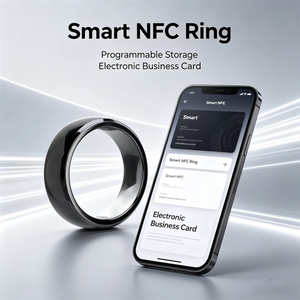
Explore production-ready base architectures optimized for private-label white-labeling, rapid firmware deployment, and seamless custom app ecosystems.
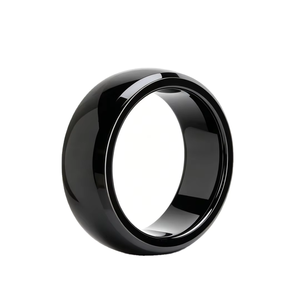
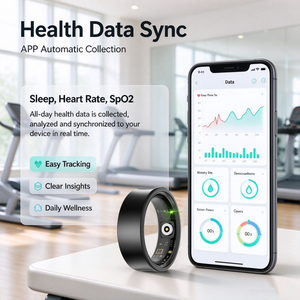

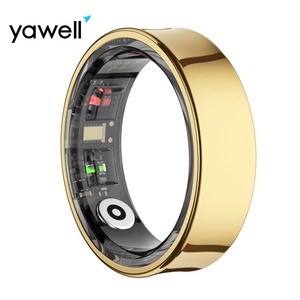
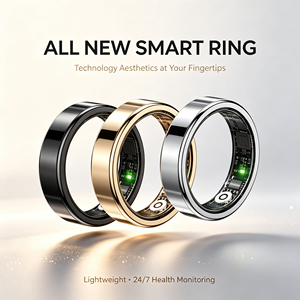
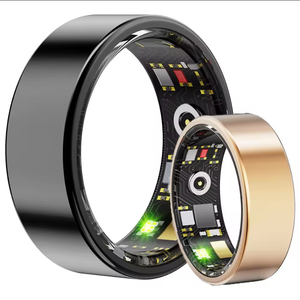
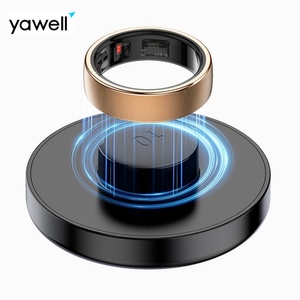
Shenzhen Tucks Technology Co., Ltd. eliminates procurement middleman layers, providing Tier-1 hardware execution, clean-room assembly, and CE/FCC/RoHS compliance.
Equipped with high-speed Yamaha and Fuji pick-and-place systems capable of 01005 passives and 0.35mm pitch BGA placement for ultra-dense micro-PCB assemblies.
Complete in-house RF pre-compliance testing covering RED (Radio Equipment Directive), EMC EN 301 489, SAR safety evaluations, and EU RoHS 2.0 chemical restriction compliance.
Accelerate your product roadmap with functional prototypes engineered and dispatched in 7 days, bridging concept-validation to 15–25 day rapid mass manufacturing.
Seamless mobile operating system integrations with native Android/iOS SDKs, open Bluetooth GATT profiles, and turnkey cloud-agnostic telemetry telemetry ingestion pipelines.
As the consumer electronics sector shifts from hand-held interfaces toward unobtrusive ambient computing, CE Certified AI smart glasses represent the most critical form factor in personal technology. For brand owners, B2B procurement managers, and electronic distributors, selecting an experienced Original Design Manufacturer (ODM) is not merely a vendor choice—it is a critical hedge against supply-chain volatility, regulatory non-compliance, and architectural failure. Shenzhen Tucks Technology Co., Ltd. leads this industry through disciplined engineering practices and transparent production matrices.
Modern AI smart glasses require sophisticated electrical, optical, and industrial compromises. Unlike bulkier AR headsets, commercially successful AI glasses must maintain an overall mass between 38g and 49g to avoid cranial fatigue over prolonged wear. This constraint demands high-density, multi-layer Flex-Rigid PCBs fitted inside titanium-reinforced TR90 optical frames.
Key processing units leverage low-power dual-core RISC-V or ARM Cortex-M33 topologies combined with discrete micro-Neural Processing Units (NPUs). These handle wake-word inference, noise-cancellation matrices, and voice biometrics locally. By keeping edge inference power under 8.5mW during active listening, our smart wearable ODM platforms achieve over 14 hours of continuous operational standby without requiring excessive battery thermal mass that would degrade user ergonomics.
| System Architecture Domain | ODM Reference Specification | Verification / Standard Test Metrology | Procurement Value Proposition |
|---|---|---|---|
| Optical Engine & Display | Diffractive Waveguide / Micro-OLED (0.13" Micro-Display) | Luminance > 1500 nits (ANSI Optical bench testing) | Guaranteed sunlight legibility with minimal eye fatigue |
| Camera Subsystem | 12MP Ultra-Low Power Sensor / 1080p@60fps Optical ISP | Dynamic range > 68dB; EIS (Electronic Image Stabilization) | High-definition first-person visual LLM prompt capture |
| Acoustic Transducers | Dual MEMS Directional Beamforming + Bone Conduction Hybrid | IEC 60268-4 sound field isolation; THD < 1% @ 1kHz | Whisper-level voice AI accuracy with zero sound leakage |
| Power Management | High-voltage dual Li-Po cells (160mAh combined capacity) | UL 1642 / IEC 62133 thermal runaway validation | All-day continuous operation; fast charge to 80% in 20 min |
| Wireless Connectivity | Bluetooth 5.3 Low Energy Audio + Wi-Fi 6 (802.11ax) Dual-Mode | ETSI EN 300 328 / FCC Part 15C pre-certified | Sub-30ms audio latency; rapid offloading of visual datasets |
For European market entry, having an accredited CE Marking is not a cosmetic formality—it is a legal prerequisite enforced by customs authorities under the EU Radio Equipment Directive (RED 2014/53/EU). Non-compliant imported AI smart wearables face border confiscation, prohibitive financial penalties, and mandatory market recalls. Shenzhen Tucks Technology Co., Ltd. incorporates CE conformity into every stage of hardware design:
Radio Spectrum Efficiency (ETSI EN 300 328): AI smart glasses utilize complex 2.4GHz and 5GHz transceivers placed in close proximity to the human temple. Our antenna matching networks (ceramic patch and flexible FPC configurations) are tuned using 3D electromagnetic field solvers to maximize transmission efficiency while strictly respecting localized Specific Absorption Rate (SAR) limits (EN 50566:2017 < 2.0 W/kg averaged over 10g of human tissue).
Electromagnetic Compatibility (ETSI EN 301 489-1/-17): Miniature switching regulators, PMICs, and camera MIPI lanes generate high-frequency emissions. Through localized mu-metal shielding and multi-ground return planes, our ODM hardware minimizes interference with domestic and industrial telecommunication bands.
Low Voltage Directive (LVD 2014/35/EU) & Eye Safety: Devices incorporating miniature lasers, Micro-OLEDs, or infrared gaze-tracking must adhere strictly to EN 62471 / IEC 60825-1 Photobiological Eye Safety certifications to ensure retinal protection against extended exposure to near-eye coherent light.
Enterprise and consumer procurement data indicate that smart eyewear will overtake wrist-based form factors for hands-free workflow automation, real-time linguistic translation, and situational logistics management. Forward-thinking procurement teams are moving away from closed, consumer-locked hardware toward open-source ODM architectures that allow them to integrate their proprietary large language model (LLM) backends, localized enterprise CRM connectors, and customized optical coatings directly at the factory level.
Key industry shifts that procurement directors must integrate into their 2025–2027 wearable roadmaps.
B2B buyers are demanding hardware ready for multi-modal interaction—combining computer vision with context-aware voice prompts. Glasses capable of parsing real-time visual scenes using embedded cameras, and interpreting user intent via multi-agent architectures, command premium retail pricing.
Procurement teams increasingly require hybrid architectures where smart rings, smartwatches, and AI smart glasses synchronize via Bluetooth LE Mesh. Ring sensors record PPG/HRV metrics and relay biometric stress signals to glasses displays without consuming smartphone gateway overhead.
European buyers must comply with upcoming EU Digital Product Passport (DPP) regulations. Tucks leads the ODM sector by offering bio-based acetate frames, modular temple assemblies for easy battery replacement, and fully recyclable unbleached FSC-certified retail packaging.
Clear, direct answers to common questions about ODM engagements, minimums, testing, and delivery cycles.
Connect directly with our senior hardware architects in Shenzhen. Submit your RFQ, request functional product samples, or discuss custom silicon configurations with our engineering team.