Hardware Portfolio
Standard & Custom OEM/ODM Smart Form Factors
Engineered for global brand distribution, offering complete SDK compatibility, medical-grade biometrics, voice transcription, and strict CE/FCC regulatory validation.
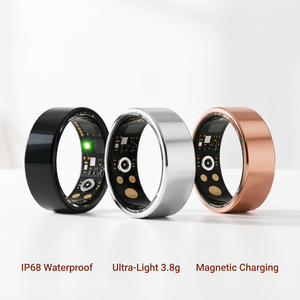
Smart Ring App Control IP68 Waterproof Aluminum Alloy Bar Magnetic Charging Case USB Health Tracking 3-5 Days Battery Life 18mAh
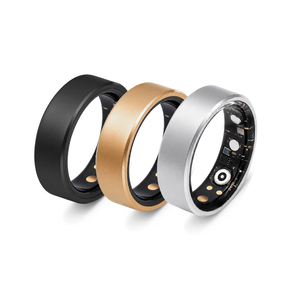
2026 Health ECG Smart Ring Fitness Tracker R639 GH3228T Steel App Control IP68 Waterproof Blood Oxygen OLED Display Nordic
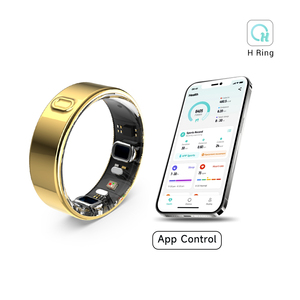
EDA ECG Smart Ring Finger Ring Titanium Long Battery Life Heart Rate Blood Oxygen Manufacturers Health Smart Rings for Men
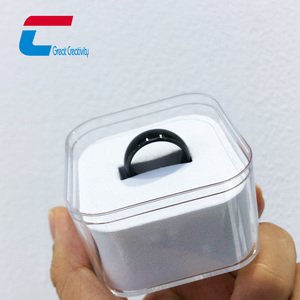
RFID Custom Logo Ceramics NFC Ring Fashionable 13.56MHz Rfid Ring Smart Programming Nfc Ring
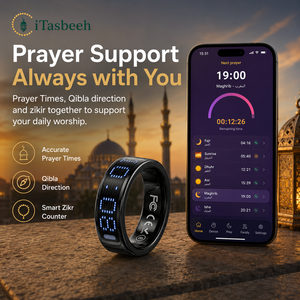
Smart Zikr Tasbeeh Counter Ring for Muslim Prayer Qibla ITasbeeh Salam SQ666 IOS App Stainless Steel Alarm Clock
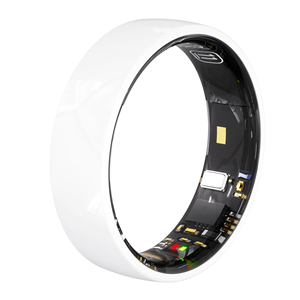
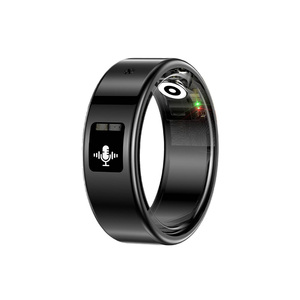
Factory OEM Ceramic Smart Ring Heart Rate Blood Oxygen Sleep Monitor 10-15 Days Battery IP68 Magnetic Charging TK8Pro
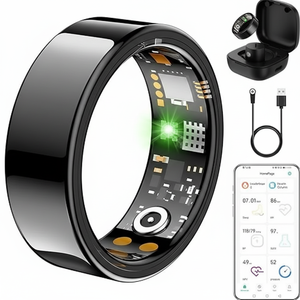
Ring Fitness Body Tracking Trending Location Magnetic Thin Touch Men's Stainless Steel Monitor Timer Odm Smart Ring IP68
Direct Shenzhen Manufacturing
Verified Factory Footprint & Quality Engineering
Shenzhen Tucks Technology Co., Ltd. provides vertically integrated electronics manufacturing—delivering audited compliance, automated SMT lines, and certified quality controls.
15+
Years Precision Engineering
8
High-Speed SMT Lines
2M+
Annual Unit Production
200
Low Pilot MOQ Tier
Full CE, FCC & RoHS Compliance
Every optical chassis and mainboard assembly passes rigorous CE-RED, FCC Part 15, and RoHS 2.0 screening. Optical SAR radiation tests, RF antenna tuning, and battery thermal runaway tests are certified by accredited laboratories.
ISO9001:2015 Manufacturing Line
Operating an end-to-end clean-room facility in Nanshan District, Shenzhen. SMT component pick-and-place is verified via automated optical inspection (AOI), high-temperature aging chambers, and hermetic ultrasonic sealing tests.
Proprietary LLM & Voice SDK Stack
Direct integration with OpenAI ChatGPT, Claude, and on-premise Large Language Models (LLMs). We supply turnkey Android/iOS SDKs, custom Bluetooth Low Energy (BLE 5.4) stacks, and bespoke firmware wake-word engines.
Agile Prototyping to Mass Rollout
Working functional samples delivered within 7 business days. Full production capacity guarantees 15–25 day container turnarounds, fully private-labeled with laser engraving, gift boxes, and regional firmware images.
Technical Whitepaper
The Architecture of CE-Certified AI Smart Glasses
A comprehensive engineering breakdown for procurement directors, product leads, and consumer electronics brand builders.
1. Optical Waveguide Paradigms: MicroLED vs. MicroOLED Architectures
Procuring commercial-grade AI smart glasses requires balancing luminous transmittance, form factor volume, and thermal envelope dissipation. While early smart optics suffered from excessive weight (>75g) and low outdoor contrast, current production lines leverage diffractive geometric and surface relief waveguides (SRG).
For augmented visualization, MicroLED optical engines achieve luminance exceeding 2,000,000 nits at the projector face, yielding over 1,500 nits to the human eye. This ensures high legibility under direct sunlight. Conversely, for indoor teleprompter, real-time live-translation, and assistive navigation applications, Silicon-based MicroOLED solutions provide superior chromatic fidelity (108% sRGB) and lower drive currents, conserving valuable battery reserves across a typical 180mAh to 280mAh temple configuration.
| Component Layer | Engineering Standard (Tucks Production) | Market Baseline / Generic Standard | B2B Quality Impact |
|---|---|---|---|
| Optical Engine | Monochrome/RGB MicroLED Diffractive Waveguide | Prism Reflective / Birdbath | Slim sunglasses form factor (<48g); zero facial strain |
| Audio Frontend | Dual Knowles MEMS + Reverse-Phase ENC Beamforming | Single Omnidirectional Mic | Clear whisper recognition at 65dB ambient background noise |
| Compute MCU / NPU | Dual-core ARM Cortex-M33 + Ultra-Low-Power Edge NPU | Single-core standard Bluetooth SoC | Offline keyword wake-up, sub-120ms BLE audio transmission |
| CE Regulatory Safety | EN 62471 Photobiological Eye Safety + RED Article 3.1b | Basic EMC Self-Declaration | Guaranteed European customs clearance; zero retinal hazard |
2. Acoustic Leakage Cancellation via Dipole Spatial Acoustic Engineering
Enterprise smart glasses must maintain conversational confidentiality during voice-driven AI interactions. Conventional temple micro-speakers emit omnidirectional sound, leading to acoustic leakage beyond 30cm. Our design integrates Dipole Sound Wave Cancellation Technology.
By creating a dual-port acoustic cavity inside the TR90 nylon temples, sound waves escaping through the vent 180 degrees out of phase with the primary speaker port neutralize spillover energy. This drops exterior sound pressure by up to 28dB at a 20cm radius, ensuring the user's AI summaries, navigation instructions, and voice transcriptions remain private during corporate meetings or public transit use.
3. Neural Network Edge-Inference & Cloud LLM Streaming
The modern AI wearable is defined by its ability to execute low-latency contextual processing. The system implements a three-tier execution hierarchy:
• Level 0 (Sensor Core / Edge): Dedicated micro-watt DSP running local voice activity detection (VAD) and IMU 9-axis gesture identification, keeping the system in a deep sleep state (sub-15μA) until triggered.
• Level 1 (Smartphone Companion Gateway): High-throughput Bluetooth 5.4 Low Energy Isochronous Channels stream raw 16kHz Opus-compressed voice packets with less than 25ms channel latency.
• Level 2 (Cloud LLM Cloud Engine): Turnkey API orchestration with custom enterprise endpoints, delivering bidirectional streaming response generation, real-time multilingual meeting transcription, and zero-shot voice synthesis.
Procurement Forecasting
Smart Glasses & Wearable Sourcing Trends: 2026–2030
Key technological pivots transforming procurement strategies across North American and European smart wearable markets.
Cross-Form Multimodal Sensor Fusion
Enterprise buyers are transitioning from isolated device SKUs toward hybrid ecosystems. By pairing smart glasses with ECG/EDA health rings and smartwatches, brands capture rich physiological data. While the glasses handle gaze, speech, and situational vision, the ring continuously monitors sympathetic nervous stress and arterial pulse waves.
Lightweight All-Day Materials
Consumer adoption hinges on sub-45-gram frames that resemble designer prescription eyewear. Injection-molded EMS TR90 memory nylon combined with precision titanium hinge mechanics allows OEM brands to replace bulky frames with ultra-slim temples, accommodating prescription lens edging directly in retail optical labs.
Stricter Global Data Compliance
With smart glasses capturing third-party biometric, spatial, and audio records, international customs and privacy authorities (GDPR, California CCPA, EU AI Act) enforce stringent criteria. Sourcing teams prioritize factories with built-in hardware LED recording indicators, TLS 1.3 encryption on Bluetooth streams, and verifiable firmware integrity.
Procurement Q&A
Frequently Asked Sourcing & Compliance Questions
Essential operational and technical clarifications for supply chain managers, brand directors, and OEM buyers.
What specific test certificates are included under the CE mark for smart glasses? +
Our CE certification file covers three core directives: 1. Radio Equipment Directive (RED 2014/53/EU) including RF exposure and SAR evaluation under EN 62479/EN 50663; 2. EMC Compatibility under EN 301 489-1/-17; 3. Low Voltage & Eye Safety Directives encompassing EN 62368-1 electrical safety and EN 62471 photobiological safety to ensure zero retinal hazard from optical displays. Full laboratory test reports and the EU Declaration of Conformity (DoC) are provided prior to shipment.
What are the minimum order quantities (MOQ) and production lead times for OEM branding? +
We support agile hardware testing with a baseline pilot MOQ of 200 pieces for standard chassis laser-marking, customized packaging, and boot firmware localization. Turnaround for custom evaluation samples is typically 7 business days. Full-scale production cycles (1,000 to 50,000 units) require 15 to 25 days, supported by our 8 SMT lines and 2,000,000+ unit annual capacity.
Can we integrate our own private LLM, mobile app, or dedicated cloud backend? +
Yes. We provide complete Native iOS and Android SDK libraries, BLE communication protocol specs, and AT-command documentation. If you manage proprietary AI backends, our firmware engineering team can pre-configure the endpoint routing or supply an entirely white-labeled mobile application that hooks into your enterprise cloud infrastructure without referencing our factory identifiers.
How does the factory resolve temple thermal buildup during prolonged audio or AI processing? +
Thermal dissipation is managed through a multi-tier passive cooling design. We utilize ultra-thin pyrolytic graphite sheets coupled with a copper ground-plane PCB layer that spreads thermal energy uniformly across the TR90 frame body. Surface temperatures on the inner temple face touching human skin remain consistently below 37.5°C, even under sustained high-volume playback or continuous streaming inference.
What lens options, prescription capabilities, and IP waterproof ratings are supported? +
Frames are engineered with standard optical bevels compatible with computerized edging machines, allowing opticians to mount single-vision, progressive, and blue-light blocking prescription lenses. Factory assemblies can ship with polarized TAC sunglasses, photochromic UV400 lenses, or anti-reflective clear blanks. Structural sealing achieves IP67 to IP68 water/sweat resistance via precision dispensing gaskets and acoustic hydrophobic mesh.
Launch Your Private Label AI Wearable Line Today
Partner directly with Shenzhen's premier smart wearable OEM/ODM manufacturer. From rapid 7-day functional prototyping to global CE/FCC-certified mass production, our engineering teams are ready to scale your project.
Contact Us