Precision Optical Wearables & Smart Micro-Hardware Showcase
Explore our certified hardware ecosystem engineered for high sunlight contrast, sub-millisecond latency, and advanced biometric processing.
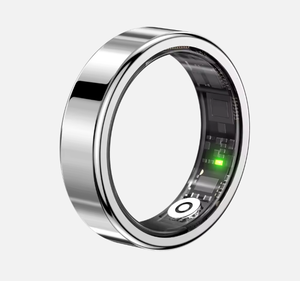
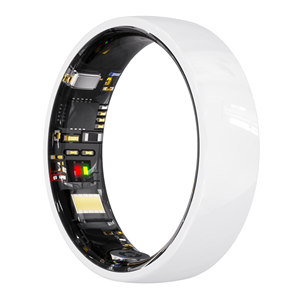
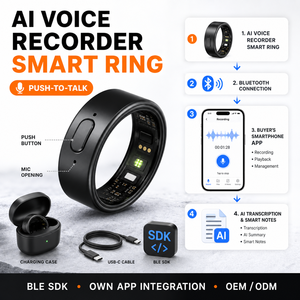
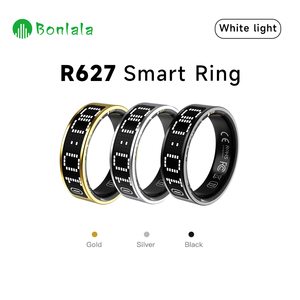
Executive Technical Whitepaper: The Evolution of Green Monochromatic Optical Engines
Within near-eye display (NED) engineering, the monochrome green display optical configuration represents the pinnacle of luminous efficiency, outdoor optical contrast, and thermodynamic optimization. As a tier-one CE certified green display smart glasses manufacturer and supplier, our Shenzhen engineering facility designs and manufactures optical waveguides integrated with micro-LED and micro-OLED light engines peaking at precisely 525nm to 532nm wavelengths. This spectral choice aligns directly with the human eye's peak photopic spectral sensitivity ($V(\lambda)$ curve), yielding up to 5x perceived brightness per lumen compared to conventional red or blue emitters. Enterprise logistics operators, outdoor sports OEMs, and industrial remote-maintenance teams demand wearable display architectures that remain crystal clear under direct sunlight while consuming under 80mW of power.
Engineering robust, lightweight (sub-48g) augmented reality eyewear requires resolving the trade-offs between thermal dissipation, field of view (FOV), eye-box tolerance, and optical MTF (Modulation Transfer Function). By deploying single-color green diffraction surface relief gratings (SRG) etched on high refractive index glass ($n \ge 1.9$), our modules achieve up to 3000 nits to the eye while avoiding the chromatic aberration and rainbow artifacts inherent in full-color optical combiners. This whitepaper guides global B2B procurement specialists, hardware brand managers, and tier-one importers through critical procurement criteria, design trade-offs, and compliance verifications required for scalable enterprise deployment.
Photopic Eye Sensitivity Advantage
By centering emission on the 525-530nm band, green displays achieve maximum luminance perception at minimal current injection, cutting battery drain by up to 65%.
Sub-Millisecond Response Time
Micro-LED silicon backplanes deliver microsecond switching latency, eliminating motion blur, visual drift, and user vestibular fatigue during active head tracking.
Industrial CE Compliance Directives
Full conformance to European RED 2014/53/EU, EN 62471 photobiological eye safety limits, and RoHS substance restrictions for frictionless international customs entry.
B2B Global Procurement Trends: Future Outlook Through 2026–2030
Corporate procurement channels for augmented reality eyewear and micro-sensor companion devices are undergoing a systemic transition from consumer novelty accessories to mission-critical operational tools. Procurement teams from Western Europe, North America, and East Asia are structuring multi-year supply contracts that demand modular architectures, unified SDK integration, and cross-peripheral interoperability. We identify four structural sourcing trends currently dominating the smart optical glasses sector:
| Procurement Pillar | Legacy AR Eyewear Sourcing | Modern Trend Requirements (2026+) | Business Impact |
|---|---|---|---|
| Optical Engine Architecture | Bulky BirdBath prism optics, high power drain, RGB color bleed. | Ultra-compact Monochromatic Green Micro-LED + Diffractive Waveguide. | Achieves all-day 14-hour operational shifts with frames under 45 grams. |
| AI Voice & LLM Orchestration | Basic Bluetooth profile, push-to-talk microphone. | Dual-mic beamforming noise cancellation with direct on-device LLM API bridge. | Real-time speech-to-text transcription and hands-free industrial automation. |
| Ecosystem Sensor Fusion | Isolated standalone glasses without peripheral connectivity. | BLE 5.3 telemetry pairing with Smart Rings and biometric sensors. | Consolidated health telemetry, industrial worker fatigue alerts, seamless input. |
| Regulatory Standards | Basic CE self-declaration without unified testing reports. | ISO9001 certified batch-level audits, EN 62471 eye safety, full WEEE/RoHS compliance. | Zero risk of customs detention or Amazon/retail channel non-compliance bans. |
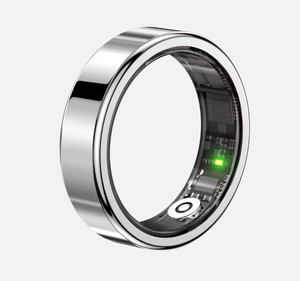
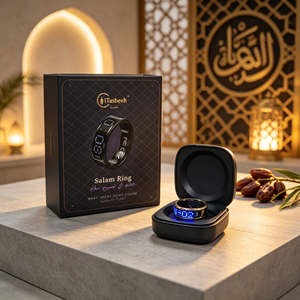
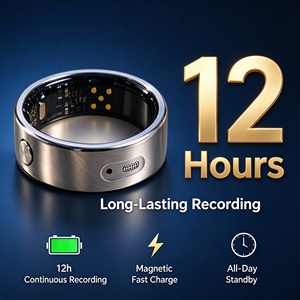
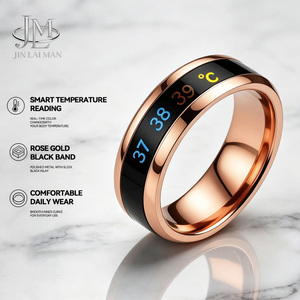
As illustrated above, modern enterprise RFP specifications mandate that green display smart glasses act as a unified dashboard. For instance, pairing an AR HUD with our custom AI voice recording rings or medical-grade biometric smart rings allows enterprise field engineers to inspect high-voltage electrical panels hands-free, receiving real-time diagnostic text in their optical field of view while monitoring their stress, pulse rate, and temperature in hazardous operating environments.
Technological Roadmaps & Architectural Milestones
The engineering evolution of smart glasses hinges on solving the thermodynamic envelope. When micro-displays operate continuously, heat generated near the temples can cause user discomfort or trigger thermal throttling in the primary MCU. By utilizing green monochromatic micro-LED arrays fabricated on gallium nitride on silicon (GaN-on-Si), internal quantum efficiency (IQE) exceeds 40%, keeping total module power under 100mW even at 5,000 nits peak emitter brightness. This allows our industrial glasses to employ lightweight, fanless aviation-grade aluminum temple cores that dissipate heat passively across the frame.
Furthermore, waveguide technology is transitioning from reflective geometrical arrays to holographic surface relief gratings fabricated via nanoimprint lithography (NIL). This reduces manufacturing costs during mass production while expanding the eye-box to 14x12mm, ensuring operators of different pupillary distances experience zero edge vignetting or display clipping. Coupled with RTOS-level power management, our green display solutions support over 18 hours of continuous contextual HUD notifications on a single 180mAh lithium polymer battery cell.
Our Manufacturing Authority & Factory Engineering Strengths
Shenzhen Tucks Technology Co., Ltd. is not an intermediary broker or trading house; we are an established high-precision hardware manufacturer founded in 2008 in Shenzhen, China. Our vertically integrated manufacturing campus spans multi-thousand square meters, housing 8 high-speed surface-mount technology (SMT) production lines, 10,000-class optical cleanroom assembly workshops, and comprehensive environmental testing laboratories. We maintain complete ownership over tooling development, SMT board placement, firmware compilation, and quality control.
Operating rigorously under an audited ISO9001:2015 quality management system, our standard production workflow integrates automated optical inspection (AOI), high-low temperature aging chambers (-20°C to 60°C), IP68 water immersion pressure tanks, and drop-impact simulation fixtures. With an annual capacity surpassing 2,000,000 wearable units, we support global B2B clients across 30+ countries, offering an accessible low-risk entry minimum order quantity (MOQ) of just 200 units per model, backed by functional samples within 7 business days and bulk turnaround within 15–25 days.
B2B Hardware Sourcing: Frequently Asked Questions (FAQ)
Q1: Why choose green monochrome display over full-color RGB for enterprise glasses?
Green monochrome Micro-LED arrays provide up to 10x higher optical efficiency and luminous output than RGB micro-displays. This guarantees readable contrast under direct midday sunlight (3000+ nits to the eye) while consuming minimal battery power, preventing device overheating.
Q2: What specific certifications do your green display smart glasses hold?
All production models carry official CE certificates (conforming to RED, EMC, and LVD directives), FCC ID approvals for North American telecommunication standards, and complete RoHS/REACH material safety compliance documents for hazardous substance restrictions.
Q3: What level of OEM/ODM customization is available for a 200 pcs order?
For orders starting at 200 units, we provide custom temple pad printing, laser logo engraving, customized boot screens, localized firmware packaging, and custom retail gift boxes. Custom frame tooling or proprietary optical light guide modifications are supported at higher tiers.
Q4: How do you verify optical eye safety during continuous use?
Our displays are certified according to EN 62471 / IEC 62471 standards for photobiological safety. The coherent green wavelength contains no hazardous UV or high-energy shortwave blue light, eliminating retinal hazard concerns during 8- to 12-hour enterprise shifts.
Q5: Can your smart glasses interface directly with proprietary enterprise apps?
Yes. We offer fully documented BLE communication protocols, Android/iOS SDK libraries, and open API hooks for notifications, sensor telemetry, voice-to-text pipeline feeds, and remote management platform integration.
Q6: What is the sample lead time and mass production delivery schedule?
Functional pre-production evaluation samples are typically dispatched within 7 business days following specification lock. Mass production runs are finalized and delivered to Shenzhen forwarding hubs within 15 to 25 business days.