BLE 5.4 AI Voice
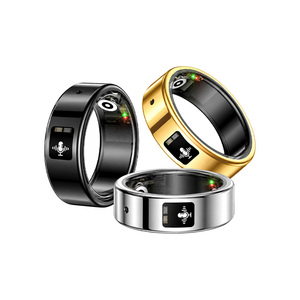
Portable Field Work Recorder BLE V5.4 AI Voice Ring
Ultra-compact acoustic MEMS microphone, edge transcription interface, and dual BLE streaming.
Engineered for white-label brand launches, healthcare system integration, and consumer wellness distributors. Fully certified with CE, RoHS, and FCC compliance dossiers ready for customs clearance.
Ultra-compact acoustic MEMS microphone, edge transcription interface, and dual BLE streaming.

Fine jewelry aesthetics combined with medical-grade continuous SpO2 and dynamic heart rate sensors.
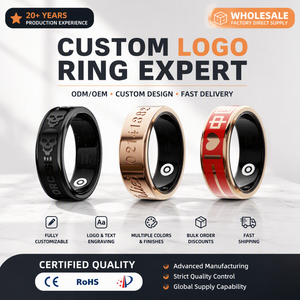
Distinctive industrial chassis with integrated NFC token, sleep quality scoring, and camera shutter trigger.
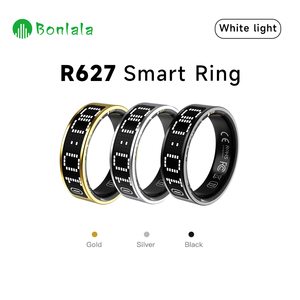
Sub-millimeter curved interactive micro-display, true 50m hydrostatic waterproofing, and blood pressure trend estimation.
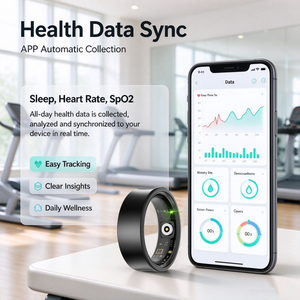
Austenitic medical-grade steel shell hosting PPG optical arrays with machine-learning biometric evaluation.
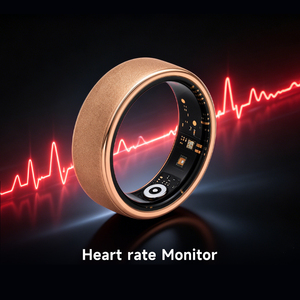
Ultra-thin 2.5mm casing with scratch-resistant PVD coating and intuitive capacitive tap/swipe gesture control.
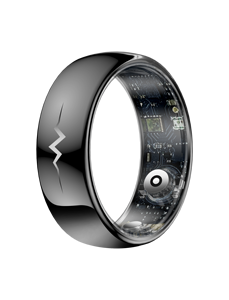
Titanium bio-contact dry electrodes capturing Lead-I electrocardiogram signals with precision thermistor accuracy.
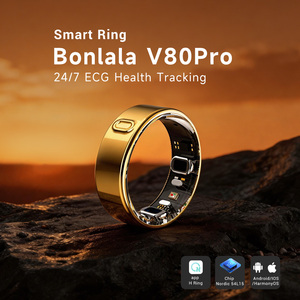
Electrodermal activity (EDA) monitoring for sympathetic nervous system arousal and algorithmic mental stress quantification.
Technical criteria for electronics importers, corporate brand managers, and medical-wellness procurement teams sourcing connected finger-worn devices.
The smart ring form factor represents one of the most mechanically demanding segments within wearable micro-electronics. Unlike smartwatches that afford generous volumetric interior space (typically exceeding 6,000 mm³), an ergonomic smart ring presents less than 550 mm³ of net internal component volume. Sourcing a dependable, CE Certified smart ring supplier requires evaluating both micro-system packaging durability and compliance with European Union harmonized standards.
Placing connected smart rings on the EU market involves compliance across three primary European directives: the Radio Equipment Directive (RED 2014/53/EU), the Electromagnetic Compatibility Directive (EMC 2014/30/EU), and the Low Voltage / Electrical Safety standards (LVD/IEC 62368-1).
| Regulatory Domain | Standard Reference | Engineering Challenge in Smart Rings | Tucks Quality Protocol |
|---|---|---|---|
| RF Radiation & SAR | EN 62479 / EN 50663 | Near-body RF absorption when finger touches adjacent human tissue. | Conducted RF power calibrated ≤ 2.5 mW; full localized SAR exemption dossiers. |
| Radio Spectrum (RED) | ETSI EN 300 328 (v2.2.2) | Antenna detuning caused by surrounding finger tissue dielectric constants (εr ≈ 50). | Precision matching network for curved planar inverted-F (PIFA) antenna arrays. |
| EMC Immunity & Emissions | ETSI EN 301 489-1/-17 | Electrodermal noise coupling with charging cradles and wireless inductive loops. | Shielded SMT ground planes; ±8 kV air / ±4 kV contact ESD suppression diodes. |
| Biocompatibility (RoHS/REACH) | ISO 10993-5 / -10 | Continuous transdermal skin contact, sweat acidity (pH 4.0–6.8), and nickel release limits. | Hypoallergenic epoxy resin barrier; PVD medical titanium and 316L passivation testing. |
| Ingress Protection | EN 60529 / ISO 22810 | Thermal expansion mismatch between ceramic outer band and resin inner sealing. | Automated vacuum resin injection; 100% pneumatic batch testing to 5ATM (50m). |
Importers must also differentiate between General Wellness Rings and those subject to the EU Medical Device Regulation (MDR 2017/745). Unless clinical diagnostic claims (such as atrial fibrillation classification or medical apnea diagnostic indices) are made, smart rings function legally as lifestyle biometric monitors, allowing commercial deployment under standard CE RED DoC (Declaration of Conformity) pathways without Class IIa/IIb notified body audits.
The palmar digital arteries within the fingers offer physiological advantages over the dorsal wrist for micro-vascular monitoring. The capillaries are closer to the skin surface, with absence of deep hair follicles and thicker subcutaneous fat layers that traditionally impede wristwatch photoplethysmography (PPG). However, because finger rings rotate and encounter frequent mechanical friction, our manufacturing engineering employs a tri-channel optical architecture:
By pairing dual-wavelength green LEDs (525 nm) for high-cadence heart rate tracking with alternating red (660 nm) and infrared (940 nm) arrays, the reflected signal captures pulsatile volumetric changes with an optical SNR surpassing 48 dB. An integrated 3-axis low-power STMicroelectronics or Bosch accelerometer operates concurrently to run real-time motion artifact cancellation algorithms on the Nordic Semiconductor or Goodix BLE system-on-chip (SoC).
How battery chemistry shifts, ultra-low power silicon, and non-invasive metabolic trend tracking will define market leaders between 2025 and 2030.
Traditional lithium-ion pouch cells suffer volumetric degradation in curved geometries. Smart rings are transitioning rapidly toward curved semi-solid and solid-state electrolyte cells, yielding energy densities beyond 450 Wh/L with zero thermal runaway hazard under heavy mechanical deformation.
Using ultra-deep-sleep MCUs consuming less than 1.2 μA in standby, modern firmware architectures now support 7 to 10 days of continuous biometric logging on a single 18 mAh charge. Sourcing teams prioritize vendors with optimized sleep-wake interrupt routines.
Pulse photoplethysmography is no longer a standalone differentiator. Next-gen rings incorporate dry micro-contacts for galvanic skin response (EDA) to map autonomic nervous system tension, while paired touchpoints capture single-lead electrocardiograms on demand.
Dual-die architectures isolate transit and closed-loop payment tokens into an EAL6+ secure element inside the ring, turning health wearables into multi-purpose authentication keys for IoT door locks, fleet tracking, and micropayment interfaces.
Rather than streaming raw data buffers that drain the battery, modern firmware runs compact neural networks directly on the ARM Cortex-M33 core to execute step counting, gesture detection, and sleep phase categorization locally.
B2B buyers are moving away from plated plastics toward aerospace-grade Grade 5 Titanium (Ti-6Al-4V) and nano-crystalline Zirconia ceramic (ZrO2). These materials endure skin sweat abrasion, resist scratches, and eliminate allergic dermatitis risks.
From schematic PCB routing to fully branded retail-ready packaging, our Shenzhen manufacturing facility controls every link in the smart wearable supply chain.
Equipped with 8 automated SMT lines capable of placing 0201 passive components and micro-pitch WLCSP silicon packages directly onto flexible printed circuits (FPC).
Every ring undergoes multi-point optical sensor calibration against artificial skin phantom standards, 5ATM pressure chamber submersion, and thermal cycling tests (-20°C to 60°C).
Full white-label options: laser-etched interior logos, tailored packaging, custom charging cradles, tailored Bluetooth broadcast names, and branded iOS/Android companion applications.
Standard OEM programs support minimum order quantities starting at just 200 units, with functional pre-production samples delivered in 7 days and volume bulk runs completed in 15–25 days.
| Evaluation Parameter | Trading Houses / Intermediaries | Generic Consumer Wearable Assemblers | Tucks OEM/ODM Precision Manufacturing |
|---|---|---|---|
| Certification Dossiers | Basic generic CE report; often outdated or mismatched. | Limited to self-declared EMC without proper RED RF tests. | Full accredited lab CE (RED, EMC, LVD), FCC ID, and RoHS dossiers. |
| Waterproof Integrity | Standard IPX7 atmospheric glue sealing. | IP68 rating without batch pressure logs. | True 5ATM (50m hydrostatic) vacuum-injection resin encapsulation. |
| Algorithm IP Ownership | Open-source generic calculation libraries. | Third-party uncalibrated algorithm licenses. | Proprietary Motion Artifact Filtering & In-House HRV Analysis. |
| Firmware Customization | Locked, non-reconfigurable firmware. | Limited to UUID and Bluetooth name tweaks. | Full SDK/API access, customized OTA servers, and white-label apps. |
A four-step procurement framework to mitigate technical risk, prevent customs seizure in European ports, and secure steady mass-production margins.
Smart rings cannot be adjusted like watch straps. A consumer must determine their exact finger circumference (standard US sizes 6 through 13). Reliable manufacturers supply customized sizing ring sets for pre-sale customer calibration to reduce post-purchase return rates from 30% down to under 3%.
Curved micro-batteries (14 mAh–22 mAh) risk copper dendrite shorting if depleted completely during 30-day ocean freight transit. Verify that your supplier incorporates a hardware battery protection IC with deep sleep cut-off below 3.0V, guaranteeing at least 9 months of shelf life before recharge.
Because a metal ring outer frame acts as an RF reflector, the internal antenna must be tuned to operate when loaded with human tissue. Demand active Over-The-Air (OTA) TRP (Total Radiated Power) and TIS (Total Isotropic Sensitivity) reports in a phantom-hand chamber to prevent Bluetooth drops.
Hardware is only half the product. An enterprise B2B partner must provide a secure companion app complying with EU GDPR (General Data Protection Regulation), offering localized European server hosting options, zero health data resale, and modular SDKs for corporate portal integration.
Practical answers covering minimum order quantities, customization scope, battery degradation, and export compliance.
Standard OEM production for existing tooling begins at 200 pieces per order. This includes laser-etched custom logos on the interior shell, branded gift boxes, and pre-programmed Bluetooth broadcast IDs. Custom physical tooling or proprietary sensor configurations start at 1,000 to 3,000 units depending on chassis complexity.
All our production runs are tested in accredited third-party laboratories (such as SGS, TUV, or Intertek). We provide complete CE RED test reports covering ETSI EN 300 328, EN 62479, and EN 301 489, alongside full RoHS 10-substance screening reports ready to satisfy European customs authorities.
Depending on sampling cadence (e.g., continuous heart rate vs. 10-minute interval logging), our rings operate for 4 to 7 full days per charge. The micro-cells are rated for ≥500 complete charge-discharge cycles before retaining 80% original capacity, translating to 3+ years of typical daily usage.
Yes. We offer fully rebrandable iOS and Android apps with customized color palettes, typography, and splash screens. Alternatively, enterprise partners with existing healthcare or fitness ecosystems can license our clean BLE API/SDK to ingest real-time raw or processed biometric data directly into their own applications.
Our rings do not rely on standard perimeter gaskets. Instead, the electronic flex circuit and battery assembly are positioned inside the chassis and hermetically encapsulated via high-precision vacuum injection of medical-grade epoxy resin. Every batch undergoes destructive and non-destructive hydrostatic chamber pressure testing.
Functional working prototypes with your custom firmware settings are dispatched within 7 business days. Following sample approval and artwork sign-off, standard mass production runs of 200 to 5,000 units are completed in 15 to 25 business days at our Shenzhen factory.
Connect directly with our engineering team in Shenzhen to request hardware specifications, sizing kit samples, and comprehensive CE compliance documentation.