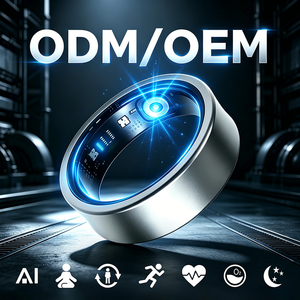
AI Sleep Analytics
SpO2 PPG
Aero Alloy
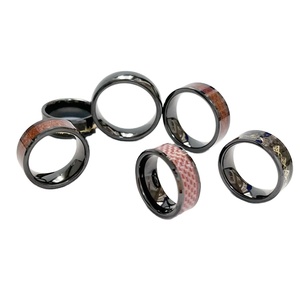
Pre-validated base platforms built with hypoallergenic medical ceramics, aerospace titanium, and 316L medical stainless steel. Available for private-label engraving, SDK application tailoring, and rapid mass deployment.
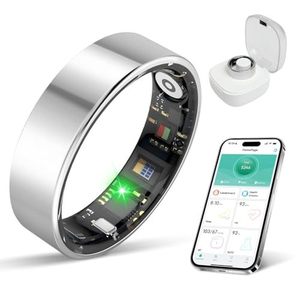
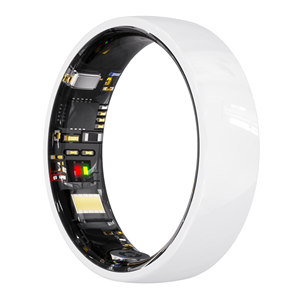
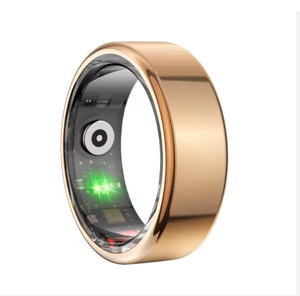
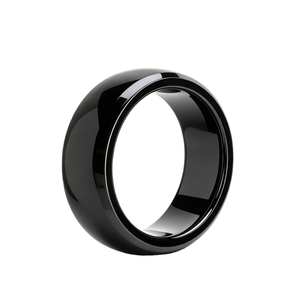
A technical breakdown of how factory-level manufacturing overcomes the physical constraints of smart ring mass production.
In consumer electronics, achieving true IP68 and 5ATM (50 meters hydrostatic depth rating) in a finger-worn form factor presents unique engineering hurdles compared to traditional smartwatches. Smart rings cannot utilize conventional elastomeric gaskets due to internal circumference limitations (typically ranging between inner diameters of 16.5mm to 22.3mm). As a certified OEM/ODM manufacturing factory, our cleanrooms deploy secondary high-pressure epoxy and resin-backfill under high-vacuum encapsulation chambers.
This automated resin-poured potting process eliminates micro-air pockets across the multi-layer flexible PCB (FPCB), hermetically locking the Nordic Semiconductor Bluetooth Low Energy (nRF52840 / nRF5340) chipset, crystal oscillators, and optical sensor modules against ionic water infiltration, sweat salinity erosion, and thermal shock during sub-aquatic sports. Each production batch undergoes rigorous chamber vacuum bubble leakage testing followed by continuous static water column pressure testing at 0.5 MPa (5 Bar) in compliance with EN 60529 and ISO 22810 standards.
CE Certification for a waterproof smart ring demands stringent electro-magnetic compatibility (EMC) and Radio Spectrum Efficiency. Encasing an RF antenna inside metallic or conductive housings (such as 316L medical stainless steel or titanium alloy) naturally attenuates RF transmissions. Our Shenzhen engineering lab integrates customized miniature ceramic patch antennas with high-permeability ferrite shielding sheets positioned radially behind the outer metallic shell. This guarantees stable BLE 5.2/5.3 data throughput up to 10 meters line-of-sight while complying with CE SAR (Specific Absorption Rate) EN 50566 safety thresholds, mitigating tissue absorption and maximizing radiation efficiency.
Leveraging 15+ years of embedded wearable hardware excellence from the hardware capital of Shenzhen.
Equipped with 8 high-speed automated Surface Mount Technology (SMT) lines and class-10,000 dust-free encapsulation workshops, supporting 01005 passives and ultra-fine-pitch BGA micro-placement with full in-line AOI optical inspection.
We supply authentic, laboratory-verified Test Reports and Declarations of Conformity (DoC) across CE RED, RoHS 2.0 (lead, cadmium, phthalate restriction), FCC Part 15C, and REACH chemical safety directives for unhindered worldwide customs clearance.
Accelerate your time-to-market. Turn around custom logo laser marking, firmware GUI parameters, bespoke BLE broadcast payloads, and specialized ring size gauge sample kits in as few as 7 business days from brief sign-off.
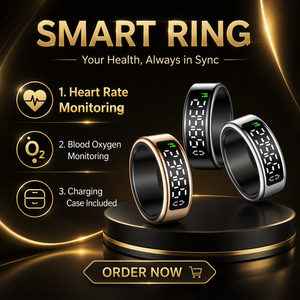
Every bio-tracking ring incorporates high-precision dual green and red wavelength photoplethysmography (PPG) optical clusters with continuous photodiode compensation, achieving high correlation against medical-grade ECG and pulse oximeter benchmarks.
Full-stack customization: We provide white-label Android/iOS mobile applications, native Apple HealthKit & Google Health Connect sync APIs, proprietary cloud server infrastructure, or raw Bluetooth GATT SDKs for enterprise platform integration.
Eliminate upfront inventory overextension with our flexible baseline MOQ starting from 200 units for standard housing variants. Scale smoothly up to containerized shipments of 100,000+ units monthly backed by deep component buffer stocks.
Actionable market data to assist supply chain managers, brand directors, and consumer tech buyers in planning upcoming product cycles.
Procurement teams are shifting away from traditional 15mAh pin-style cells toward curved, solid-state and high-density lithium polymer chemistries (20mAh to 25mAh). These deliver 7 to 9 days of untethered biometric logging on a single 30-minute inductive charge cycle, reducing return rates attributed to battery wear.
The convergence of biometrics with secure elements (SE) and NFC payment tokenization (EMVCo certification) represents the fastest-growing enterprise purchasing segment. Buyers are increasingly sourcing hybrid rings combining passive ISO 14443A access control with active physiological tracking on a single band.
Future wholesale tenders require on-device TinyML machine learning engines running lightweight neural networks directly on Cortex-M33 microcontrollers. This allows autonomous detection of atrial arrhythmias, sleep apnea events, and early circadian phase shifts without relying entirely on constant mobile cloud processing.
Clear, direct specifications on order minimums, testing procedures, sizing matrices, and software architecture.