Featured Next-Gen AI Wearables & Smart Biometric Devices
From micro-acoustic hearables to medical-grade sub-millimeter smart health rings, our Shenzhen SMT facilities produce low-power, BLE 5.3/5.4 connected wearable ecosystems engineered for seamless private-label integration.
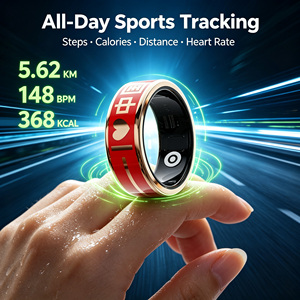
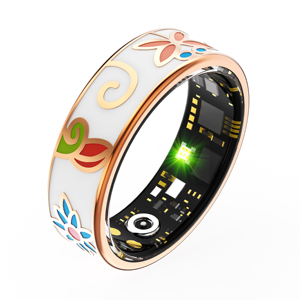
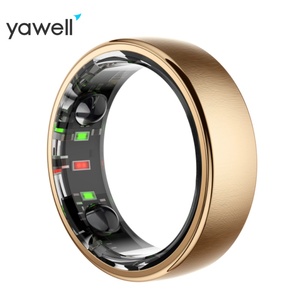
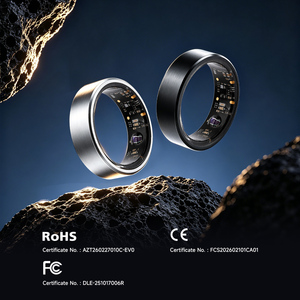
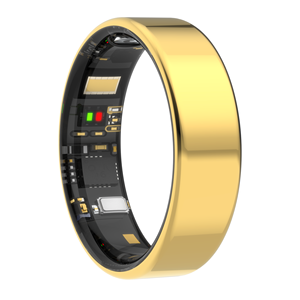
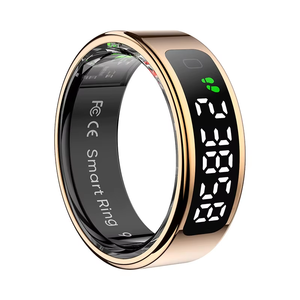
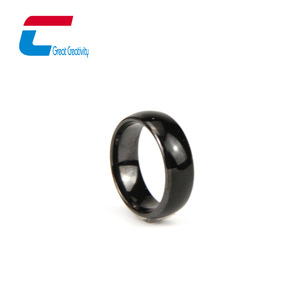
Ceramic Smart NFC Ring for Car Model 3 Y S X Wearable Finger Smart Ring Car Keys
Years Manufacturing Experience (Est. 2008)
Fully Automated High-Speed SMT Lines
Annual Units Wearable Production Capacity
Low Barrier OEM MOQ for Scalable Brands
Navigating the China Wholesale AI Earbuds & Hearables Manufacturing Matrix
The global audio landscape has breached the tipping point: legacy Bluetooth earphones that merely stream compressed SBC/AAC stereo audio are rapidly becoming commoditized relics. Procurement teams, electronics distributors, and enterprise consumer tech brands are pivoting toward a unified ecosystem: Edge-AI-Powered Earbuds (Hearables) and Complementary Micro-Biometric Smart Wearables. Sourcing high-precision acoustic hardware equipped with neural processing units (NPUs), multi-microphone beamforming arrays, bidirectional low-latency translation models, and continuous PPG biometric telemetry requires moving far beyond generic consumer trading companies.
Shenzhen Tucks Technology Co., Ltd. (operating since 2008 from Nanshan District, Shenzhen) represents the vanguard of this transition. By synthesizing advanced acoustic electro-mechanics, high-density Surface Mount Technology (SMT), and on-device machine learning inference, our manufacturing ecosystem provides B2B buyers with direct engineering ownership over their product roadmaps. This technical dossier dissects the procurement methodologies, acoustic engineering thresholds, firmware architectures, and compliance benchmarks required to dominate the global AI earbud market in 2025 and beyond.
"Procuring AI hearables is not merely an audio procurement challenge—it is an edge-computing, radio-frequency, and micro-power management undertaking. Factory-direct engineering transparency is the only bulwark against high RMA rates and software obsolescence." — Tucks Chief Acoustic Systems Architect
Architectural Anatomy: Dual-Core DSPs, On-Device AI, and Hybrid Acoustic Chambers
In classical True Wireless Stereo (TWS) manufacturing, an audio system-on-chip (SoC) executed primitive digital signal processing: equalization, basic codec decoding, and fixed-coefficient Active Noise Cancellation (ANC). Modern AI earbuds, conversely, mandate a Heterogeneous Dual-Core or Multi-Core Architecture. Our production lines integrate flagship microchips (such as Bestechnic BES2700-series, Qualcomm S5 Gen 2 Sound Platforms, and Realtek AI-enhanced Bluetooth SoCs) that combine an ultra-low-power ARM Cortex-M core with a dedicated Tensilica HiFi DSP and a sub-watt Neural Processing Unit (NPU).
This silicon framework allows the earbud to run localized TinyML models directly at the network edge. Instead of routing raw microphone audio to a paired smartphone or a remote cloud server—which incurs 800ms to 2.5s of latency and consumes vast cellular bandwidth—our AI earbuds perform Deep Neural Network (DNN) Voice Isolation directly on the silicon. Ambient background babble, wind shear, and industrial noise are separated in real time with sub-15ms processing latency, feeding clean vocal phonemes into on-device or cloud-bridged Large Language Model (LLM) agents (including OpenAI GPT-4o, Anthropic Claude, and proprietary multilingual translation APIs).
Acoustic Transducer Engineering: Balancing Dynamic Transients with Driver Integrity
Factory-level acoustic design requires uncompromising mechanical precision. Tucks integrates Diamond-Like Carbon (DLC) coated diaphragms, Beryllium-plated composites, and custom-tuned balanced armature (BA) hybrid drivers within sub-miniature acoustic back-chambers. Our CNC tooling tolerances are held within ±0.02mm to ensure cavity resonance remains linear across the 20 Hz to 40 kHz frequency band, qualifying client models for Hi-Res Audio Wireless certification (LDAC and LHDC codec pipelines).
Every batch coming off our automated production lines undergoes sweeping electro-acoustic verification on Audio Precision APx555 analyzers and Bruel & Kjaer Type 4128-C Head and Torso Simulators (HATS). We enforce rigid manufacturing thresholds: Total Harmonic Distortion (THD+N) must remain strictly under 0.5% at 1 kHz / 94 dB SPL, and channel balance matching between left and right earbuds is held to within ±0.8 dB across the core vocal spectrum.
Key Sourcing Trends Reshaping AI Earbuds & Smart Wearables (2025–2030)
Strategic supply chain directors must anticipate technological disruption before placing mass manufacturing orders. These four megatrends define next-generation smart micro-wearable procurement.
Low-Latency Multilingual Live Translation
Global procurement is shifting toward earbuds that double as synchronous interpretation consoles. Our factory firmware supports hands-free face-to-face dialogue translation across 45+ languages, integrating bone-conduction VPU (Voice Pick-Up) sensors to isolate the wearer's speech vibrations from cross-talk in loud public spaces.
Hearable & Smart Ring Ecosystem Fusion
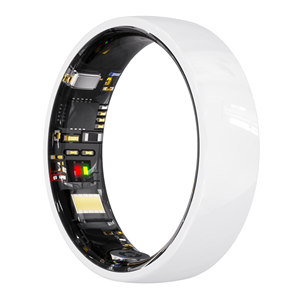
Consumer brands are bundling smart rings with AI earbuds. Earbuds provide real-time audio coaching and voice assistance during exercise, while sub-3g ceramic smart rings (such as our R20 and TK8Pro series) handle continuous 24/7 heart rate variability (HRV), skin temperature, and sleep staging, synchronizing data into a single brand-owned white-label app.
BLE 5.4, LC3 Codec & Auracast Broadcast
Bluetooth Low Energy Audio (LE Audio) is standardizing low power draw with higher fidelity. By integrating the LC3 compression standard, our OEM hardware achieves up to 40% reduction in battery consumption alongside Auracast location-based broadcasting for shared museum tours, gym televisions, and airport transit audio.
Photoplethysmography (PPG) in the Ear Canal
Because the auditory canal features dense vascularization close to the surface, earbud-integrated optical sensors yield signal-to-noise ratios far superior to wrist wearables. We engineer custom micro-flex PCB assemblies housing miniaturized dual-wavelength emitters and photodetectors for medical-grade continuous core biometric capture.
Edge Privacy & Secure Enclave Architecture
With corporate buyers deploying AI wearables for confidential business dictation and enterprise transcription, privacy compliance (GDPR, CCPA, HIPAA) has become critical. Our hardware utilizes cryptographic secure enclaves on chip, preventing voice payload snooping and ensuring encrypted transmission between device and cloud endpoints.
Sustainable Materials & Circular Supply Chains
Tier-1 Western retailers now mandate verified PCR (Post-Consumer Recycled) polymers, bio-compatible ceramic composites, and conflict-free cobalt supply chains. Our factory holds ISO14001 environmental certification, delivering RoHS and REACH compliant bill-of-materials alongside zero-plastic unboxing packaging architectures.
Technical Benchmarks: AI Audio & Smart Wearable Hardware
Use this specification blueprint to evaluate component grades, acoustic thresholds, and radio frequency performance prior to initiating sample fabrication.
| Subsystem | Enterprise Standard Specification | Tucks Factory Execution | Target B2B Application |
|---|---|---|---|
| Core DSP & NPU | Dual-Core 32-bit ARM + 500 DMIPS Audio DSP | BES2700 / Qualcomm S5 Embedded TinyML Engine | Real-time voice isolation & AI translation |
| Acoustic Drivers | 10mm–13mm Composite Diaphragm (DLC / Titanium) | Custom hybrid dual-driver, 20Hz–40kHz, THD < 0.5% | Hi-Res Audiophile & Enterprise Communication |
| Active Noise Cancellation | Hybrid Feedforward + Feedback (-35dB to -48dB) | Adaptive real-time scene filtering (6-mic array + VPU) | Aviation, corporate commuting & open office |
| RF & Wireless Protocol | Bluetooth 5.3 / 5.4 + BLE Audio (Auracast) | LDS / FPC Laser Direct Structuring 3D Antenna | Ultra-stable 15m range, zero dropouts |
| Biometric Telemetry | Dual-Wavelength PPG Photodiodes + 3-Axis Accel | PPG module for HR, SpO2, stress, and sleep analytics | Health insurance, fitness & senior monitoring |
| Ingress Protection | IPX4 to IPX8 / 5ATM Water Resistance | Plasma nano-coating & ultrasonic chamber bonding | Intense athletics, swimming & rain protection |
| Battery & Charging | High-energy density Li-Po (C-rate 3C quick charge) | UL1642 / UN38.3 certified cell, 8h + 32h battery case | All-day commercial and travel duty cycles |
Why Tier-1 Brands Trust Shenzhen Tucks Technology Co., Ltd.
For over 15 years, our Shenzhen manufacturing facility has eliminated middlemen, providing international buyers with uncompromised engineering depth, rapid product iterations, and ironclad export compliance.
In-House SMT & Automated Production
Unlike trading entities that broker orders, Tucks operates 8 high-speed SMT lines, automated optical inspection (AOI), X-ray BGA inspection, and Class 10,000 dust-free acoustic assembly workshops yielding an annual output of over 2,000,000 wearable units.
Turnkey White-Label & Firmware Customization
We deliver complete private-label branding beginning at an industry-low MOQ of 200 units per model. Customization encompasses laser-etched logos, bespoke charging vault aesthetics, multilingual voice prompts, companion iOS/Android white-label apps, and raw SDK/API access for enterprise platform integration.
Global Regulatory & Export Compliance
Our facility operates under an audited ISO9001:2015 Quality Management System. All shipped products carry comprehensive CE (RED), FCC (Part 15C), RoHS, REACH, and BQB Bluetooth SIG certificates, ensuring immediate clearance through European, North American, and Asia-Pacific customs regimes without compliance friction.
Accelerated 7-Day Prototyping Cycle
Time-to-market is the fundamental differentiator in consumer electronics. Our vertical integration allows functional evaluation samples—complete with your custom logo, firmware configuration, and retail packaging mockups—to be dispatched within 7 business days, followed by 15–25 day bulk delivery timelines.
Comprehensive In-House Stress Lab
Every design iteration is subjected to rigorous qualification protocols: 10,000-cycle charging port insertions, drop tests from 1.5 meters onto concrete, 96-hour salt-spray corrosion chambers for sweat resistance, and thermal shock testing ranging from -20°C to +60°C to guarantee negligible return rates for overseas distributors.
Direct Access to Senior System Architects
Avoid bureaucratic delays and communication distortions. Our international business desk interfaces directly with senior firmware, acoustic, and RF engineers. Your technical requirements are translated immediately into production engineering briefs, eliminating costly iteration errors.
Frequently Asked Questions for B2B Hearable & Wearable Importers
Clear, authoritative technical answers addressing commercial terms, customization limits, intellectual property, and quality control procedures.
What is the actual minimum order quantity (MOQ) for custom OEM AI earbuds and smart rings?
Standard white-label programs featuring custom laser logo branding, custom silk-screened charging cases, and localized packaging begin at an accessible MOQ of 200 pieces per SKU. For bespoke industrial tooling (custom acoustic molds, proprietary ring exterior housings, or deep firmware architecture modifications), MOQ requirements generally scale to 1,000–3,000 units depending on raw material sourcing and tooling fabrication costs.
How does Tucks manage AI model integration and API latency in smart audio products?
Our firmware supports hybrid deployment models. For instantaneous voice command recognition and deep noise filtration, lightweight neural network algorithms run directly on the DSP/NPU silicon on-device. For high-order generative AI (e.g., live dialogue translation, meeting summary synthesis, conversational assistants), our BLE stack streams low-latency compressed audio to the companion mobile application, which connects via secure TLS endpoints to OpenAI, Claude, DeepSeek, or your enterprise server.
What quality control milestones occur before bulk shipments depart your Shenzhen plant?
We employ a rigid four-stage inspection protocol: Incoming Quality Control (IQC) on raw driver diaphragms, microchips, and battery cells; In-Process Quality Control (IPQC) along automated SMT solder pasting and assembly; 100% End-of-Line testing using Audio Precision acoustic sweep analyzers and RF shielding chambers; and Outgoing Quality Control (OQC) inspecting according to AQL 0.4 / 1.0 standards with full burn-in and battery aging cycles.
How do you guarantee lithium battery safety and international shipping compliance?
Battery integrity is paramount in wearable technology. Every lithium-ion pouch cell and coin cell integrated into our hearables and smart rings features dual Seiko IC protection circuits preventing over-charging, over-discharging, and short-circuiting. All production batches are documented with UN38.3 test summaries, MSDS dossiers, IEC 62133 certifications, and sea/air transport safety declarations for frictionless global freight handling.
Can you provide custom companion mobile applications for our private-label brand?
Yes. We deliver complete turn-key software support. You can choose our fully white-labeled iOS and Android applications, which are re-skinned with your visual identity, app logo, and privacy agreements, ready for submission to the Apple App Store and Google Play Store. Alternatively, we supply comprehensive Bluetooth Low Energy SDK libraries and REST API documentation if your internal development team chooses to build a custom application from scratch.
What are your standard mass production lead times and sample delivery timelines?
Following requirement confirmation and artwork finalization, functional samples configured with your firmware parameters and custom branding are shipped within 7 business days via DHL/FedEx. Mass production lead times generally range between 15 and 25 calendar days, contingent on order volume and custom mold availability. Reorders with locked bills-of-materials can achieve expedited dispatch windows.
Initiate Your Custom AI Audio & Wearable Project Today
Connect directly with our Shenzhen engineering and procurement division. Receive a comprehensive bill-of-materials (BOM) breakdown, acoustic compliance analysis, and a transparent pricing quotation within 24 business hours.