Connected Wearable Devices & Navigation Micro-Controllers
State-of-the-art hands-free navigation relies heavily on micro-interaction peripherals, sensory rings, and intelligent haptic feedback controllers. Explore our verified export hardware line ready for custom white-label deployment.
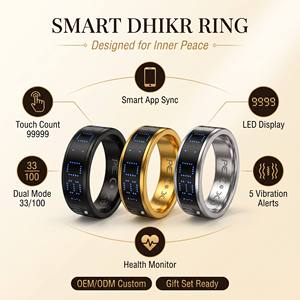
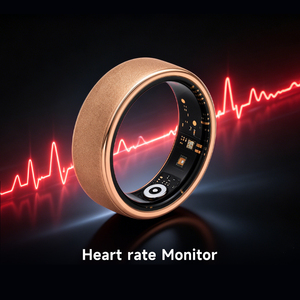
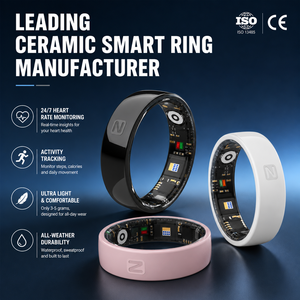
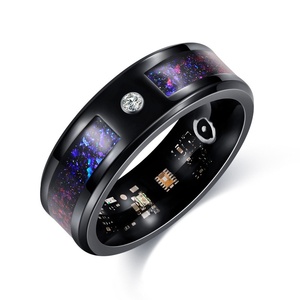
Enterprise Advantages: Why Global Tier-1 Importers Choose Tucks
Shenzhen Tucks Technology Co., Ltd. eliminates third-party trading markups by offering direct access to cleanroom SMT lines, proprietary optical alignment laboratories, and embedded firmware customization.
Optical Waveguide Precision
Proprietary micro-machining and automated optical axis calibration for diffractive surface relief (SRG) and geometric reflective waveguides, ensuring zero parallax error and crystal-clear turn-by-turn navigation graphics.
Multi-GNSS Dead-Reckoning
Integration of ultra-low power dual-frequency GPS/BDS/Galileo/GLONASS positioning modules paired with high-performance 9-axis MEMS IMU sensors for continuous urban canyon navigation where standard GPS signals fail.
Turnkey Global Compliance
Comprehensive regulatory engineering backing: every production lot is fully compliant with CE-RED, FCC Part 15, RoHS 2.0, REACH, BQB, and UN38.3 lithium battery transport safety documentation ready for rapid customs clearance.
Technical Whitepaper: Engineering Architecture of Navigation Smart Glasses
As consumer demand shifts from smartphone screens to ambient visual ergonomics, smart glasses with navigation have emerged as the fastest-growing wearable computing category. According to industrial procurement benchmarks, the transition from conventional Bluetooth audio eyewear to heads-up display (HUD) navigational systems requires resolving three fundamental engineering trade-offs: optical display transparency under outdoor illuminance, real-time inertial positioning without smartphone thermal throttling, and ergonomic weight distribution below the critical 50-gram comfort threshold.
At Shenzhen Tucks Technology Co., Ltd. (operating since 2008 with ISO9001:2015 certification and 8 cleanroom SMT lines), our optical engineering department focuses on solving the systemic pain points that B2B brand owners, government procurement teams, and cross-border hardware importers encounter when sourcing smart eyewear from China.
1. Optical Engine & Waveguide Architectures: Micro-OLED vs. Micro-LED
The visual engine represents approximately 40% of the overall bill of materials (BOM) cost in augmented visual navigation glasses. When evaluating wholesale suppliers, procurement officers must understand the mechanical and photonic characteristics of the two primary optical architectures currently dominating China's export pipeline:
| Evaluation Parameter | Micro-OLED + Freeform / BirdBath | Micro-LED + Diffractive Waveguide | Monocular HUD Audio-Visual |
|---|---|---|---|
| Luminous Efficiency | 1,500 – 3,000 Nits (Optic exit) | 100,000+ Nits at source (~1,000-2,000 Nit eye level) | 400 – 800 Nits (Turn-indicator LED) |
| Optical Transparency | 35% – 50% (Tinted sunglasses required) | 85% – 92% (True transparent clear lens) | 95%+ (Peripheral projection) |
| Power Consumption | 1.2W – 2.0W (Requires 300mAh+ battery) | 350mW – 650mW (Optimized for all-day cycling) | 120mW – 200mW (Multi-day standby) |
| Total Frame Weight | 65g – 85g (Front-heavy frame) | 38g – 48g (Resembles standard prescription specs) | 32g – 39g (Ultralight TR90 alloy) |
| Primary B2B Application | Immersive 3D AR, Enterprise Inspections | Urban Pedestrian Wayfinding, Cycling HUD | Micromobility, Delivery Logistics & Audio |
For high-volume retail and consumer e-commerce brands, diffractive optical waveguides utilizing monocrystalline silicon Micro-LED engines offer the ultimate sweet spot: they maintain high light transmittance so users can navigate busy pedestrian intersections without peripheral vision loss, while weighing under 45 grams.
2. Navigation Engines: GNSS Hardware vs. BLE Dead-Reckoning Forwarding
A frequent dilemma in smart eyewear engineering is whether to embed standalone GNSS (GPS/BDS/Galileo) receiver chipsets directly within the eyewear temple or utilize low-latency Bluetooth LE 5.3 data piping from a host smartphone or companion peripheral.
- Embedded Standalone GNSS Architecture: Incorporates a dedicated ultra-compact GNSS patch antenna inside the right temple. This allows total independence from mobile phones, making it ideal for outdoor trail runners, cyclists, and municipal field workers. However, continuous satellite acquisition drains battery reserves within 3.5 to 5 hours.
- PDR (Pedestrian Dead Reckoning) + Smartphone Assisted SDK: By streaming vector coordinates via BLE and using the smart glasses' built-in 9-axis IMU (gyroscope, accelerometer, magnetometer), our proprietary firmware interpolates step cadences, heading changes, and turn angles. This dual-engine pipeline extends battery life to beyond 14 hours on a single charge while eliminating satellite lock-up delays in subways and urban canyons.
3. Companion Wearables: The Hands-Free Interaction Paradigm
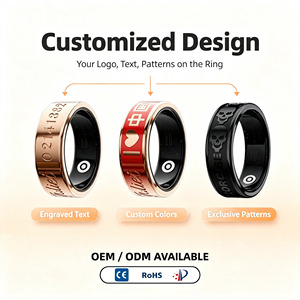
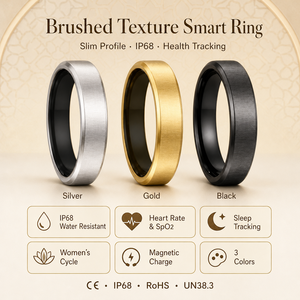
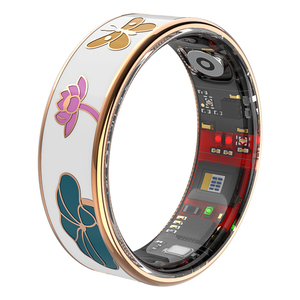
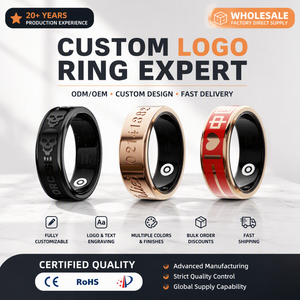
Touching or tapping the temple of smart glasses while cycling, driving, or carrying equipment creates safety hazards and social friction. As highlighted in our product catalog above, Tucks integrates micro-wearables—such as the Gesture Matte Smart Ring and RFID Sensor Ring—as dedicated low-latency remote controllers for smart glasses with navigation. With subtle thumb-to-index finger gestures, users can switch navigation map layers, dismiss turn-by-turn prompts, accept acoustic calls, or zoom into route overviews without lifting an arm.
Global Procurement Trends in Smart Navigation Eyewear (2025 – 2030)
Procurement directors and product managers sourcing from China must prepare for several structural shifts occurring across the supply chain:
- Multi-Modal AI LLM Integration: Modern navigation glasses are no longer passive display conduits. By marrying camera vision modules with generative speech models, glasses can inform users: "Turn left past the brick cafe with the green awning" instead of merely indicating "Turn left in 50 meters."
- Prescription Lens Modularity: Traditional AR glasses suffered high return rates because 60% of the adult population requires vision correction. Export-ready smart glasses now incorporate magnetic prescription inserts or direct robotic lens edging services within Shenzhen optical labs.
- Acoustic Privacy and Spatial Directionality: Open-ear acoustic leak reduction has leaped forward through reverse-phase sound cancellation chambers, ensuring navigational directions remain private to the wearer even in crowded elevators or quiet transit coaches.
- Supply Chain Consolidation: Discerning European and American buyers are bypassing assembly workshops in favor of integrated original design manufacturers (ODMs) possessing in-house surface-mount technology (SMT) lines and optical alignment fixtures to avoid quality drift between sample batches and mass production.
Turnkey 5-Stage OEM/ODM Manufacturing Workflow
From initial optic simulation and industrial design (ID) rendering to cleanroom SMT assembly and customs clearance documentation, our standardized protocol ensures on-time delivery.
Optical & ID Definition
Optical field-of-view (FOV), waveguide selection, IP rating, weight constraints, and industrial styling alignment within 48 hours.
Rapid Prototyping
Functional 3D-printed SLA/CNC engineering sample with active display and BLE firmware deployed in 7 to 10 days.
SMT & Tooling Release
High-precision PCB tooling, component booking, steel mold fabrication for TR90/aluminum temples, and pre-production trial.
Automated Cleanroom Mass Assembly
Micro-soldering on 8 SMT lines, automated optical alignment, RF spectrum calibration, and 100% waterproof testing.
QC & Global Logistics
48-hour continuous burn-in test, drop/hinge life cycling, CE/FCC export declaration, and direct DDP shipping worldwide.
Frequently Asked Questions for B2B Importers
Detailed technical, commercial, and regulatory guidance for purchasing managers shortlisting Chinese smart eyewear manufacturers.
What is the standard MOQ for customized smart navigation glasses?
For standard white-label orders with custom laser logos, branded packaging, custom boot screens, and companion app colorways, our minimum order quantity starts at just 200 units. For complete ODM projects involving proprietary industrial frame molds, custom optical waveguides, or dedicated PCB board spins, typical MOQs range from 1,000 to 2,000 units depending on component lead times.
How do the smart glasses receive turn-by-turn navigation data?
We provide comprehensive mobile SDKs for both iOS and Android. The smart glasses connect via Bluetooth Low Energy (BLE 5.2 / 5.3) to retrieve turn-by-turn coordinates, distance indicators, arrows, and speed limits from Mapbox, Google Maps, or your proprietary navigation app. For enterprise warehouse logistics, we can provide custom raw UART/BLE API documentation for direct integration with ERP systems.
How do you ensure outdoor optical visibility under bright sunlight?
Standard indoor displays wash out when ambient light reaches 50,000 to 100,000 lux on a sunny day. Our smart navigation glasses combat this using high-luminance Micro-LED projection engines delivering up to 1,500 nits directly to the pupil, coupled with electrochromic or photochromic outer lenses that automatically tint in UV light to preserve contrast without obscuring vehicle traffic.
What certifications are provided for EU and US market entry?
All exported models undergo stringent laboratory certification under ISO9001 quality controls. Standard shipments include valid CE-RED (Radio Equipment Directive), FCC ID Part 15C certification, RoHS 2.0 heavy metal compliance, REACH SVHC declarations, and UN38.3 plus MSDS flight safety test certificates for the internal lithium polymer batteries.
Can prescription (Rx) lenses be fitted to navigation glasses?
Yes. We manufacture magnetic snap-on prescription inner frames that accept standard optical lab lenses (from -8.00D to +4.00D with astigmatism correction). Additionally, for select optical models, we offer factory-direct customized lens fitting through our partnered optical edging facility before final cleanroom encapsulation.
What is the operational battery life during active GPS guidance?
Depending on the hardware configuration: our monocular HUD cycling glasses equipped with dual 110mAh balanced batteries deliver 8 to 12 hours of continuous turn-by-turn navigation and acoustic guidance. Waveguide models operating in hybrid intermittent flash mode achieve full-day (14+ hours) operational standby with over 4.5 hours of continuous active optical projection.
Factory Verification: Shenzhen Tucks Technology Co., Ltd.
Choosing an overseas manufacturing partner requires absolute clarity regarding physical production assets, engineering headcounts, and intellectual property safeguards. Shenzhen Tucks Technology Co., Ltd. operates a high-precision smart wearable manufacturing facility based in Nanshan and Bao'an districts of Shenzhen—the Silicon Valley of global smart hardware.
| Audit Dimension | Verified Factory Specification | Buyer Procurement Benefit |
|---|---|---|
| SMT Surface Mount Capacity | 8 Yamaha & Panasonic high-speed cleanroom lines | Direct control over PCB yield; prevents unauthorized sub-contracting |
| Cleanroom Standards | Class 10,000 optical dust-free encapsulation workshop | Zero micro-dust specks on optical waveguides or camera sensor covers |
| Firmware & Software R&D | 35+ in-house embedded C/C++, DSP audio, and Android/iOS engineers | Rapid custom SDK, Bluetooth stack tuning, and cloud API development |
| Quality Management System | ISO9001:2015 certified; multi-stage IPQC, FQC, and OQC testing | Rigorously tracked defect rates below 0.3% across mass production lots |
| Reliability Testing Lab | Micro-vibration, salt spray, thermal shock (-20°C to 60°C), IP68 water tank | Ensures commercial durability in European rainy climates and Middle East heat |
Whether you represent an established outdoor sports label launching an AR cycling glasses line, a consumer electronics distributor broadening into smart audio-visual eyewear, or an enterprise software developer seeking customized navigation hardware, our engineering team provides end-to-end support from rapid tooling to global door-to-door logistics.
Launch Your Branded Smart Navigation Glasses Today
Speak directly with our senior hardware engineers and international export managers. Receive technical datasheets, optical whitepapers, and tailored volume price quotations within 24 hours.