Flagship AI Micro-Wearable & Smart Audio Hardware
Explore our production-ready OEM baseline models. Featuring aerospace-grade titanium, custom bio-sensor arrays, edge AI algorithms, and ultra-compact acoustic driver modules ready for rapid white-label customization.
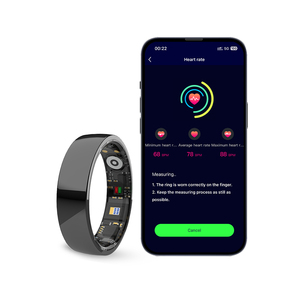
Smart Ring Blood Pressure AI Analysis Heart Rate Sleep 128 Multisports HRV Fitness Tracker APP Smart Rings 2026
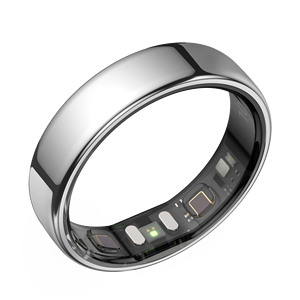
6mm Wide ultra Lightweight Smart Health Ring with AI Health Analysis and Heart Rate Monitoring for Activity Tracking
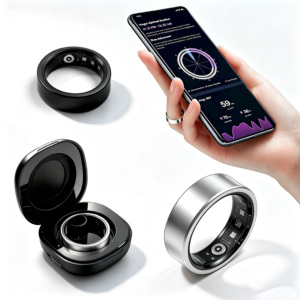
SHR Health Care Ring Smart AI Analysis Heart Rate Sleep Activity Multisports Fitness Tracker App Control Titanium Alloy K3 Smart
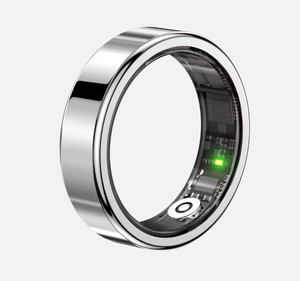
Smart Ring, White, Scratch-Resistant and Waterproof, NFC Payment, Health Monitor, Women's Fashion Accessory
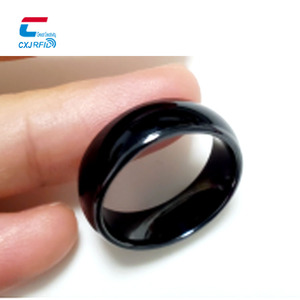
Custom Smart Ring Social Media Payment Ntag216 Nfc Ring Wearable Nfc Mobile Phone Ceramic Nfc Ring
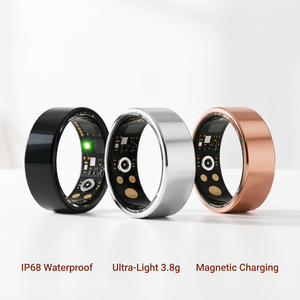
Smart Ring App Control IP68 Waterproof Aluminum Alloy Bar Magnetic Charging Case USB Health Tracking 3-5 Days Battery Life 18mAh
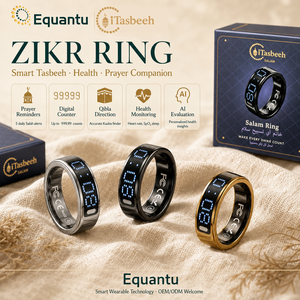
Zikr Ring Muslim New Counting Ring Azan Reminder Counter Blood Oxygen Heart Rate Monitoring Sleep Analysis Tasbeeh Counter
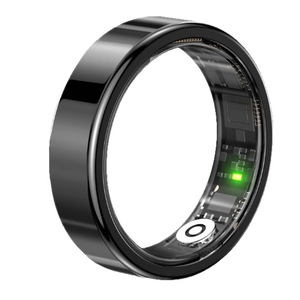
Bluetooth Couple Smart Ring Steel Wearable 5 Day Battery Sleep Heart Rate Blood Oxygen for Lovers Jewelry Factory Oem Odm
Industrial Scale Direct from Shenzhen: Precision SMT to Anechoic Audio Testing
In the high-stakes arena of AI hearables and micro-wearables, factory ownership and direct engineering oversight separate sustainable private-label brands from unstable operations. Operating from Shenzhen’s core high-tech corridor, Shenzhen Tucks Technology Co., Ltd. provides an integrated manufacturing sanctuary engineered to support international B2B clients, regional consumer audio distributors, and tech enterprises across 30+ countries.
Micro-SMT & SiP Assembly
Our 8 high-velocity SMT lines deploy Yamaha and Panasonic modular placement systems capable of 0201 passive mounting, ultra-dense micro-BGA packages, and System-in-Package (SiP) architectures. By keeping PCB layout, paste inspection (3D SPI), and automated optical inspection (AOI) strictly in-house, we eliminate signal degradation and inter-batch variability in RF and audio traces.
Acoustic Chamber Validation
Every audio design is calibrated inside full-size anechoic chambers utilizing Audio Precision (APx555) analyzers and Brüel & Kjær artificial head simulators. We quantify total harmonic distortion (THD+N < 0.5% across 20Hz–20kHz), passive isolation curves, hybrid active noise cancellation (ANC) phase response, and beamforming signal-to-noise ratios before tooling sign-off.
ISO9001 & Regulatory Mastery
Standard production runs comply with ISO9001:2015 traceability frameworks. Finished consignments depart with fully verified CE, FCC, RoHS, and WEEE documentation. Furthermore, our dedicated regulatory compliance lab facilitates swift BQB (Bluetooth SIG qualification), REACH, and UN38.3/MSDS battery transport certifications, streamlining frictionless customs entry globally.
Acoustic & Hardware Engineering: OEM Comparison Matrix
Procurement teams must distinguish between legacy TWS audio assemblers and advanced AI micro-wearable foundries. The breakdown below details our standard vs. next-generation engineering tolerances.
| Architecture Vector | Legacy Contract Manufacturer | Tucks Custom AI Earbud / Wearable Spec | B2B Strategic Commercial Advantage |
|---|---|---|---|
| DSP & Neural Engine | Generic fixed-function DSP (Audio-only decoding) | Dual-Core HiFi 5 DSP + Dedicated NPU (TinyML on-device inference) | Sub-15ms real-time translation, keyword wake-up, voice biometric isolation |
| Microphone Array | 2x ECM or basic MEMS with omni-capsules | Triple MEMS Array + Bone Conduction VPU (Voice Pickup Unit) | Wind-noise rejection up to 35km/h; crystal-clear LLM voice prompt input |
| Acoustic Transducer | Standard 10mm dynamic driver (Mylar/PET) | Custom 11mm DLC (Diamond-Like Carbon) + Balanced Armature hybrid | Extended 10Hz–42kHz frequency bandwidth; Hi-Res Audio wireless verified |
| Biometric Integration | None or isolated steps tracker | High-SNR Micro-PPG array, continuous SpO2, skin temp monitoring | Single hub health & audio convergence; commands higher retail margins |
| Firmware & Edge SDK | Closed proprietary binary, zero source access | Modular C/C++ SDK, BLE GATT service mapping, open API for companion apps | Complete autonomy to link native enterprise apps, ChatGPT, or custom AI agents |
| Mass Run RMA Rate | Industry average 1.5% – 3.2% | Guaranteed strictly below 0.3% via 100% 4-tier inline automated testing | Drastically lowers channel return liabilities and marketplace account health risks |
Four Operational Cornerstones of Our OEM Programs
From startup innovators securing initial seed runs to multinational retail chains demanding predictable high-volume pipelines, our contracts are backed by concrete manufacturing disciplines.
Rapid Prototyping in 7 Days
Shorten time-to-market dramatically. Utilizing modular tooling architectures, rapid-cure CNC casing materials, and standardized firmware stacks, we deliver fully functional, branded engineering validation samples within 7 business days from brief sign-off.
True White-Label Customization
Customization extends well beyond pad-printing an exterior logo. We provide deep personalization including customized BLE broadcast names, bespoke charging case tooling, laser engraving, multilingual voice prompts, unique DSP acoustic sound profiles, and tailor-made retail packaging.
Scalable 200-Unit Starter MOQs
Mitigate inventory risk and capital exposure. We support emerging tech brands and targeted regional promotions by opening verified factory assembly slots with manageable minimum order quantities from just 200 units, scaling smoothly to 50,000+ monthly shipments.
Disciplined Mass Delivery (15–25 Days)
Supply chain reliability is maintained through dedicated strategic component reserves for critical chipsets (Qualcomm, Bestechnic, Nordic, Realtek). Bulk production orders complete automated SMT, ultrasonic welding, 48-hour burn-in, and full outgoing QC checks in 15 to 25 business days.
Procurement Trends & Technological Evolution in AI Hearables
As auditory devices transition from passive playback peripherals into context-aware ambient computing portals, procurement officers must align their sourcing strategies with three dominant hardware trajectories.
On-Device Generative AI & Low-Latency Translation
The commoditization of legacy Bluetooth audio has forced brand differentiation toward edge AI intelligence. Emerging hearables incorporate ultra-low-power neural processors directly into the earbud casing, enabling multi-language translation, zero-latency meeting transcription, and generative audio summary engines without continuous cloud latency or cellular connectivity dependencies.
In-Ear Continuous Bio-Diagnostic Sensing
The human ear canal offers physiological vascular accessibility superior to the wrist, featuring dense capillary beds free from skin pigmentation interference. Procurement trends show surging demand for dual-purpose hearables equipped with sub-miniature PPG arrays capable of clinical-grade core body temperature monitoring, photoplethysmographic arterial stiffness analysis, and fatigue detection.
Converged Hearable & Smart Ring Symbiosis
Leading consumer brands are abandoning isolated device paradigms in favor of complementary wearable ecosystems. Sub-threshold gesture controls from smart rings (e.g., micro-taps, rotational swipes) are mapped via low-latency Bluetooth LE Audio (LC3 codec) directly to AI earbud agents. Sourcing both product categories under one unified OEM manufacturing roof guarantees unified data structures and companion app coherence.
Frequently Asked Questions for Sourcing Directors
Direct, transparent answers regarding manufacturing contracts, acoustic tooling tolerances, intellectual property security, and international export logistics.
What is your minimum order quantity (MOQ) structure for private-label OEM?
Our standard baseline OEM programs begin at 200 units per model with personalized laser branding, customized firmware device names, and standard factory packaging. Comprehensive ODM customization—such as bespoke industrial injection tooling, custom acoustic driver cavities, or full-scale white-label mobile application development—typically requires an initial volume commitment of 1,000 to 3,000 units depending on the engineering complexity.
How do you safeguard client Intellectual Property (IP) and proprietary algorithm models?
We execute enforceable bilateral Non-Disclosure Agreements (NDAs) prior to receiving any CAD files, acoustic targets, or proprietary AI algorithm code. Firmware flashing occurs in segregated, access-controlled cleanrooms via encrypted automated JTAG programming stations. We do not recycle, redistribute, or showcase proprietary tooling geometries to third-party clients.
Can our engineering team tune the default sound curve and active noise cancellation (ANC)?
Yes. Our electro-acoustic laboratory provides comprehensive DSP parametric equalization (PEQ) mapping. Our senior acoustic engineers collaborate directly with your team via APx555 analyzer export graphs to dial in targeted Harman target curves, bass response profiles, ambient pass-through transparency gains, and custom dual-feedforward/feedback ANC filters tailored to your brand’s auditory identity.
Which international export certifications are pre-cleared for bulk shipping?
All core hardware configurations leave our factory fully validated under CE (RED), FCC ID, and RoHS 2.0 directives. Rechargeable lithium battery cells incorporate UL1642, IEC62133, UN38.3, and verified MSDS documentation essential for both air express and ocean freight clearance. We additionally coordinate Bluetooth SIG (BQB) EPL listings and regional TELEC/KC approvals on request.
What are your lead times from initial functional sample to mass order delivery?
Following brief sign-off and CAD/artwork approval, working functional prototypes with preliminary firmware flashing ship in approximately 7 business days. Upon sample approval and deposit confirmation, standard mass production runs of 1,000 to 10,000 units are completed in 15 to 25 business days, including rigorous 100% battery aging and RF parametric testing.
What quality assurance protocols are implemented to prevent field RMA failures?
Our quality assurance system enforces a strict 4-level gate: incoming material quality inspection (IQC with AQL 0.4), in-process quality control across 8 SMT lines (IPQC via 3D SPI and AOI), 100% acoustic sweep and waterproof pressure chamber testing (FQC), and final random outgoing quality control (OQC). We maintain an audited mass production defective rate well below 0.3%.