Custom OEM AI Earbuds & Smart Wearables Manufacturer
Engineered with Edge AI Acoustic Algorithms, Biometric Tracking, Ultra-Low Power Dual-Chipsets, and Turnkey Private Label ODM Services
15+
Years in Micro-Electronics & Smart Wearables
8
High-Precision SMT Production Lines
2M+
Annual Unit Capacity with ISO9001:2015 QC
30+
Countries Shipped (CE, FCC, RoHS, REACH)
Enterprise Product Catalog: Custom OEM Smart Wearable Nodes
Explore production-tested smart wearables and sensory endpoint hardware designed for seamless firmware bridging, on-device AI integration, and health telemetry capture.
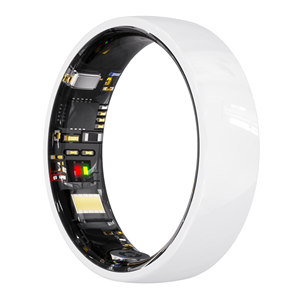
White Ceramic Smart Ring TK8Pro Heart Rate, SpO2 & HRV Monitor IP68
Inquire Now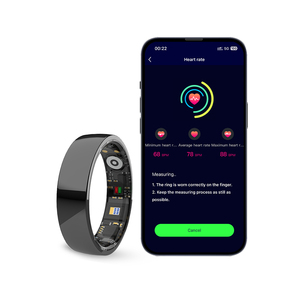
Smart Ring Blood Pressure AI Analysis Sleep HRV Fitness Tracker
Inquire Now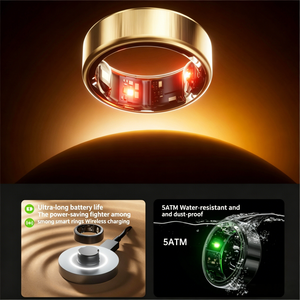
Titanium Alloy Smart Ring Lightweight Waterproof Sleep & Fitness Tracker
Inquire Now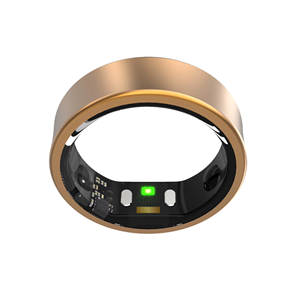
App Control Health Smart Ring R11M Blood Oxygen Sleep Tracking IP68
Inquire Now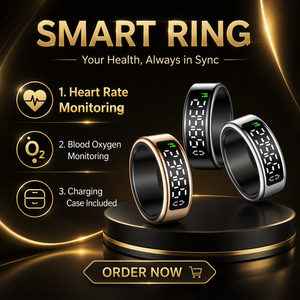
Unisex Stainless Steel Display Health Monitor Smart Ring IP68
Inquire Now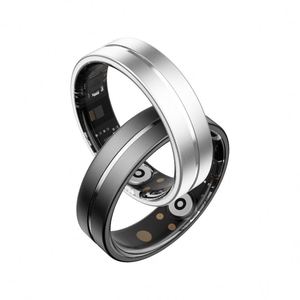
TK7 Multifunctional Smart Ring Voice Touch Control Vibration Alert
Inquire Now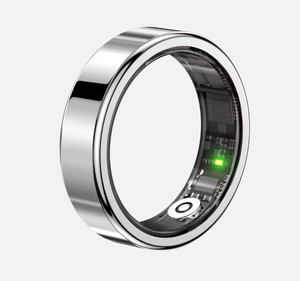
White Scratch-Resistant NFC Payment & Health Monitor Ring
Inquire NowIndustry Deep Dive: The Architectural Shift to Hearable AI Edge Compute
The global ear-worn and micro-wearable computing sector is experiencing a monumental transformation. Where traditional True Wireless Stereo (TWS) earphones focused purely on static audio streaming and passive noise cancellation (PNC), the new generation of OEM AI earbuds represents an intelligent acoustic workstation. As a tier-one custom OEM AI earbuds manufacturer, our engineering ecosystem reconciles the high compute demands of multimodal Large Language Models (LLMs) with the strict constraints of micro-acoustic enclosures, sub-50mAh battery envelopes, and millisecond latency bounds.
Hardware-Level AI Acceleration and System-on-Chip (SoC) Topology
Building high-performance private-label AI earbuds requires moving past monolithic single-core microcontrollers. Modern custom OEM designs utilize an asymmetrical dual-core or tri-core topology combining an ultra-low-power ARM Cortex-M architecture with a dedicated Neural Processing Unit (NPU) and high-fidelity DSP. This architecture allows the device to handle keyword spotting (KWS), voice activity detection (VAD), and contextual biometric sensor fusion on-device without waking the main RF transceiver, extending battery longevity significantly.
Integrated micro-electromechanical systems (MEMS) beamforming microphone arrays, bone conduction vibration sensors, and photoplethysmography (PPG) optical clusters convert the ear canal into a continuous data collection node. In our Shenzhen cleanroom facilities, surface-mount technology (SMT) handles dense component placement down to 01005 metrics, allowing complex acoustic chambers to house high-density multi-layer PCBs alongside balanced armature drivers and custom inductive charging coils.
Real-Time Cloud-Edge Inference & Bidirectional Translation Pipelines
The defining technical parameter of contemporary AI hearables is bidirectional translation latency. When an end-user speaks, our embedded acoustic stack performs real-time beamforming to isolate the vocal signal from ambient noise using DNN-based acoustic filters. The digitized audio packets are compressed through advanced low-complexity communications codecs (such as LC3) and transmitted via Bluetooth 5.3/5.4 LE Audio to a client-branded mobile gateway or direct cellular bridge.
This streamlined pipeline routes the input to hosted neural endpoints (e.g., GPT-4o, Claude, or domain-specific language engines) and returns synthesized, translated audio in under 450 milliseconds. By providing comprehensive SDKs and APIs across iOS and Android ecosystems, our contract manufacturing programs empower corporate clients, enterprise communication providers, and retail brands to ship end-to-end branded AI personal assistants with custom wake words and localized firmware languages.
Direct Shenzhen Factory Strengths: Engineering, Quality Control, and Supply Security
Shenzhen Tucks Technology Co., Ltd. (operating as Tucks) has served as an original equipment manufacturer (OEM) and original design manufacturer (ODM) for smart wearables, smartwatches, AI glasses, and intelligent micro-wearables since 2008. Operating in Shenzhen's hardware heartland, we bridge the gap between abstract firmware concepts and scalable mass assembly.
8 In-House SMT Lines
Equipped with high-precision Panasonic and Yamaha placement machines delivering component mounting accuracy within ±0.025mm for high-density micro-wearable motherboards.
ISO9001:2015 Operations
Standardized multi-tier verification covering incoming component inspection (IQC), in-process quality control (IPQC), RF tuning, and final automated optical testing.
Turnkey Export Compliance
All production batches are accompanied by documented CE, FCC, RoHS, and WEEE test reports, with BQB Bluetooth listing and REACH documentation facilitated on-demand.
Agile MOQ & 7-Day Samples
Flexible evaluation pathways starting at low MOQs of 200 units for standard white-label housings, coupled with 7-day functional rapid prototyping for OEM engineering briefs.
Procurement Trends: What Global Sourcing Directors Must Factor for 2026–2030
Procuring micro-wearables and AI audio hardware requires procurement executives to analyze multi-year component roadmaps, regulatory mandates, and platform shifts. Our production telemetry indicates three macro procurement pivots taking place across European, North American, and Asia-Pacific markets:
1. Decoupling from Closed Big-Tech Stacks
B2B enterprises and consumer brands are moving away from closed ecosystems. Procurement teams increasingly specify white-label hardware capable of directly addressing private self-hosted LLMs, sovereign cloud databases, or enterprise CRM environments without routing voice data through non-compliant consumer servers.
2. In-Ear Clinical Biometric Convergence
The vascular architecture of the human ear canal presents superior signal-to-noise ratios compared to the wrist. Forward-looking sourcing departments are ordering combined acoustic-biometric units featuring continuous core temperature tracking, photoplethysmography (PPG) heart-rate monitoring, and arterial oxygen saturation sensors.
3. Sustainable Metallurgy and Circular Packaging
Regulatory scrutiny around ESG compliance is tightening across the EU and North America. Sourcing mandates increasingly specify recycled aluminum housings, biocompatible medical-grade ceramic coatings, modular charging cradle designs for battery reclamation, and plastic-free unboxing presentations.
Technological Roadmap: The Evolution of Intelligent Audio & Micro-Wearables
Over the next five years, audio hardware development will converge around three critical technological thresholds. Our research and development lab in Shenzhen is actively deploying engineering samples around these specific pillars:
- Solid-State MEMS Micro-Speakers: Moving away from moving-coil dynamic drivers toward silicon MEMS speakers allows sub-millimeter profiles, faster transient response, and zero phase distortion, clearing crucial cubic millimeters inside the earbud enclosure for larger batteries and additional bio-sensors.
- On-Device TinyML Acoustic Anomaly Detection: Moving localized inference models to low-power DSPs allows hearables to detect environmental auditory hazards, industrial machinery failures, and user health distress signals (such as sleep apnea or respiratory strain) without needing cellular connectivity.
- Sub-Millimeter Ceramic and Titanium Metallurgy: Borrowing materials science breakthroughs from our smart ring production lines, future AI earbuds and companion ring wearables will incorporate micro-sintered zirconia ceramics and Grade 5 titanium shielding to maximize durability while maintaining skin-safe hypoallergenic properties.
Frequently Asked Questions: Smart Wearable & Earbud OEM Procurement
Direct technical and operational answers to support your engineering, sourcing, and logistics evaluation.
What is your standard Minimum Order Quantity (MOQ) for custom OEM orders?
For standard white-label projects using our proven acoustic and micro-wearable platforms (including customized laser logo engraving, custom packaging, and custom boot strings), our minimum order quantity starts at 200 units. For full structural ODM projects involving custom tooling, proprietary PCB layouts, or custom silicon housings, our baseline MOQ typically begins at 1,000 to 3,000 units depending on mechanical complexity.
How do you approach acoustic tuning and ANC algorithm customization?
Our acoustic engineers use Bruel & Kjaer artificial head fixtures and SoundCheck analysis platforms inside calibrated anechoic chambers. We provide custom-tailored equalization profiles, adaptive Hybrid Active Noise Cancellation (feedforward + feedback ANC up to -48dB), and wind-noise mitigation algorithms aligned with your specific target listener curves (Harman Target or custom enterprise voice clarity profiles).
Can our engineering team integrate custom cloud AI models or private LLM APIs?
Yes. We offer companion iOS and Android software development kits (SDKs) and open firmware APIs. Whether you are connecting to open AI gateways (such as OpenAI, Microsoft Azure Cognitive Services, Anthropic) or your own internal self-hosted microservices, our companion bridge handles audio packet streaming, encryption, authentication tokens, and return voice playback seamlessly.
What are your typical sampling and mass production turnaround times?
Functional samples configured with your target firmware, language packages, and laser-engraved logos are delivered within 7 business days from brief confirmation. Following sample sign-off and golden sample sign-off, full production runs on our 8 SMT lines are typically completed within 15 to 25 business days, subject to component lead times and factory booking volume.
What quality assurance procedures protect our shipment from DOA risks?
All devices undergo rigorous 100% testing regimes: incoming material screening (IQC), automated surface-mount optical inspection (AOI), battery high-temperature cycle aging, Bluetooth RF attenuation chamber calibration, drop tests, and IPX7/IP68 air-pressure decay water-resistance testing. We adhere strictly to AQL 0.65 Major / 1.0 Minor standards prior to issuing outgoing quality certificates (OQC).
Which international regulatory certifications do your facilities supply?
Production adheres to our ISO9001:2015 quality management structure. We deliver tested and compliant CE (RED), FCC (ID), RoHS, and WEEE documentation ready for customs clearance. Battery packs contain full UN38.3 test summaries, MSDS, and air/sea transport documentation. Additional regional certifications including BQB, REACH, TELEC, and KC can be facilitated rapidly via our accredited laboratory partners.
Launch Your Private Label AI Wearable Line
Consult directly with our Shenzhen engineering specialists. Get comprehensive specification sheets, Bill-of-Materials (BOM) estimates, and reserve your 7-day functional evaluation sample today.