Featured Hardware Platforms & Connected Smart Modules
Explore our field-tested smart wearable and biometric hearable baseline architectures, precision-manufactured under rigorous ISO9001:2015 quality standards for private label deployment.
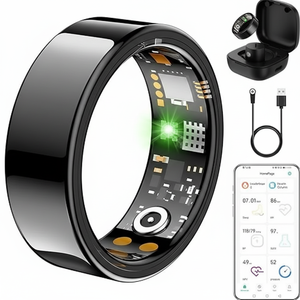
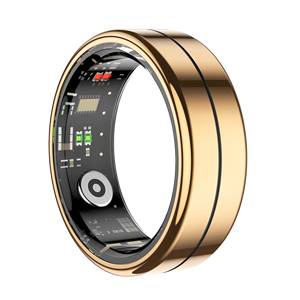
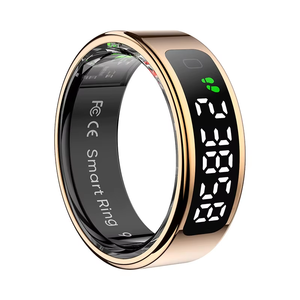
Ring Fitness Body Tracking Trending Location Magnetic Thin Touch Men's Stainless Steel Monitor Timer Odm Smart Ring IP68
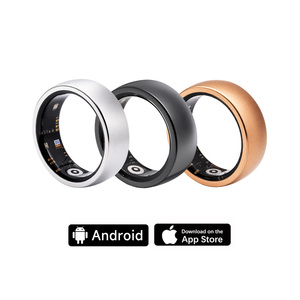
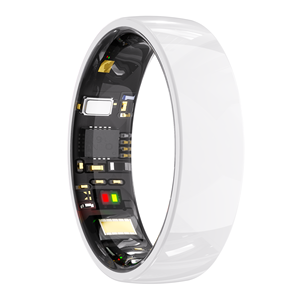
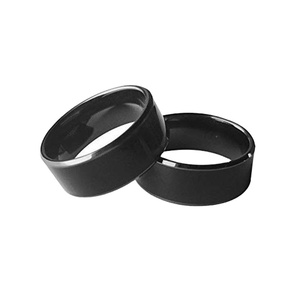
Ceramic Smart Ring with Charging Case Fast Magnetic 10-15 Days Standby Heart Rate Blood Oxygen Sleep Tracker IP68 TK8Pro
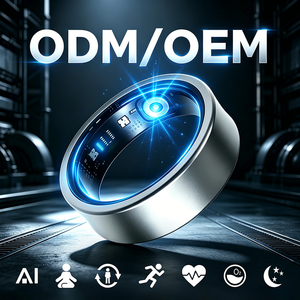
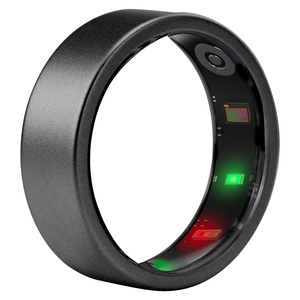
Heart Rate Monitor Smart Ring with Sleep and Fitness Tracking IOS and Android APP Control
Industrial Scale, Precision Engineering & Export Compliance
Established in 2008 in Nanshan & Bao'an high-tech corridors, Shenzhen Tucks Technology Co., Ltd. bridges acoustic electro-mechanical engineering with high-throughput SMT mass production.
In-House Anechoic Acoustic Lab
Equipped with SoundCheck analysis, B&K head and torso simulators (HATS), and environmental climate testing chambers to tune dual-mic ENC, spatial beamforming, and THD < 0.5% acoustic performance.
ISO9001:2015 Process Control
End-to-end traceability across incoming component inspection (IQC), Surface Mount Technology placement, ultrasonic housing fusion, in-line acoustic testing, and outbound AQL 0.65 / 1.0 quality audits.
Turnkey Full-Stack Customization
From bespoke laser engraving, silk-screen logos, and custom injection tooling to custom Bluetooth broadcast IDs, tailored firmware voice prompts, DSP audio EQ profiles, and branded retail gift packaging.
Export Compliance & Certifications
Full factory documentation ready for direct customs clearance: CE-RED, FCC ID, RoHS 2.0, REACH, BQB Bluetooth SIG listing, UN38.3 lithium battery shipping reports, and MSDS dossiers.
Architecting AI Hearables: Neural Processing, On-Device LLM & Acoustic Silicon
The personal audio category is experiencing an unprecedented structural shift. Earbuds are evolving from passive audio output transducers into proactive personal cognitive computing interfaces.
Low-Latency On-Device Neural DSP
Modern private label AI earbuds integrate energy-efficient dual-core digital signal processors (DSP) operating in tandem with dedicated neural processing units (NPU) clocked at sub-milliwatt power envelopes. This hardware acceleration enables DNN (Deep Neural Network) beamforming, suppressing 45dB+ of environmental chaos while isolating human vocal fundamentals with ultra-low 8ms group delay.
By isolating ambient acoustic interference before wireless transmission, speech recognition engines operating downstream receive pure, uncompressed vocal envelopes, drastically increasing contextual intent detection accuracy.
Multimodal LLM & Bidirectional Translation
Through custom Bluetooth Low Energy (BLE 5.4) audio streaming and optimized companion application SDKs, OEM brands can bridge our acoustic hardware directly into leading conversational AI infrastructures, including OpenAI GPT-4o, Anthropic Claude 3.5, and bespoke localized edge models.
Our firmware accommodates real-time dual-ear simultaneous translation in over 75 global languages and 120 localized dialects, enabling hands-free face-to-face cross-border communication with negligible latency under 350ms end-to-end round trip.
Ear-Canal Ingress Biometric Fusion
The ear canal offers superior arterial perfusion compared to the wrist, making it an optimal biological site for medical-grade physiological telemetry. Our advanced AI earbud ODM platforms integrate miniaturized reflective infrared photoplethysmography (PPG) sensors and MEMS digital thermopiles.
These miniature sensors capture continuous real-time heart rate, heart rate variability (HRV), dynamic core body temperature fluctuations, and blood oxygenation (SpO2), transferring encrypted biometric telemetry to wellness applications for automated physiological coaching.
B2B Procurement Trends: What Sourcing Directors Must Anticipate
Procurement departments are recalibrating their supplier selection matrix away from commodity white-label audio assembly toward vertically integrated hardware partners capable of long-term software co-engineering.
1. Modular Silicon & Dual-Engine Architecture
Procurement teams are prioritizing earbud architectures that utilize decoupled system-on-chips (SoC). Combining a Qualcomm, Bestechnic (BES), or Actions audio core with an ultra-low-power independent sensor-hub microcontroller enables AI features to operate continuously without collapsing playback battery reserves.
This modular hardware approach protects brand product lines against localized supply chain bottlenecks, allowing seamless pin-compatible chip substitutions without costly acoustic redesigns or complete enclosure re-tooling.
2. Bluetooth LE Audio, Auracast & LC3 Codec Standardization
Legacy Bluetooth Classic (A2DP / HFP) audio is systematically retiring. Enterprise RFQs for 2025–2028 necessitate full compliance with Bluetooth 5.3 / 5.4 LE Audio and the Low Complexity Communication Codec (LC3).
LC3 provides 50% lower bitrates while delivering superior acoustic fidelity compared to legacy SBC, cutting power consumption by roughly 30%. In parallel, public broadcast Auracast capability is becoming mandatory for smart venue, enterprise conference, and assistive listening procurement.
3. Software-Defined Acoustics & Firmware OTA Revenue Models
B2B brands are leveraging private label earbuds to generate recurring post-purchase monetization. Sourcing directors require ODM factories capable of delivering sophisticated iOS and Android companion applications with robust Over-The-Air (OTA) firmware update channels.
Through cloud-managed firmware endpoints, private label brands can deliver tiered AI subscription features—such as premium noise cancellation profiles, specialized voice-memo cloud transcriptions, and enterprise meeting summarization engines—transforming hardware into sticky SaaS-enabled ecosystems.
4. Circular Materials, Recycled Resins & ESG Scrutiny
Western consumer electronics markets are enforcing strict environmental sustainability mandates. Corporate buyers must confirm tier-1 supplier alignment with post-consumer recycled (PCR) plastic resins, halogen-free internal PCBs, cobalt-free battery chemistries, and FSC-certified plastic-free retail unboxing.
Shenzhen Tucks Technology integrates verified PCR-ABS and PCR-polycarbonate composite casings, backed by comprehensive carbon footprint certifications and REACH substance compliance dossiers for seamless European and North American retail distribution.
B2B Hardware Benchmark: Legacy TWS vs. Next-Gen AI Hearables
Compare critical engineering parameters to evaluate your product upgrade path and ensure component allocations match your brand's market price-performance tier.
| Evaluation Parameter | Standard Commodity TWS | Mid-Tier Private Label AI Earbud | Flagship Enterprise AI Hearable Platform |
|---|---|---|---|
| Main SoC & Processing | Single-Core RISC-V 32-bit DSP | Dual-Core Audio DSP + Sensor Hub | Dual-Core SoC + Dedicated 1.2 TOPS Neural NPU |
| RF & Audio Protocol | Bluetooth 5.0 / 5.2 (SBC/AAC) | Bluetooth 5.3 + LC3 Ready | Bluetooth 5.4 LE Audio, Auracast, LDAC / LHDC |
| Microphone Array | Single ECM or Dual MEMS (-38dB) | Triple MEMS Array with ENC Algorithm | 3x MEMS Array + 1x Bone Conduction VPU Sensor |
| Noise Cancellation | Passive Isolation or 25dB Feedforward | Hybrid Active Noise Cancelling (38dB) | Adaptive Real-Time Dynamic AI ANC (Up to 50dB) |
| Edge AI Latency | Not Supported (Cloud Reliant >1.5s) | Hybrid Cloud Offload (~500ms) | Sub-15ms Ultra-Fast On-Chip Keyword Wake & Translation |
| Biometrics & Telemetry | None | Optical In-Ear Wear Detection | Continuous Infrared PPG (Heart Rate, SpO2) + Skin Temp |
| Factory MOQ & Lead Time | 1,000 Pcs / 30 Days | 500 Pcs / 20 Days | From 200 Pcs Agile Pilot / 7-Day Fast Samples |
Frequently Asked Questions: OEM / ODM AI Earbud Sourcing
Clear, documented answers addressing minimum order thresholds, firmware IP protection, certification timelines, and engineering test procedures.
What is the minimum order quantity (MOQ) for custom private label AI earbuds? +
How does your factory handle custom firmware, AI API bridging, and companion apps? +
What export compliance certificates accompany your acoustic hardware shipments? +
What is the lead time for functional prototypes versus mass production runs? +
What electro-acoustic testing procedures are performed during in-line mass production? +
How do you protect client intellectual property (IP) and proprietary acoustic tooling? +
Can your engineering team support custom acoustic cavity tuning and dynamic driver customization? +
What are the payment terms, warranty policies, and RMA support frameworks for B2B contracts? +
Accelerate Your AI Hearable Brand Today
Request a customized BOM quote, reserve your factory production slot, or consult directly with our acoustic and firmware engineering team in Shenzhen. Rapid quotation and technical response within 24 hours.