Featured OEM Smart Rings & Wearables for Private Label
Engineered on ultra-low-power Nordic nRF and Dialog micro-architectures with dual photoplethysmography (PPG) sensors. All models support white-label firmware, custom anodized finishes, proprietary packaging, and open Bluetooth Low Energy (BLE) APIs.
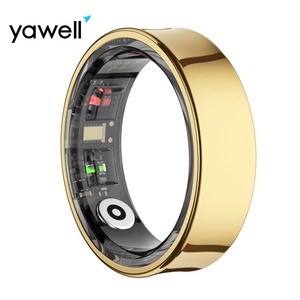
Yawell R09 5ATM Waterproof Thin Fitness Tracker Smart Health Ring
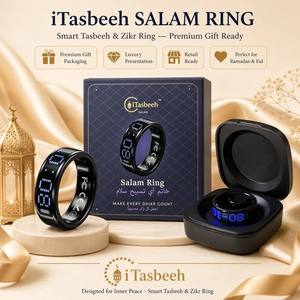
Zikr Ring Islamic Smart Health Ring Tasbih Counter HRV Sleep SpO2 Tracker
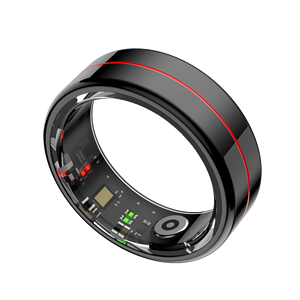
Wearable Smart Ring Heart Rate Sleep Tracker Step Calorie Meter
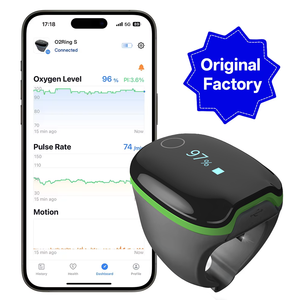
Wellue O2ringS Bluetooth Pulse Oximeter Ring Continuous SpO2 Monitor
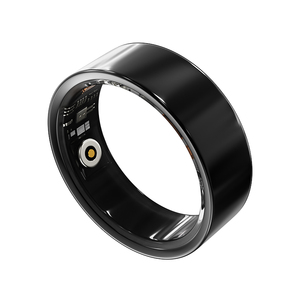
Smart Fitness Ring All-Day Heart Rate SpO2 Sleep Monitoring IP68
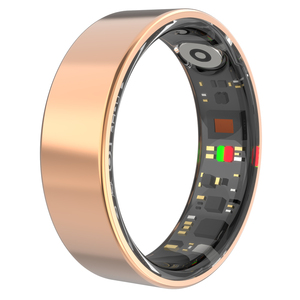
5ATM Waterproof Stainless Steel Smart Ring Fast Charge HRV Stress M08
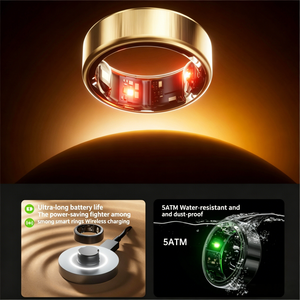
Titanium Alloy Smart Ring Sports Tracking Sleep Stages Lightweight
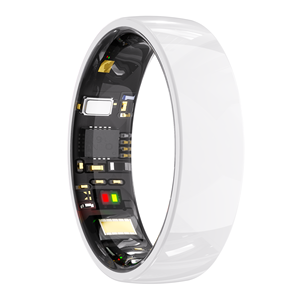
Ceramic Smart Ring Magnetic Charging Case 15-Day Standby TK8Pro
Shenzhen Tucks Technology: Production Scale & Capabilities
Operating as an ISO9001:2015-certified smart wearable original equipment manufacturer since 2008. We eliminate trading desk markups through end-to-end in-house surface-mount technology (SMT), automated optical inspection (AOI), acoustic calibration, and environmental hermetic chamber testing.
Every wearable undergoes three-stage validation: SMT paste inspection, automated in-circuit testing, and 100% pneumatic hydro-pressure decay testing up to 5ATM (50 meters equivalent) under ISO 22810 standards.
Complete white-label branding ecosystem: customized boot screens, custom localized language firmware packs, BLE broadcast UUID masking, open REST/GraphQL APIs, and private cloud server integration.
Pre-tested schematics compliant with CE-RED (Europe), FCC ID (United States), RoHS 2.0 hazardous material directives, REACH chemical compliance, BQB Bluetooth SIG licensing, and UN38.3 battery flight safety.
Engineering Principles of Sub-Miniature Smart Rings vs. Smartwatches
As consumer expectations transition toward seamless 24/7 continuous health tracking, the micro-ring form factor presents significant structural advantages—and rigorous design challenges—relative to wrist-worn devices.
Traditional smartwatches detect photoplethysmography (PPG) signals along the dorsal wrist, where light must penetrate thick epidermal layers, radial bone shadowing, and dense muscular tissues. Wrist measurements suffer frequent motion artifacts from forearm rotation and extensor muscle contractions.
In contrast, smart health rings target the proper palmar digital arteries running directly along the proximal phalanx. The capillary beds here are significantly denser and positioned closer to the cutaneous skin surface, providing a higher signal-to-noise ratio (SNR) for pulse wave velocity (PWV) and SpO2 oxygenated hemoglobin reflectance.
Our OEM optical sensor modules utilize dual green (525nm), red (660nm), and infrared (940nm) emitters paired with low-noise transimpedance amplifiers, maintaining clinical-grade pulse accuracy (±1 bpm across 40–210 bpm range) while drawing sub-35 microamps in quiescent states.
Integrating a multi-channel PPG sensor, 3-axis accelerometer, power management integrated circuit (PMIC), micro-antenna, and lithium-ion pouch cell into a band less than 2.8mm thick demands specialized manufacturing techniques.
We implement an advanced semi-rigid flexible printed circuit (FPC) curved potting process. The components are surface-mounted on an ultra-thin polyimide flex substrate, placed into an automated injection mold, and sealed with biocompatible medical epoxy resin that isolates the circuit from moisture and human sweat.
Battery chemistry is optimized using high-density pure cobalt pouch cells yielding 18mAh to 24mAh in ring sizes US 6–13. Combined with custom Bluetooth LE 5.3 connection event intervals and aggressive sleep-wake duty cycles, our smart rings sustain 5 to 7 days of continuous telemetry on a single 60-minute inductive charge cycle.
| Architecture Vector | OEM Smart Ring (e.g., Titanium R09 / M08) | AMOLED Smartwatch (e.g., W12 Pro / Watch Ai 4) | B2B Sourcing Advantage |
|---|---|---|---|
| Primary Anatomical Site | Palmar digital arteries (finger phalanx) | Dorsal carpal branch of radial artery (wrist) | Higher pulse wave SNR for sleep and stress scoring |
| Enclosure Engineering | Ti-6Al-4V / ZrO2 Ceramic with resin potting | Zinc alloy / Aluminum with O-ring ultrasonic seal | Ring offers superior long-term scratch & sweat resistance |
| Battery Capacity & Life | 18mAh – 24mAh (5–7 days operation) | 300mAh – 375mAh (5–7 days with AMOLED AOD) | Rings eliminate high-drain displays, preserving battery longevity |
| Sleep Tracking Compliance | 92% user sleep adherence rate (sub-4g weight) | 64% user sleep adherence rate (bulk/strap irritation) | Significantly reduced churn in subscription health platforms |
| B2B Logistics & Freight | Ultra-compact freight volume (85% lower shipping weight) | Standard display gift box packaging dimensions | Lowers international air cargo expenses per 10,000 units |
Future Procurement Trends for Smart Wearable OEM Buyers
The international wearable electronics landscape is experiencing a paradigm shift driven by preventative healthcare, enterprise wellness compliance, edge artificial intelligence, and changes in medical hardware regulations.
Importers and brand owners are no longer asking for simple step pedometers. B2B buyers targeting North American and European channels demand photoplethysmography validation against FDA/MDR clinical monitors for overnight peripheral arterial tone, identifying preliminary biomarkers of obstructive sleep apnea (OSA) and autonomic nervous system stress via root mean square of successive differences (RMSSD) HRV tracking.
Mass consumer electronic brands often suffer from high return rates due to metal hypersensitivity and aesthetic wear on electroplated plastics. Forward-thinking procurement managers are transitioning OEM specifications toward micro-arc oxidized grade-5 titanium and sintered nano-zirconia ceramic housings, delivering scratch resistance, premium consumer touchpoints, and superior biocompatibility.
Wireless charging ergonomics dictate end-user retention. Sourcing teams are standardizing on magnetic inductive clamshell charging docks capable of delivering 80% capacity within 25 minutes, with charging cases carrying integrated 300mAh–600mAh reservoir batteries that allow end users to travel for three weeks without AC wall connectivity.
Contactless ticketing, access control (smart door locks, hotel hospitality keys), and tokenized EMV payments are moving directly into fingers. Buyers are looking for wearable OEMs capable of embedding ISO/IEC 14443 Type A/B dual-interface chips and secure microcontrollers without degrading BLE RF antenna efficiency.
Modern brand owners generate ongoing revenue via monthly health app subscriptions. Our OEM services provide custom-compiled iOS and Android SDK libraries, enabling engineering teams to ingest raw inter-beat interval (IBI), tri-axial acceleration, and peripheral skin temperature data directly into proprietary cloud databases without third-party vendor lock-in.
Procurement teams are cutting New Product Introduction (NPI) lead times from 12 months down to 45–60 days by choosing pre-certified base hardware architectures. By leveraging existing tooling for outer diameters (US sizing 6 to 13) and modifying only firmware, logo branding, and companion app UIs, brands minimize capital expenditure and financial risk.
Why Global B2B Leaders Source From Shenzhen Tucks Technology
We bridge the gap between initial mechanical industrial design and high-yield automated mass assembly, providing predictable outcomes for enterprise buyers worldwide.
Many consumer electronic distributors contract trading desks that farm orders out to unverified subcontractors. Shenzhen Tucks Technology Co., Ltd. controls 100% of production across 8 modern SMT surface-mount lines located in Shenzhen's hardware technology corridor.
Our facility employs high-precision Yamaha and Fuji placement machines capable of handling 01005 passive chips and ultra-fine-pitch 0.35mm BGA microprocessors. Cleanroom workshops (Class 10,000 standard) prevent dust contamination during optical resin molding and display lamination, maintaining high manufacturing yields.
Every product batch is systematically serialized, establishing complete supply chain traceability from silicon wafer lot numbers to battery cell batches and final firmware check-sums.
Our internal testing laboratory subject random units from each batch to continuous reliability trials:
- Thermal Cycling: 72 hours of cyclic stress between -20°C and +60°C.
- Salt-Mist Corrosion: 48 hours in continuous neutral 5% NaCl aerosol to ensure anti-sweat durability on stainless steel and titanium finishes.
- Tumble & Drop: 1.5-meter automated drops across 6 orientations to verify epoxy resin potting resilience.
- Submersion Sealing: Real-time vacuum and water hydro-pressure holding tests up to 5ATM.
Standard shipments arrive with ready-to-file laboratory documentation covering CE-RED, FCC Part 15C, RoHS 2.0, and REACH, reducing customs clearance friction in over 30 countries.
Frequently Asked Questions for Wearable OEM Buyers
Key commercial, legal, and engineering questions answered directly by our hardware engineering and sourcing directors.
Our standard production MOQ starts at 200 pieces per model for baseline white-label customization, including laser logo etching, localized boot firmware, customized BLE broadcast identification, and branded consumer gift packaging. Deep-level ODM programs requiring custom tooling dimensions, proprietary housing molds, or unique biometric sensors typically start at 1,000 to 3,000 units.
We provide precision injection-molded B2B sizing kit sets (US sizes 6 through 13) that brands can distribute to consumers or retail stores. For mass manufacturing, clients can customize their sizing ratio based on regional demographic sales profiles (e.g., higher volume of sizes 9–11 for North American men's sports sectors, or sizes 6–8 for female wellness lines).
Custom-configured functional prototypes with client-specified laser marking, boot screens, and test firmware are dispatched within 7 working days. Mass production lead times generally range between 15 and 25 working days following Golden Sample confirmation and packaging artwork sign-off, supported by local buffer stock of critical chips.
Yes. Unlike standard consumer fitness tracker brands that hide raw data behind closed clouds, our OEM engineering division supports Open SDK and Raw Data Streaming protocols. You can extract raw photoplethysmography waveform reflections, inter-beat intervals (IBI), acceleration data, and skin temperature logs via our Bluetooth Low Energy API bridge.
Our smart rings utilize complete seamless epoxy resin potting encapsulation, leaving no mechanical seams, O-rings, or speaker grilles to fail under pressure. Smartwatches (such as MA35 or W12 Pro) feature dual-layer ultrasonic gasket seals with high-density acoustic membranes. Each unit undergoes automated pneumatic pressure decay screening before packing.
All shipments ship with authentic CE, FCC, and RoHS 2.0 testing certifications conducted by accredited independent laboratories (such as SGS, TUV, and Intertek). Lithium battery air cargo transport documentation—including UN38.3 test summaries, 1.2-meter drop test reports, and MSDS sheets—is provided with commercial logistics manifests.
Request Full Engineering Specs, B2B Pricing & Sizing Kits
Accelerate your wearable roadmap with direct factory engineering support. Review our full hardware portfolios, component breakdowns, wholesale volume tiered pricing, and open SDK documentation today.