Turnkey OEM/ODM Hardware Showcase
Explore our scalable product platforms engineered for Tier-1 private label integration. Featuring ultra-low power System-on-Chips (SoCs), advanced biocompatible ergonomics, and enterprise-grade health telemetry.
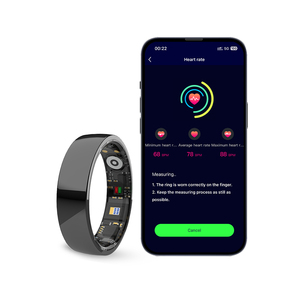
Smart Ring Blood Pressure AI Analysis HRV Tracker
Configure Specs →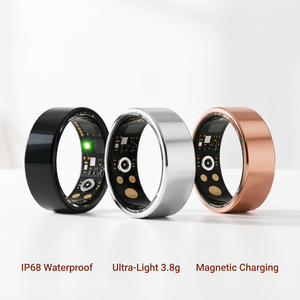
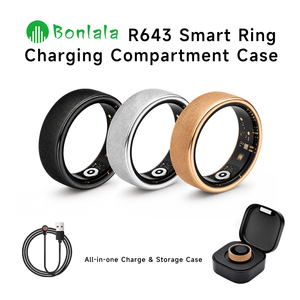
Smart Ring Magnetic Charging Case IP68 Alloy
Configure Specs →
20 Languages Smart Ring 5ATM Stress Tracker M08
Configure Specs →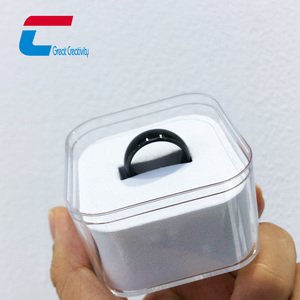
RFID Custom Logo Ceramics 13.56MHz NFC Ring
Configure Specs →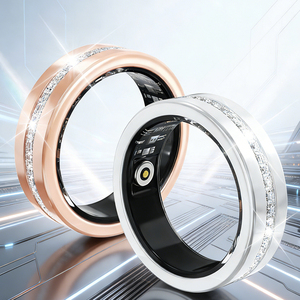
Diamond Fashion IP68 Stainless Steel Ring
Configure Specs →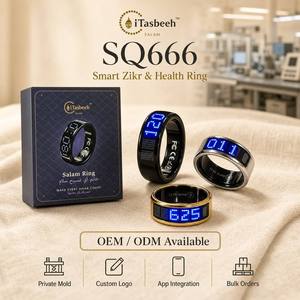
Islamic Zikr Ring Digital Qibla Finder Tasbih
Configure Specs →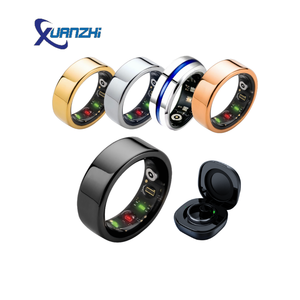
Meditation AI Analysis K3 Multi-Sport Ring 2026
Configure Specs →15+
Years Engineering R&D
8 SMT
Automated High-Speed Lines
2M+
Annual Unit Output Capacity
200 Pcs
Low-Risk Entry OEM MOQ
Enterprise Manufacturing Infrastructure
Operating in Shenzhen’s high-tech manufacturing corridor, Shenzhen Tucks Technology Co., Ltd. provides comprehensive end-to-end wearable system integration, from industrial tooling to cryptographic firmware flashing.
Tier-1 Quality Protocols
Strict ISO9001:2015 process compliance with multi-stage automated optical inspection (AOI), high-pressure IP68 water testing, and full CE/FCC/RoHS validation reports for frictionless cross-border distribution.
Modular Customization
Full-stack modularization across PCB footprint layouts, acoustic cavity wave-guides, physical laser engraving, bespoke boot animations, localized voice engines, and white-label companion SDKs.
Rapid Delivery Pipeline
Rapid prototyping framework delivering fully functional, pre-certified verification samples within 7 business days, transitioning to scale production batches of 500 to 50,000+ units within 15–25 days.
Global Interoperability
Our solutions deploy globally compliant low-latency Bluetooth 5.3/5.4 RF antennas and cross-platform native SDK frameworks engineered to interface seamlessly with modern iOS and Android ecosystems.
Technical Architecture: Engineering Next-Gen OEM Bluetooth Smart Glasses
As global consumer demand converges around personal computing miniaturization, the transition from conventional wearables to Bluetooth Smart Glasses demands rigorous engineering expertise across acoustic directivity, micro-power management, and weight distribution balance. At Shenzhen Tucks Technology Co., Ltd., our OEM/ODM wearable operations bridge the gap between heavy optical eyewear and unobtrusive personal audio computing.
Traditional Bluetooth frames suffered from sound leakage and excessive thermal dissipation along the temple arms. Our latest product architectures leverage reverse-phase acoustic wave-canceling drivers and directional beamforming micro-speakers positioned precisely above the human ear canal. This structure delivers crystal-clear audio fidelity during calls and media playback while maintaining privacy in dense office and public transit environments.
Comparative Architecture: Smart Rings vs. Smart Glasses vs. Smartwatches
Procurement directors and product managers must evaluate battery constraints, sensor surface contact, and form factors when building a cohesive consumer hardware portfolio. The following engineering matrix outlines the technical parameters across our primary OEM platforms:
| Wearable Architecture | Primary Sensor Package | Avg. Battery Capacity | Primary Interaction Method | Optimal Consumer Use Case |
|---|---|---|---|---|
| Bluetooth Audio/AI Glasses | Dual MEMS Mics, 9-Axis IMU, Touch Sensor | 110mAh – 180mAh (Temples) | Natural Voice AI & Capacitive Tap | Hands-free communications, on-the-go calls, navigation |
| Health Smart Rings | PPG (Red + IR), NTC Temp, Accelerometer | 18mAh – 24mAh | Passive biometric skin polling | Continuous sleep, HRV, recovery, continuous health tracking |
| AMOLED Smartwatches | Optical PPG, ECG, SpO2, GPS, Barometer | 300mAh – 450mAh | Full Color Capacitive Touch Screen | High-intensity sports telemetry, rich notifications, calling |
Acoustic Directivity and RF Antenna Integration in Smart Frames
One of the core challenges in smart glass manufacturing is maintaining robust Bluetooth 5.3/5.4 throughput without interference from optical hinge joints and internal reinforcement wires. Our RF laboratories implement custom-tuned LDS (Laser Direct Structuring) antennas molded directly into the temple housing. This minimizes attenuation against human cranial tissue, yielding an unobstructed wireless radius exceeding 15 meters while preserving an ultra-light total frame weight under 36 grams.
Future Procurement Trends (2026–2030 Horizon)
Strategic market analysis for volume importers, global consumer brands, and distributors preparing product roadmaps for the next generation of smart eyewear and interconnected wearables.
Edge-AI Voice Integration
OEM smart glasses are shifting from passive Bluetooth transceivers to autonomous edge-AI nodes. Future models utilize low-power neural processing architectures to enable zero-latency on-device wake-word detection and cloud-agnostic conversational assistant interfacing (compatible with ChatGPT, Gemini, and localized enterprise LLMs).
Biocompatible Micro-Materials
Procurement teams are moving away from standard plastics toward aerospace-grade titanium memory-alloys, bio-acetate fronts, and surgical-grade ceramic inner linings. These materials elevate drop durability, resist galvanic sweat corrosion, and eliminate dermatological contact risks across prolonged wear cycles.
Multi-Device Sensor Fusion
The future lies in the symbiotic ecosystem between smart rings, smartwatches, and smart glasses. By offloading computational telemetry to a unified companion app, glasses deliver spatial auditory feedback while rings monitor biological stress trends, forming a holistic personal digital health suite.
Procurement & Manufacturing FAQ
Essential technical and commercial clarifications for professional B2B purchasing executives, OEM project directors, and consumer electronics brand buyers.
Q: What is the standard MOQ and sample evaluation lead time for OEM projects?
Standard minimum order quantities start at an accessible 200 units per model for white-label branding (logo placement, packaging customization, initial firmware localization). Fully customized ODM projects involving private tooling or unique PCB layout adjustments typically begin at 1,000 to 2,000 units. Functional pre-production engineering samples are dispatched within 7 working days following brief sign-off.
Q: How do your manufacturing facilities manage waterproof and acoustic quality controls?
Every production run undergoes systematic quality checks under ISO9001:2015 frameworks. Smart rings and sealed electronics undergo vacuum pressure testing up to IP68/5ATM standards. Smart glasses undergo acoustic chamber testing using artificial head simulators (HATS) to quantify total harmonic distortion (THD), sound leakage levels, and dual-microphone noise-cancellation metrics before final packaging.
Q: What international regulatory certifications are supplied with shipments?
All commercial products leave our Shenzhen facility certified with comprehensive European CE (EMC/LVD), RoHS hazardous substance verification, and United States FCC Part 15 compliance documentation. Additional regional requirements—such as Bluetooth SIG (BQB), REACH, MSDS, and UN38.3 battery transport compliance dossiers—are maintained and provided for smooth customs clearance.
Q: Can our engineering team customize the proprietary smartphone companion app and SDK?
Yes. We supply comprehensive SDK/API documentation allowing enterprise partners to integrate hardware telemetry directly into their existing cloud architecture or corporate health systems. Alternatively, we provide full white-label app customization—including App Store/Google Play publishing, brand styling, color schemes, and cloud database localization.
Ready to Launch Your Custom Wearable Line?
Connect directly with our Shenzhen engineering and OEM project management team. From rapid 7-day prototyping to high-volume manufacturing, we bring your product vision to market efficiently.