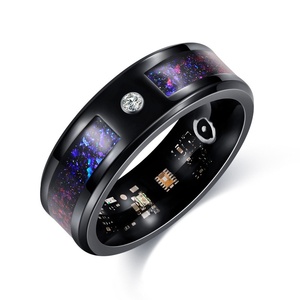
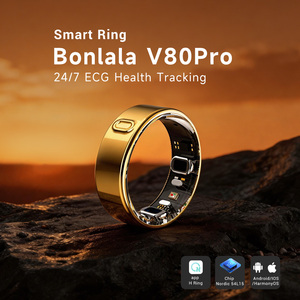
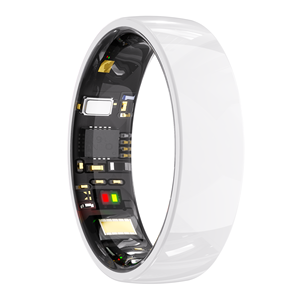
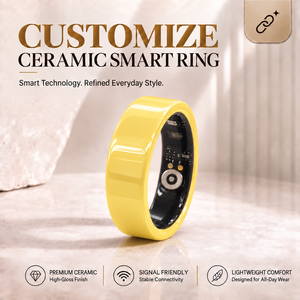
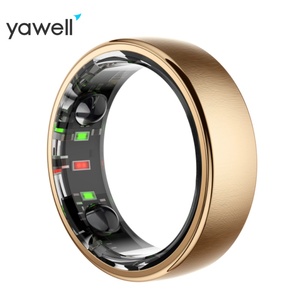
Custom Cross-Border for Smart Ring Blue Sandstone Inlay OLED Display IP68 Waterproof 3-5 Days Battery Life App Controls
OLED Micro-Panel
IP68 Submersible
Blue Sandstone
Precision-engineered sensor fusion, ultra-compact form factors, and enterprise-grade firmware solutions tailored for custom international deployments.
Operating an integrated, full-stack ODM facility. From component level SMT micro-soldering to automated acoustic and optical calibration, Tucks eliminates intermediary risks for enterprise buyers.
Years Wearables Engineering (Since 2008)
High-Precision Yamaha/Siemens SMT Lines
Certified Annual Production Capacity
Global B2B Partners Across 30+ Countries
Complete factory certification portfolio under ISO9001:2015. Every bulk shipment complies with CE, FCC, RoHS, BQB, and REACH standards with ready-to-file safety test reports.
Proprietary dual-microphone directional beamforming, Sony ultra-low power CMOS vision pipelines, and Nordic/Qualcomm low-latency edge computing architecture.
From low MOQ 200 pcs initial runs to deep firmware customization: Custom bootloader, wake words, proprietary LLM endpoint bridging (OpenAI, Claude, Llama 3), and custom companion apps.
7-day engineering samples delivered with fully functional hardware-software builds. Standard mass manufacturing cycles fulfilled within 15–25 days from final tooling approval.
An authoritative engineering assessment of the transition from passive audio eyewear to contextual, multimodal AI edge terminals in 2026–2030.
Early smart glasses suffered from severe acoustic leakages. Current generation solutions engineered by Tucks utilize dual-capsule reverse-phase acoustic dipoles embedded directly into the acetate or TR90 temples.
By producing inverted phase sound waves outside the 15mm ear canal radius, privacy is maintained even in high-density office environments while offering the user crisp, spatial audio without occlusion.
Transitioning from consumer wearables to contextual vision agents requires highly optimized ISP (Image Signal Processing) hardware. We leverage ultra-compact Sony CMOS sensors (up to 4K resolution) with a native 110-degree FOV.
Coupled with hardware-accelerated H.265 compression, raw visual tokens can be streamed to the paired mobile edge or host cloud LLM in sub-120ms latencies for real-time visual question answering (VQA).
Thermal dissipation remains the critical physical bottleneck for smart glasses under 48g. Tucks incorporates graphene heat-spreading foils and structural titanium alloy cores inside the frame hinges.
This balances thermal loads across bilateral temples, maintaining skin touch contact temperatures strictly below 38°C while sustaining continuous video capture and neural inference.
| Evaluation Parameter | Legacy Bluetooth Audio Eyewear | Gen-1 Camera Recording Glasses | Tucks Multimodal AI Smart Glasses (2026 Ready) |
|---|---|---|---|
| Core SoC / Architecture | Single-Core BT 4.2 / 5.0 Audio DSP | ARM Cortex-A7 Video SoC (Stand-Alone) | Dual-Core BLE 5.3 + NPU + Low-Power Vision ISP |
| Microphone Topology | Single Omnidirectional Mic (-42dB) | Dual Mic Array (Static Noise Suppression) | Tri-Mic Array with ENC Beamforming & Wind Cut |
| AI Integration Capacity | Basic Smartphone Siri/Google Pass-through | None (Physical Storage SD Card Only) | Direct API Bridge to Multimodal LLMs (ChatGPT / Claude) |
| Weight & Ergonomics | 42g – 55g (Heavy Front Weight) | 65g – 80g (Front Heavy, High Neck Strain) | 38g – 46g (Balanced Center of Gravity, TR90/Titanium) |
| Typical Enterprise Procurement MOQ | 1,000+ Units | 500 Units | From 200 Units (Flexible OEM Customization) |
What corporate buyers, international importers, and brand aggregators must prepare for over the next 24 to 36 months to protect margin, scale, and compliance.
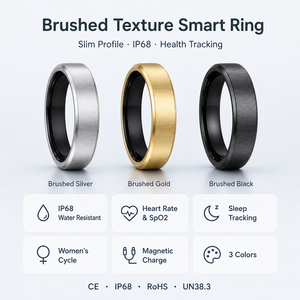
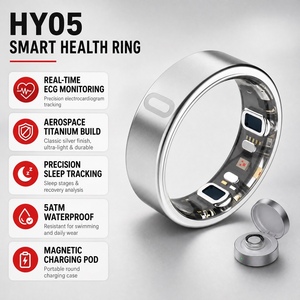
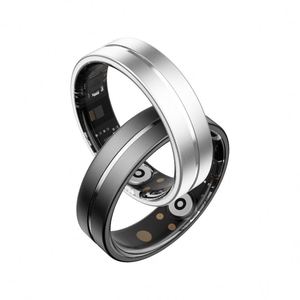
Importers are increasingly shifting from isolated SKUs toward complementary wearable ecosystems. Pairing lightweight AI Smart Glasses with discrete micro-sensors—such as medical-grade ECG/EDA Smart Rings and AMOLED smartwatches—delivers comprehensive bio-contextual input.
By aggregating continuous pulse wave velocity (PWV), heart rate variability (HRV), and real-time visual feeds into a unified health and productivity companion app, brands achieve unmatched customer retention rates and higher hardware ARPU.
Hardware lifecycles are dictated by firmware agility. Forward-thinking procurement teams no longer accept static firmware. The requirement is for modular OTA (Over-The-Air) firmware engines that can be reconfigured dynamically.
Tucks provides dedicated SDK layers supporting post-launch firmware enhancements, allowing private label owners to upgrade speech-to-text models, add multilingual localized translation packs, and adapt LLM server endpoints without modifying PCB designs.
With cameras and microphones deployed on facial hardware, international regulatory scrutiny has intensified across the EU (GDPR) and North America (FCC Part 15 / CCPA). Hardware LED recording indicators must be hardwired into camera power circuits to prevent software-based bypassing.
Tucks’ engineering department builds tamper-proof hardware interlocks and end-to-end encrypted BLE/Wi-Fi channels, guaranteeing your consumer products meet strict regional privacy laws right off the production line.
Critical insights on engineering constraints, lead times, optical customizations, and logistics for procurement officers.
Connect directly with Tucks’ principal hardware engineers and overseas export managers in Shenzhen. Review technical BOM configurations, verify unit cost tiers, and request 7-day custom working samples.