Featured OEM/ODM Wearable Platforms & Connected Micro-Peripherals
In modern spatial computing, AR smart glasses operate in a tightly synchronized telemetry and input environment. Explore our certified companion biometric rings, haptic gesture controls, and micro-wearable platforms manufactured across our Shenzhen SMT cleanrooms.
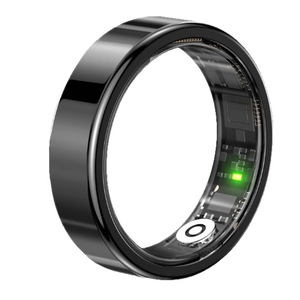
Bluetooth Couple Smart Ring Steel Wearable 5 Day Battery Sleep Heart Rate
- BLE 5.2 Micro-Node
- SpO2 & HRV
- Stainless Steel
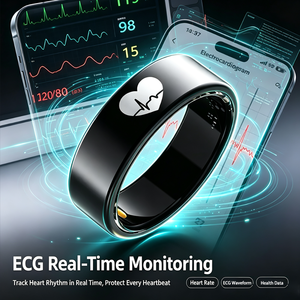
Custom Smart Ring Waterproof IP68 ECG Blood Pressure Oxygen AI Monitoring
- Continuous ECG
- IP68 Submersible
- AI Bio-Tracking
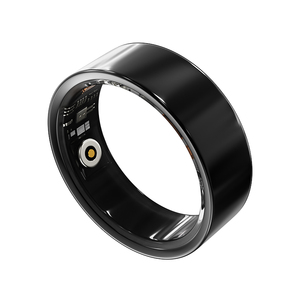
Smart Fitness Ring All-Day Activity Tracker Heart Rate SpO2 Sleep Monitoring
- Ultra-Light Weight
- Precision Calorie
- 7-Day Standby
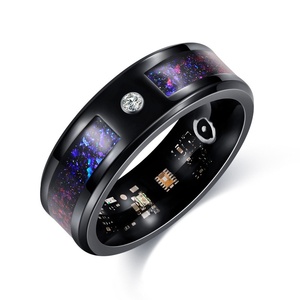
Custom Cross-Border Smart Ring Blue Sandstone Inlay OLED Display IP68
- Active Micro-OLED
- Sandstone Craft
- Proprietary App
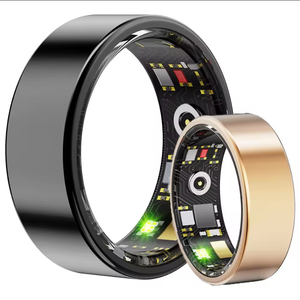
Multi-Sport Mode Waterproof Health Monitoring Remote Photo Smart Ring
- Shutter Control
- Multi-Sport Logic
- Titanium Alloy
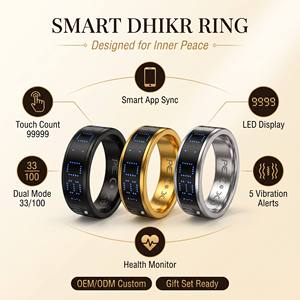
2026 Smart Tasbih Ring Muslims Digital Display Counter Prayer Zikr Ring
- OLED Vibration
- CNC Enclosure
- Long Standby
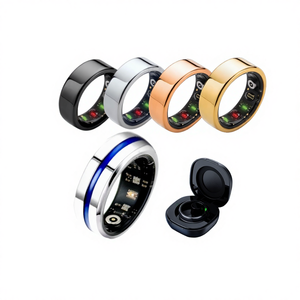
OEM Health Smart Ring Menstrual Prediction HRV Gesture Camera Control
- Air Gesture Input
- HRV Temperature
- Spatial Pairing
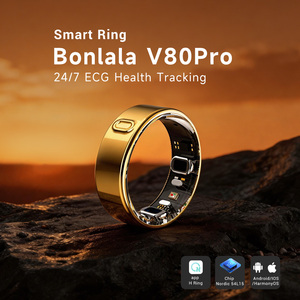
Intelligent Smart Ring Tracker Nordic Blood Oxygen ECG EDA IP68 Sensor
- Electrodermal EDA
- Nordic Low Power
- Stress Biomarkers
Engineering Custom AR Glasses: Architecture, Micro-Optics, and China Sourcing Dynamics
The global augmented reality (AR) hardware ecosystem has shifted rapidly from experimental developer kits to mass-producible, ergonomically sound eyewear designed for industrial logistics, remote telemetry, surgical guidance, and multimodal consumer spatial interaction. As a top China custom AR glasses manufacturer based in Shenzhen, Shenzhen Tucks Technology Co., Ltd. (Tucks) bridges the gap between deep optical physics, miniaturized embedded computing, and high-yield turnkey manufacturing.
Procuring custom AR smart glasses requires engineering evaluation far beyond standard consumer electronics. Sourcing teams must reconcile conflicting physical trade-offs: display brightness against thermal dissipation budgets, field-of-view (FOV) against optical optical-engine volume, and real-time 6DoF simultaneous localization and mapping (SLAM) computational load against battery form factors. This white paper serves as an authoritative procurement and design guide for enterprise brands, hardware startups, and optical integrators seeking a scalable contract manufacturing partner in China.
1. Optical Architecture Selection: Waveguides vs. Birdbath Configurations
The fundamental determinant of any custom AR glasses program is the light engine and combiner module. B2B procurement teams must match optical properties to user context:
Diffractive Surface Relief Waveguides (SRG): Offering industry-leading industrial ergonomics, diffractive waveguides allow thin, planar glass or resin substrates (sub-1.8mm thickness) that closely resemble everyday eyewear. Paired with monochrome or full-color Micro-LED light engines, waveguides yield transparency rates exceeding 85%, rendering them the undisputed choice for outdoor navigation, enterprise field operations, and heads-up tactical information. While optical grating mastering requires high initial NRE, our Shenzhen micro-nano lithography partners enable cost-effective scaling at mass volumes.
Birdbath Optical Modules: Utilizing a curved beam-splitter and polarized combiner paired with Sony 0.68-inch or 0.71-inch Micro-OLED panels, Birdbath architectures deliver supreme visual fidelity, up to 1080p or 4K perceived resolution, high color gamut (sRGB >108%), and wide FOV (45° to 52°). These modules represent the primary choice for virtual office monitors, private cinema consumption, and remote desktop engineering, offering lower upfront tooling expenses and superior initial contrast.
Diffractive Waveguide (SRG)
Thickness under 1.8mm with over 85% ambient transparency. Engineered for tactical heads-up display, industrial maintenance, and all-day wearable ergonomic balance.
Micro-OLED Birdbath
Delivers up to 52° FOV with 1080p–4K perceived visual fidelity and cinema-grade contrast. Optimal for virtual office monitors, CAD modeling, and media rendering.
AI Vision & Camera Frames
Ultra-low-power edge NPU architecture integrating open-ear audio, directional beamforming microphones, and Sony camera sensors for hands-free documentation.
2. Structural Miniaturization, Thermal Dissipation, and Weight Distribution
Industrial design in AR smart glasses must address the "50-gram threshold." For continuous consumer wear, frame assemblies must remain below 55 grams. At Shenzhen Tucks, our mechanical engineering division utilizes magnesium-aluminum alloy core skeletons coupled with TR90 or Grilamid memory polymer temples. This balance ensures structural rigidity for optical alignment stability while remaining lightweight.
Thermal dissipation represents the second critical barrier. Modern AR spatial processors (e.g., Qualcomm Snapdragon XR2 Gen 2, MediaTek, or edge AI vision co-processors) generate between 1.8W and 4.2W of thermal energy under active 6DoF tracking and video streaming. Direct heat conduction to human temples causes immediate user discomfort and perspiration. Our factory integrates anisotropic pyrolytic graphite thermal spreaders and titanium vapor-chamber heatsinks directed outward along the temple arms, keeping inner temple contact temperatures strictly below 38°C during peak operational cycles.
3. Companion Wearables & Spatial Telemetry Synergy
A prevalent error among procurement planners is attempting to embed all sensory controls directly onto the eyeglass temples. Capacitive touchbars on temples induce arm fatigue and introduce optical micro-shifts during interaction. As evidenced by our expansive micro-wearable manufacturing portfolio—including high-precision medical-grade and gesture-enabled smart rings—the industry has moved toward a distributed spatial interface.
Our smart ring nodes provide continuous sub-millimeter finger gesture telemetry, optical mouse emulation, physiological state feedback (HRV, galvanic skin response, core temperature), and micro-haptic confirmation. By pairing custom AR glasses with an OEM smart ring platform over ultra-low-latency BLE 5.3, enterprise clients establish an invisible, frictionless human-machine interface (HMI) for warehouse picking, clinical diagnostics, and hands-free engineering inspections.
AR Light Engine & Hardware Platform Selection Matrix
Direct comparative benchmarks to guide procurement directors, hardware product managers, and systems architects in selecting the optimal configuration for volume customization.
| Optical Architecture | Display Engine | Perceived FOV | Eye-Box Luminance | Total Weight | Target B2B Application |
|---|---|---|---|---|---|
| Diffractive Waveguide (SRG) | Monochrome / Color Micro-LED | 28° – 32° | 1,500 – 3,000+ nits | < 48g | Outdoor Navigation, Enterprise HUD, Logistics |
| Micro-OLED Birdbath | 0.71" Sony Micro-OLED | 46° – 52° | 500 – 700 nits | ~ 75g | Virtual Desktop, Cinema, CAD Engineering |
| Reflective Geometric Waveguide | Micro-OLED / LCoS | 35° – 40° | 800 – 1,200 nits | ~ 62g | Medical Guidance, Remote Tele-Assistance |
| AI Voice & Camera Frames | Non-Display Audio/Vision Node | N/A (Spatial Audio/VLM) | N/A | < 42g | Multimodal AI Interaction, Hands-Free Video |
Future Procurement Trends in AR Smart Glasses (2025–2030)
As enterprise procurement shifts from exploratory prototyping to standardized fleet deployments, multinational buyers must evaluate long-term market drivers to prevent hardware obsolescence.
1. Multimodal AI Integration (Visual Language Models at the Edge)
The era of passive heads-up displays has ended. Procurement specifications in 2025 onward increasingly mandate on-device and edge-cloud Multimodal Visual Language Models (VLMs). Smart glasses equipped with 4K ultra-compact image sensors (e.g., Sony IMX CMOS sensors) transmit compressed visual feeds to low-latency edge servers or on-board NPUs (Neural Processing Units). The glasses recognize equipment anomalies, translate schematic diagrams in real-time, and project contextual spatial pin-points directly over machinery. Sourcing an OEM manufacturer that provides camera sensor calibration, driver-level tuning, and open Android/Linux BSP (Board Support Package) access is essential.
2. Silicon-to-Glass Optical Waveguide Integration
The manufacturing complexity of surface relief diffractive waveguides has historically presented yield challenges. However, advanced semiconductor manufacturing lines in Shenzhen and the greater Guangdong Bay Area now integrate nano-imprint lithography (NIL) directly with high-refractive-index glass (refractive index n > 2.0). This process has dropped unit costs by up to 60% over three years, while boosting optical yield rates beyond 92%. Custom eyewear programs can now achieve scalable pricing models at initial production runs as low as 1,000 units.
3. Prescription Lens Bonding and Personalized Vision Customization
Over 60% of the world's adult population requires optical vision correction. Legacy AR smart glasses suffered from severe ergonomics failures caused by cumbersome clip-on prescription inserts. Tucks has pioneered Direct Optical Resin Bonding, where custom prescription corrective lenses are laminated directly onto the diffractive waveguide substrate without introducing Newton's rings, chromatic aberration, or internal reflections. This development enables optical retail brands and prescription eyewear chains to offer private-label prescription AR devices directly to end-consumers.
4. Strict ESG, Carbon Footprint & Regulatory Conformance
Global customs enforcement—particularly in the European Union (CE RED, RoHS, REACH, WEEE) and North America (FCC-ID Part 15, Prop 65, ANSI Z87.1-2020 industrial optical impact certifications)—demands fully documented supply chain provenance. Tier-1 China factories must provide documented Material Declarations, conflict-free mineral sourcing, ISO14001 environmental verification, and ISO9001:2015 process compliance.
Why Global Brands Partner with Shenzhen Tucks Technology
Founded in 2008 in Shenzhen, China, Shenzhen Tucks Technology Co., Ltd. delivers direct factory engineering, strict intellectual property defense, and rapid end-to-end prototyping.
8 SMT Lines & 2M+ Capacity
Equipped with high-precision Yamaha and Panasonic SMT pick-and-place systems capable of mounting 01005 micro-components and high-density SiP (System-in-Package) micro-modules under strict ISO9001 controls.
Class 10,000 Optical Assembly
Temperature- and humidity-regulated dust-free cleanrooms specifically dedicated to optical combiner alignment, UV-curing lamination, and automated MTF (Modulation Transfer Function) optical testing.
7-Day Prototyping & Agile MOQ
Overcome prohibitive industry barriers with standard OEM sample turnaround within 7 days, full functional validation, and scalable mass production quantities beginning at just 200 pieces.
Our 5-Stage OEM/ODM Engineering Workflow
Precision execution guarantees seamless handoff from initial ID industrial design sketches to sea and air export logistics:
System Spec & Feasibility
Optical simulation in Zemax, mechanical thermal budgeting, chipset selection (Qualcomm / Actions / Nordic), and complete DFM (Design for Manufacturability) analysis completed within 48 hours.
Functional Prototype
Rapid CNC alloy tooling, 3D laser stereolithography frame verification, prototype PCBA surface mounting, and optical calibration for physical client sign-off in 7 to 10 days.
Pre-Production & Tooling
Hardened steel injection molds, magnesium die-casting tooling, automated optical alignment jig creation, and complete material certification preparation (CE, FCC, RoHS).
Mass Production & Burn-In
Continuous SMT assembly, automated AOI inspection, 100% optical MTF testing, RF antenna calibration, high-low temperature aging tests (-20°C to 60°C), and waterproof drop checking.
Software & Logistics
Bootloader locking, white-label client Android/iOS companion SDK deployment, customized retail packaging assembly, and global freight forwarding with export clearance.
Post-Launch Life-Cycle
Continuous firmware OTA maintenance, patch updates, reserve component warehousing, and guaranteed spare parts availability across standard 3- to 5-year enterprise hardware cycles.
Frequently Asked Questions for AR Glasses Sourcing
Clear, direct answers regarding optical engineering, minimum orders, software rights, and factory standards.
What is the standard Minimum Order Quantity (MOQ) for custom AR glasses?
Standard white-label programs with customized logos, branded laser engraving, custom packaging, and firmware language localization start at just 200 units. Deep ODM programs involving custom industrial ID tooling, novel optical combiner geometries, or dedicated cleanroom jigs typically begin at 1,000 to 2,000 units depending on component supply chains.
How does Tucks manage optical alignment and parallax calibration?
Our Shenzhen factory employs multi-axis sub-micron automated alignment robotic arms inside Class 10,000 dust-free cleanrooms. Every optical light engine undergoes automated Modulation Transfer Function (MTF) inspection, ghost-image elimination, luminance uniformity checks (>85%), and dual-eye convergence parallax calibration to eliminate eye strain.
Can you provide SDKs and low-level firmware access for proprietary enterprise apps?
Yes. We provide complete Android/Linux Board Support Packages (BSP), comprehensive OpenXR-compatible SDKs, Bluetooth serial APIs for smart ring gesture integration, and camera stream libraries. Enterprise clients retain complete proprietary ownership of their upper-level software and cloud applications.
What international export compliance certifications do you provide?
All production lines operate under verified ISO9001:2015 quality control systems. Our hardware platforms ship fully tested with CE (RED), FCC-ID, RoHS, and REACH documentation. Where required, our regulatory engineering team facilitates BQB Bluetooth listing, UN38.3 lithium battery transport testing, and ANSI Z87.1 impact compliance.
How are battery safety and thermal limits maintained on temples?
We use custom-shaped high-density lithium polymer cells with dual hardware overcharge/discharge protection ICs embedded in the rear temple tips to achieve optimal 50:50 weight distribution. Outer temple heat management relies on micro-thermal vapor spreaders, maintaining skin contact zones under 38°C at continuous peak draw.
What is the typical lead time for samples versus mass orders?
Functional proof-of-concept samples based on existing base architectures are dispatched within 7 days. Tooling and sampling for new mechanical housings require 25 to 30 days. Mass production runs typically ship within 15 to 25 business days following pre-production sample sign-off and material lock.
Accelerate Your Custom AR Glasses Hardware Project
Consult with our optical, structural, and embedded firmware engineers. Receive comprehensive BOM breakdowns, DFM assessments, and optical feasibility reports within 24 hours.
Contact Us