Top China TWS Earbuds Manufacturer & Exporter

Engineering Enterprise-Grade True Wireless Stereo Solutions, AI Acoustic Architectures, and Medical-Grade Wearable Systems for Global Brand Tier-1 Sourcing.

15+
Years Engineering Expertise
8 Lines
Automated SMT Infrastructure
2M+
Annual Exported Units
500+
Active B2B Global Partners
Precision Ecosystem Hardware

Featured Micro-Acoustic & Biometric Smart Form Factors

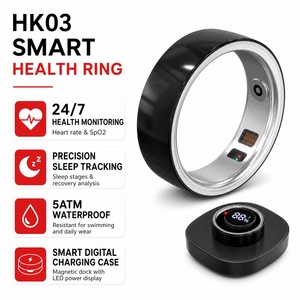
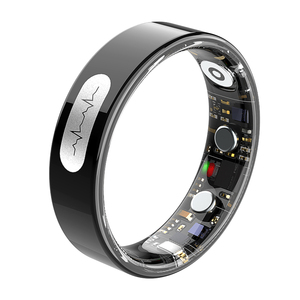
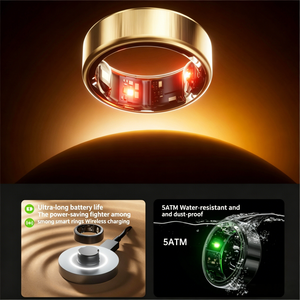
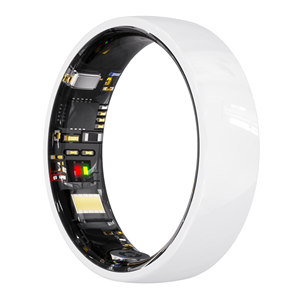
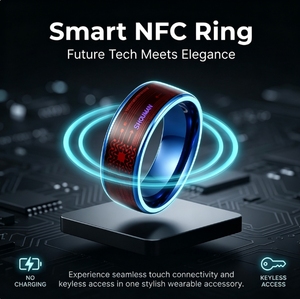
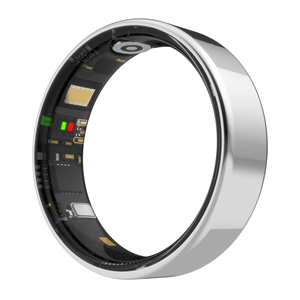
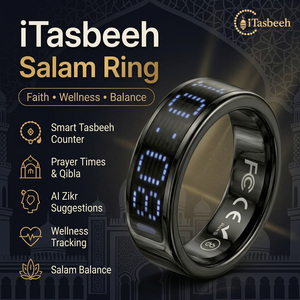
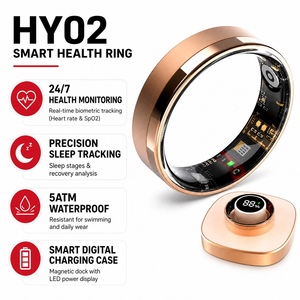
Factory-verified OEM base assemblies built with Bluetooth 5.3 SoC frameworks, titanium-grade metallurgy, and biometric health tracking arrays for private-label brand deployment.

Tier-1 Manufacturing Standards

Industrial Infrastructure: Shenzhen Direct Plant Capability

Eliminating third-party trading markups through vertically integrated RF acoustic engineering, automated surface-mount lines, and certified quality governance.

8 High-Speed SMT Lines

Operating precision Yamaha and Panasonic surface-mount placement lines capable of micro-component positioning (down to 0201 packages) for tight TWS acoustic cavities and hybrid SoC wearable layouts.

ISO9001:2015 Process Control

Stringent incoming raw-material inspection (IQC), in-line optical inspection (AOI), environmental RF testing in anechoic chambers, and rigorous aging verification to ensure defect yields below 0.15%.

Turnkey OEM / ODM Agility

Low barrier B2B entry starting at MOQ 200 units. Full-spectrum white-label solutions encompassing laser engraving, DSP equalization profiles, localized firmware, custom SDKs, and retail master packaging.

Rapid Turnaround & Compliance

Complete functional sample delivery within 7 working days; high-volume bulk production delivery in 15–25 days. Every batch ships with authentic CE, FCC, RoHS, and MSDS/UN38.3 battery dossiers.

Industry Sourcing Report

Future Procurement Trends: The Convergence of TWS & Biometrics

An analytical overview of technical procurement shifts, acoustic silicon development, and market dynamics shaping the consumer audio and smart hardware import channels through 2026–2030.

1. Architectural Shift to Edge-AI & Neural Noise Cancellation

The global demand for standard Bluetooth audio has hit product parity. Enterprise B2B purchasers are now pivoting toward Edge-AI computing integrated into low-power DSPs. The standard Hybrid Active Noise Cancellation (ANC) paradigm is migrating from fixed-filter feedback loops to dynamic, environmental scene identification algorithms capable of adjusting phase cancellation in real time.

Additionally, Environmental Noise Cancellation (ENC) for voice pickup is integrating dual and triple MEMS microphone beamforming structures powered by Deep Neural Networks (DNN) trained on millions of noise profiles. Procurement specialists must now assess silicon partner ecosystems—such as BES, Realtek, and Qualcomm—for on-chip neural processing unit (NPU) throughput rather than simple Bluetooth transmission codecs.

"Procurement channels no longer evaluate acoustic hardware on driver diameter alone. Silicon firmware programmability, spatial audio gyro-tracking, and BLE Audio Auracast integration now dictate wholesale market velocity."

Importers must target factories that preserve firmware source access to tune latency down to ultra-low thresholds (<35ms) necessary for synchronous media consumption and cloud gaming accessories.

2. Cross-Category Convergence: Hearables & Continuous PPG Sensing

The consumer wearables landscape is undergoing aggressive physical consolidation. The boundary dividing smart health trackers (such as smart rings and fitness bands) and True Wireless Earbuds has begun to dissolve into a unified Hearables Architecture.

The human ear canal provides one of the most arterial-dense, physically stabilized biometric optical reading environments on the body, superior to the dorsal wrist in optical signal-to-noise ratio. Leading OEMs are embedding photoplethysmography (PPG) optical sensors directly inside the earbud shell structure to capture core body temperature, continuous pulse wave analysis, HRV, and arterial blood oxygenation without requiring active consumer interaction.

For cross-category brands, sourcing from a manufacturer with combined expertise in both RF acoustic assembly and high-density wearable sensor packaging provides significant supply-chain leverage. Consolidating Bluetooth 5.3 RF engineering with low-noise biosensor placement reduces PCB spatial requirements by over 30%, unlocking sleek ergonomic industrial designs.

Evaluation Parameter Legacy TWS Solutions (Tier-3) Next-Gen TWS & Hybrid Audio Architecture Procurement Strategy Impact
Core Bluetooth Stack Bluetooth 5.0 / 5.1 Legacy Mode Bluetooth 5.3 / 5.4 with BLE Audio & LC3 50% less power consumption; Auracast multi-listener support.
Acoustic DSP / Processing Standard Fixed Biquad Filters Integrated NPU / Dual-Core DSP with Adaptive ANC Enables firmware-updatable voice isolation and low latency.
Biometric Sensor Integration None (Audio and Mic Only) Infrared In-Ear Detection + Optical PPG Core Module Positions client brand into high-margin health & wellness tier.
Waterproof / Barrier Level IPX4 Splash Resistance IP68 / Micro-Structural Nano Coating Reduces RMA return rates from sweat acid and submersion incidents.
Battery Cell Chemistry Standard Liquid Electrolyte Pure Cobalt High-Density Cells with Protection IC Prevents cell degradation; guarantees 500+ deep cycles for retail longevity.

3. Next-Gen Materials: Titanium Alloys & Zirconia Ceramics

Product durability and tactile luxury are foundational to establishing premium shelf value. While consumer electronic housings were historically limited to low-cost ABS/PC polymers, tier-1 manufacturing in Shenzhen has transitioned to aerospace-grade metals and sintered ceramics.

Materials such as TC4 Titanium Alloy and Microcrystalline Zirconia Ceramic provide hypoallergenic biocompatibility, complete chemical resistance to human sweat, and superior RF permeability when engineered with non-interfering antenna windows. From an engineering viewpoint, precision micro-milling and vacuum sintering prevent the signal attenuation issues typical of poorly grounded structural metal cases.

4. Navigating Global Customs & Certification Compliance

The regulatory barrier for international electronics trade continues to intensify. Procuring devices without rigorous pre-certification documentation puts importers at severe risk of container seizures at European and North American ports of entry.

A legitimate Chinese manufacturer must supply fully traceable compliance documentation: CE-RED (Radio Equipment Directive) for EU spectral integrity, FCC ID Certification for North American emissions, and comprehensive chemical audit trails verifying RoHS and REACH SVHC compliance. Furthermore, with stricter air and ocean cargo restrictions on lithium batteries, UN38.3, MSDS, and 1.2-meter drop test certifications must be verified directly against the production batch before dispatch.

Procurement Advisory

Frequently Asked Questions for B2B Importers

Critical operational answers regarding factory audits, tooling lead times, MOQ thresholds, and firmware customization protocols.

What is the standard Minimum Order Quantity (MOQ) for custom OEM orders?
Our standard production MOQ starts at 200 units per model for private-label white-box programs utilizing our existing tooling and verified PCBA layouts. This includes custom laser logo branding, customized packaging, and factory-flashed multilingual firmware. For deep ODM modifications involving new injection molds, proprietary acoustic chambers, or custom-designed PCB layouts, our baseline project threshold typically starts at 1,000 to 3,000 units depending on component supply-chain commitments.
How does the factory conduct acoustic and biometric quality validation?
Every production batch undergoes automated functional testing at multiple checkpoints. Acoustic modules are evaluated in isolated anechoic chambers utilizing artificial ear simulators to measure frequency response curves, Total Harmonic Distortion (THD < 1% at 1kHz), and ANC phase attenuation across 20Hz–20kHz bands. For biometric and health wearables, our engineering laboratory runs multi-axis shaker tables, high-pressure water submersion tanks (IP68/5ATM), and specialized optical PPG simulators to calibrate pulse rate and oxygenation algorithms against clinical reference standards.
What are the typical lead times for functional prototypes versus mass production?
Following receipt of client design files (vector branding, CMF specifications, and custom firmware parameters), fully functional engineering prototypes are completed and dispatched within 7 business days. Once the golden pre-production sample is approved and component commitments are secured, mass production lead times generally range between 15 to 25 calendar days, contingent upon order volume and current semiconductor allocation cycles.
Can our engineering team customize Bluetooth firmware and Companion Apps?
Yes. We provide complete firmware-level customization, including the configuration of Bluetooth Broadcast Names, localized Voice Prompts, default DSP EQ profiles, touch sensor sensitivity mappings, and custom battery power tables. For software ecosystems, we provide white-label companion application templates (iOS and Android) along with comprehensive API/SDK documentation for client teams requiring direct integration into proprietary corporate, telecommunications, or healthcare backends.
What international export certifications accompany shipments?
Our manufacturing plants operate strictly under ISO9001:2015 quality management systems. Base models carry pre-cleared CE, FCC, RoHS, and WEEE compliance certifications. Battery cells are engineered with discrete protection circuit modules (PCMs) and ship with authentic UN38.3 test reports, Material Safety Data Sheets (MSDS), and sea/air transportation condition appraisals to guarantee unhindered global customs clearance.
What warranty parameters and defective unit RMA policies are offered?
We provide an enterprise-grade 12-month factory warranty on all finished hardware units. For high-volume export orders, we routinely supply a 0.3% to 0.5% spare-unit allocation buffer with the shipment to handle immediate end-user replacements without reverse-logistics friction. In the rare event of batch component failure, our Shenzhen engineering office coordinates rapid root-cause analysis (8D reporting) and immediate hardware remediation.
Direct Factory Engagement

Launch Your Hardware Portfolio with China's Premier OEM Partner

Connect directly with our acoustic and wearable engineering group. Get comprehensive price matrices, customized sample packages, and technical teardowns delivered within 24 hours.

Chat with Sales