Featured OEM/ODM Smart Wearable Portfolio
Factory-direct smart rings, ceramic bio-monitors, and wireless edge devices engineered with high-density multi-layer substrates, ultra-low power consumption PMICs, and calibrated PPG optical arrays.
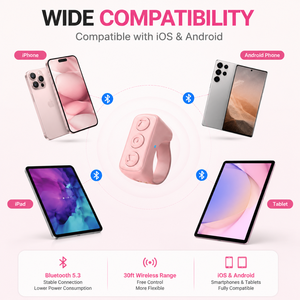
Smart Ring Wireless Remote Control for TikTok Scrolling Instagram Facebook Social Media Wearable Android IOS Device
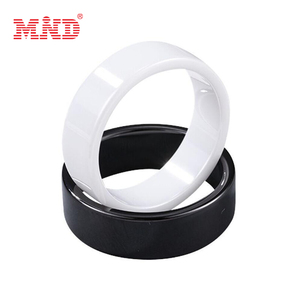
NFC 13.56Mhz Smart Chip Waterproof Ceramic Smart Ring for Phone
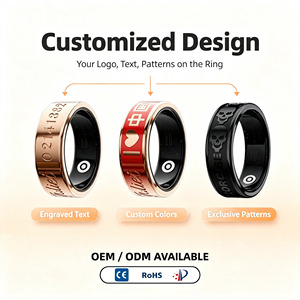
Customized Ip68 Waterproof Smart Ring Android Ios Sleep Fitness Monitor Activity Health Tracker with Magnetic Charging Case
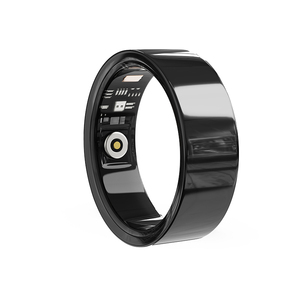
AI Health Tracker with Sleep SpO2 Monitoring IP68 Smart Ring for Men Women NFC Control Ceramic Bezel Magnetic Fast Charging
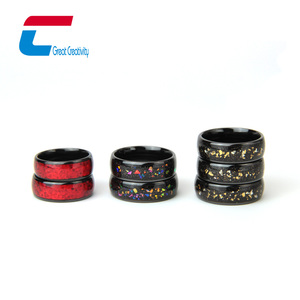
OEM/ODM RFID Smart Ceramic NFC Rings Waterproof Wearable NFC Ring for Men Women Daily Use
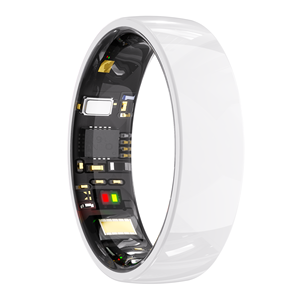
Ceramic Smart Ring with Charging Case Fast Magnetic 10-15 Days Standby Heart Rate Blood Oxygen Sleep Tracker IP68 TK8Pro
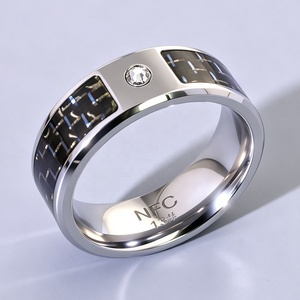
XZX Custom Smart Ring Stainless Steel Carbon Fiber Inlay Diamond NFC Enabled Wearable Personalized Fashion Jewelry for Men
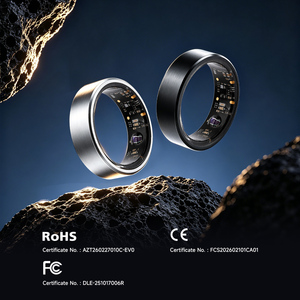
Waterproof Smart Ring for Sleep Rings Tracking Heart Rate Monitoring Sports Photo Features Android App Control with Steel Case
Engineered in Shenzhen: The Pure Direct Manufacturer Advantage
Unlike export brokers and trading intermediaries, Shenzhen Tucks Technology Co., Ltd. operates a vertically integrated hardware manufacturing hub. From chip-on-board micro-soldering to optical calibration and hermetic laser sealing, every production stage is auditable under ISO9001:2015 frameworks.
Micro-Substrate SMT Engineering
Equipped with state-of-the-art Yamaha and Panasonic high-speed placement lines handling ultra-dense 01005 passive components, flexible rigid-flex PCBs, and stacked System-in-Package (SiP) modules. This delivers sub-millimeter tolerances required for ergonomic curved inner shells in smart rings and lightweight smart glasses.
Comprehensive Global Regulatory Compliance
All wearable models carry verified CE, FCC, RoHS, and REACH documentation ready for swift customs clearance. Our products pass SAR (Specific Absorption Rate) thresholds and RoHS lead-free guidelines. We maintain comprehensive technical documentation files (TCF) to support enterprise clients facing stringent import inspections in North America and the European Union.
Rapid Prototyping & Agile Scalability
Accelerate commercialization cycles with 7-day turnkey functional samples including bespoke firmware, laser logo etching, and custom packaging. Supported by automated inventory management, our volume production line reliably completes 200 to 50,000 unit runs within 15–25 business days, shielding global buyers from supply disruptions.
Strategic Sourcing Trends: The Future of Smart Wearable Procurement
As consumer expectations shift from basic activity tracking to continuous clinical-grade bio-analytics and seamless ambient intelligence, procurement teams must navigate profound shifts in component availability, material science, and edge AI algorithms.
Shift Toward Hypoallergenic Bio-Ceramics
Procurement data indicates a 42% YoY surge in demand for microcrystalline zirconia ceramic ($ZrO_2$) and medical-grade austenitic steel in place of conventional polycarbonates. Sourcing teams prioritize non-reactive, skin-friendly materials that prevent contact dermatitis during 24/7 wear while transparently transmitting optical PPG signals and RF electromagnetic waves without capacitive attenuation.
Multi-Wavelength Optical Biometrics
The market is transitioning away from single green-LED pulse monitors. Modern enterprise tenders mandate multi-spectral optical clusters combining 525nm (Green), 660nm (Red), and 940nm (Infrared) wavelengths. This multi-channel configuration ensures precise peripheral capillary oxygen saturation ($SpO_2$) calculation, arterial elasticity indexing, and deep-tissue HRV tracking across diverse skin tones and perfusion indices.
Energy-Dense Solid-State Micro-Cells
Form-factor constraints in smart rings require energy densities exceeding 350 Wh/L within ultra-miniaturized curved lithium-ion cells. Sourcing managers now prioritize custom PMIC architectures featuring ultra-low quiescent sleep currents (<1.2µA) paired with magnetic induction cradles that replenish 80% battery capacity in under 28 minutes, providing 10–15 days of practical standby endurance.
Comprehensive Hardware Architecture & Component Matrix
Compare core parameters across form-factor categories to inform your hardware specification brief before committing tooling budgets and initiating production runs.
| Wearable Architecture | MCU / SoC Core | Biosensor Suite | Housing & Ingress Sealing | Power Profile | Ideal B2B Market Segment |
|---|---|---|---|---|---|
| Smart Ring Series (Ceramic ZrO2) | Nordic nRF52840 / Dialog DA14531 (Cortex-M4) | Multi-wavelength PPG, NTC Thermistor, 3-Axis Accel | Nanocrystalline Zirconia Ceramic, IP68 (5ATM Vacuum Sealing) | 18–24mAh Curved Li-Po, 5–7 Days Run / 15 Days Standby | Health-Tech Ecosystems, Corporate Wellness, Jewelry Brands |
| AMOLED Smartwatch (e.g. Watch Ai 4 / W12) | Realtek RTL8763EWE-VP / JL7012 (Dual-Mode BLE) | VC30F Dynamic PPG, Blood Pressure Pulse, SpO2, Pedometer | Zinc Alloy Chassis + IML Back Shell, IP68 Waterproof | 300–375mAh High-Density Cell, 5–7 Days Bluetooth Calling | Consumer Electronics Brands, Telecom Operators, Retail Chains |
| Rugged Outdoor GPS Watch (Explorer Pro) | Dual-Core MCU with Dedicated GNSS Satellite Baseband | Barometric Altimeter, 6-Axis IMU, Geomagnetic Compass, PPG | Reinforced Polycarbonate + 316L Bezel (MIL-STD-810H Level) | 350–420mAh Polymer, 12 Days Low-Power / 30h Active GPS | Tactical Hardware Importers, Sports & Marine Wholesalers |
| NFC Contactless Access Rings | NXP NTAG216 / MIFARE Classic IC (Passive RF) | Zero Internal Sensors (Passive Resonant Tank Circuit) | Surgical 316L Stainless Steel + Carbon Fiber Inlay (IP68) | Zero Battery Drain (Powered via 13.56MHz Interrogation Field) | Security Access Firms, FinTech Payment Pilots, Smart Luxury |
End-to-End Quality Validation Protocols at Tucks
Mitigate post-market returns and safeguard brand equity. Our Shenzhen facility implements a multi-stage testing regimen that exceeds consumer-grade standards.
1. Automated Optical & X-Ray Inspection
100% of populated printed circuit boards pass high-resolution 3D AOI (Automated Optical Inspection) and selective 3D X-ray microscopy to detect solder bridging, BGA ball voiding, and micro-component misalignment prior to conformal resin potting.
2. Pneumatic & Hydrostatic Chamber Testing
Every waterproof device undergoes dual-stage testing: dry differential air-pressure decay to detect structural micro-leaks, followed by randomized immersion cycling in specialized hydrostatic tanks calibrated to 5ATM pressures (equivalent to 50 meters depth).
3. Accelerated Thermal Shock & Aging
Units undergo continuous 72-hour dynamic burn-in cycling across thermal extremes (-20°C to +60°C). Batteries, charging cradles, and Bluetooth transceivers are actively exercised to identify early-life failures before lot packaging and shipment sign-off.
Frequently Asked Questions for Sourcing Directors
Direct engineering answers to the technical, legal, and operational inquiries procurement teams address when evaluating China-based smart wearable manufacturers.
What are the exact minimum order quantities (MOQ) and setup costs for custom branding?
How do you handle firmware customization, Bluetooth UUIDs, and companion mobile apps?
What international export certifications and battery transport compliance documents are supplied?
How does your factory ensure RF antenna efficiency across metal and ceramic ring housings?
What are the lead times for functional prototypes, tooling, and mass production runs?
What is your factory warranty policy and process for handling defective units (RMA)?
Partner with a Proven Shenzhen Smart Wearable Manufacturer
Whether launching a dedicated private-label smart ring line, developing custom edge-AI health monitoring devices, or expanding into enterprise wearable ecosystems, our engineering and production teams stand ready to turn your product roadmap into market-ready hardware.