Precision Connected Hardware: Integrated Ring & AI Node Ecosystem
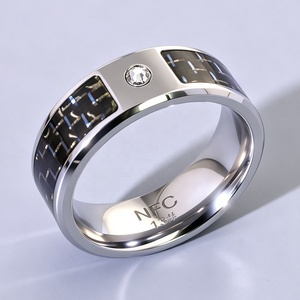
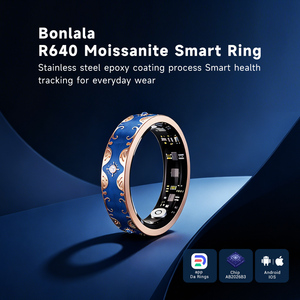
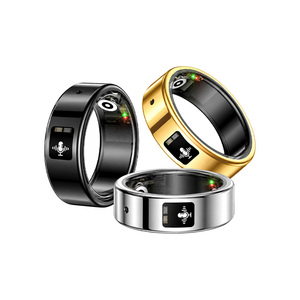
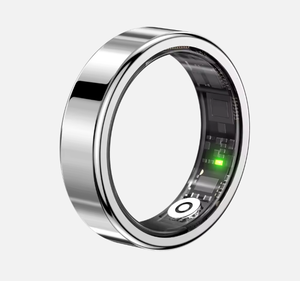
Before examining optical headsets, enterprise spatial systems rely on low-latency micro-wearable inputs. Discover our ISO9001:2015 manufactured wearable biometric, voice, and NFC nodes engineered for industrial field integration.
AI Glasses vs. AR Glasses: Demystifying Optoelectronic & Compute Topologies
For European technical directors and device procurement officers, conflating AI audio/vision glasses with Augmented Reality (AR) optical waveguide systems leads to misalignment in Bill of Materials (BOM), battery envelopes, and thermal performance.
AI Glasses (Audio & Vision Sensing)
AI glasses prioritize ambient, non-intrusive edge computing. Designed without bulky optical engines, they leverage dual MEMS beamforming directional microphones, low-power Sony CMOS camera sensors, Bluetooth 5.3/5.4 LE audio chips, and on-board or cloud LLM interpreters (ChatGPT/Claude APIs). Weight ranges from 38g to 52g, enabling continuous all-day comfort for Berlin logistics staff and corporate field technicians.
True AR Glasses (Spatial Optical Waveguide)
AR systems deliver true spatial registration and graphical overlays into the user's retina. They combine Micro-OLED or Micro-LED light engines with diffractive (surface relief) or geometric reflective optical waveguides. AR headsets demand 6DoF spatial tracking (dual visual SLAM tracking cameras, IMU 9-axis clusters), requiring dedicated NPU power chips like Qualcomm Snapdragon XR2. Weight typically exceeds 78g to 135g with active thermal dissipation.
Industrial Hybrid Ecosystems
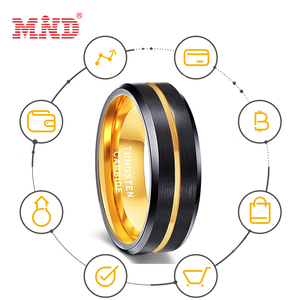
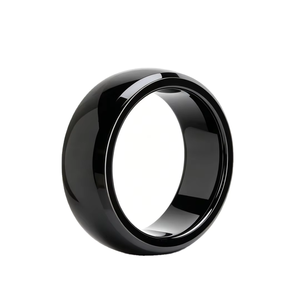
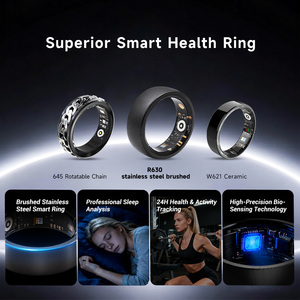
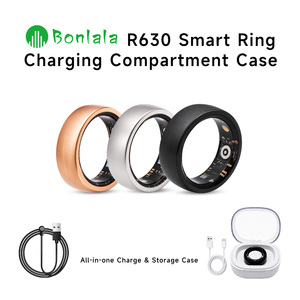
In real-world deployment across Berlin and broader Germany, pure AR headsets often trigger cognitive fatigue during 8-hour factory shifts. Modern OEM deployments frequently adopt a hybrid architecture: AI voice/camera frames for continuous field auditing, coupled with peripheral companion controllers like NFC/bio-sensor smart rings or ruggedized wrist displays for zero-latency, tactile telemetry confirmations.
| Evaluation Parameter | AI Smart Glasses (Edge Vision/Voice) | True AR Optical Glasses (Waveguide/SLAM) | Shenzhen Tucks Factory OEM Offering |
|---|---|---|---|
| Optical Engine / Display | None (Audio-first) or Monocular Micro-HUD (<15° FoV) | Diffractive Waveguide / BirdBath Micro-OLED (30°–52° FoV) | High-transmittance Micro-OLED + Open Audio integration |
| Power Consumption / Cell | 180mAh – 320mAh Lithium polymer (5h–12h continuous) | 650mAh – 1200mAh (Requires tethered pocket pack, 1.5h–3h) | Fast-charge LiPo cells; 7-day stand-by; dual cell in temples |
| Compute & Processing | BLE 5.3 SoC + Edge Neural Voice + Companion Phone/WLAN | Dedicated XR2 Gen 2 / Dedicated Spatial SLAM Coprocessor | Low-latency BLE 5.3/5.4 + Open SDK for LLM endpoint API |
| BOM & Tooling Cost | Low-to-Medium ($38 - $95 OEM bulk component cost) | Extremely High ($280 - $750+ due to optical diffraction yields) | Factory-direct SMT assembly; MOQ 200 pcs from Shenzhen lines |
| GDPR / BDSG Privacy Compliance | Hardware Kill-Switch, Physical Shutter, Indicator LED | Multi-camera spatial scanning requires continuous processing | EU-spec firmware; physical red camera LED; on-device privacy filter |
| Primary Enterprise Fit | Warehouse picking, hands-free field recording, translations | CAD architectural visualization, remote complex repair | Dual SKU availability: AI Smart Frames & Companion Smart Rings |
Why Berlin? The Epicenter of Spatial Computing & Germany's Industry 4.0
Berlin represents far more than Germany's political capital; it is the algorithmic engine of Europe. Sourcing and deploying smart wearable hardware within the Berlin-Brandenburg metropolitan corridor connects Shenzhen manufacturing prowess directly with Germany’s elite software and industrial base.
The Berlin Ecosystem: From Silicon Allee to Adlershof WISTA
The Berlin tech cluster—spanning Adlershof Technology Park (Germany's largest science and technology cluster), the historical industrial spine of Siemensstadt Square, and the rapid-growth AI laboratories of Kreuzberg and Mitte—has pioneered computer vision algorithms and enterprise spatial AI workflows.
While local Berlin hardware startups excel in optical bench prototyping, high-precision refractive lens mathematics, and AI model weights, scaling to mass production reveals a bottleneck: Germany lacks high-volume Surface Mount Technology (SMT) cleanroom plants capable of producing thousands of sub-50g wearable frames with sub-millimeter component tolerances.
By pairing Shenzhen Tucks Technology Co., Ltd.'s 8 automated SMT lines with Berlin’s bespoke spatial software architectures, DACH enterprises achieve agile time-to-market without incurring astronomical domestic prototyping markups.
Spandau & Brandenburg Precision Manufacturing
On the automotive assembly lines and battery gigafactories surrounding Berlin, operators utilize AI voice and camera glasses for instant, hands-free work-order documentation. Coupled with industrial NFC rings, assembly specialists verify torque specifications, scan bin part numbers, and complete QA digital sign-offs without taking their hands off high-voltage tools.
Grossbeeren & GVZ Berlin South Intralogistics
In major freight corridors across the Berlin-Brandenburg metropolitan region (GVZ Berlin Süd), pick-by-vision AR glasses have historically suffered from battery depletion and operator headaches. High-throughput distribution centers have transitioned to lightweight AI audio frames that receive low-latency picks via Bluetooth 5.4, using biometric smart rings for rapid barcode confirmation.
Charité Universitätsmedizin & Clinical Tele-Consult
Berlin's globally renowned medical institutions deploy ultralight 42g AI camera frames for remote surgical mentoring. Surgeons stream encrypted, first-person 4K video feeds to consulting specialists across Europe while retaining open peripheral vision, adhering to stringent German medical device ergonomics and hospital sanitary sterilization standards.
Emerging Smart Wearables & Spatial Trends in Germany (2025–2030)
German hardware procurement is transitioning from experimental sandbox trials into production-grade, certified enterprise rollouts. Five distinct regulatory, optical, and hardware trends dictate purchasing decisions in Berlin and the wider DACH market.
1. Sovereign Edge Computing & EU AI Act Compliance
Under the EU Artificial Intelligence Act and Germany's Bundesdatenschutzgesetz (BDSG), enterprise smart wearables cannot stream unrestricted video data to foreign cloud servers. Next-generation factory models incorporate on-device face/license plate obfuscation at the sensor level, routing encrypted telemetry through private industrial 5G campus networks operating in Berlin industrial zones.
2. DIN EN ISO 9241 Ergonomic & Optical Duty-Cycle Standards
German trade unions (Berufsgenossenschaften) enforce strict ergonomic guidelines on head-worn displays. Headsets exceeding 60g face mandatory rest-interval regulations during commercial operation. As a result, German enterprises are shifting toward featherweight sub-48g titanium frames, reserving true AR optical headsets exclusively for brief, high-complexity inspection routines.
3. Symbiosis of Smart Rings & AI Headsets
The "Invisible Wearables Array" has become the standard procurement architecture for DACH enterprise operations. Rather than burdening glasses with power-hungry gesture-tracking cameras, users control AI glasses via subtle micro-gestures performed on an index-finger smart ring equipped with sub-surface IMUs and capacitive tap controllers.
Tucks Shenzhen: Direct-to-Factory Precision for European Importers
Shenzhen Tucks Technology Co., Ltd. eliminates trading house markups, delivering direct access to the engineers, surface-mount lines, and cleanrooms manufacturing next-generation smart glasses and companion micro-wearables.
Full CE, RoHS, & FCC Conformance
Every batch leaving our Shenzhen plant includes accredited laboratory documentation (EMC, RED directive, RoHS substance restriction, FCC IDs). German customs clearance and market surveillance verifications proceed without delays, backed by full ISO9001:2015 process trace logs.
Firmware & White-Label Localization
We supply open BLE API hooks, custom Linux/RTOS kernels, localized German language font packs, and boot-loader branding. Whether your system bridges into SAP S/4HANA or a bespoke cloud broker, our Shenzhen firmware team supports direct software integrations.
Rapid 7-Day Functional Prototyping
Bridge the gap between design approval and board evaluation. We turn around fully functional, laser-engraved prototype samples within 7 business days, followed by streamlined 15 to 25-day bulk container runs to meet German project deadlines.
Frequently Asked Questions: Sourcing Smart Wearables in Berlin & Germany
Critical operational answers regarding customs tariffs, privacy compliance, technical support, and warranty terms for German B2B buyers and supply chain executives.
What are the legal distinctions under German law between importing AI camera glasses vs standard audio frames?
Why should a Berlin enterprise source hardware from Shenzhen rather than a local European assembly house?
What is the minimum order quantity (MOQ) and sample lead time for German corporate clients?
How does Tucks ensure compliance with EU battery and electronic waste directives (WEEE, BattG)?
Can German software development firms integrate custom LLM endpoints (e.g., private Aleph Alpha or Ollama instances)?
What customs documentation and Incoterms apply to shipments heading to Germany?
Architect Your Wearables Project with Tucks Engineering
Consult with our senior hardware engineering team. Whether planning a pilot run of 200 custom smart rings or launching a white-label AI glasses brand for the DACH market, we deliver full-stack OEM/ODM manufacturing agility.
Send an Inquiry