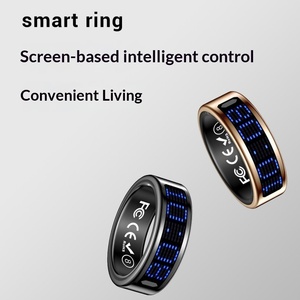
Precision Smart Rings for Osaka Importers
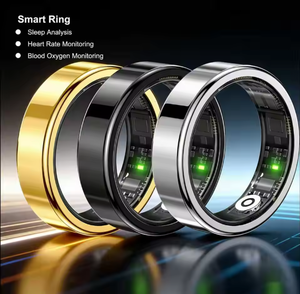
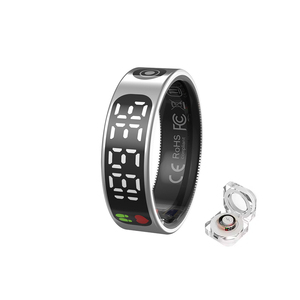
Featured Health Monitoring Ring Models for Kansai Channels
Direct from our ISO9001:2015 accredited facility in Shenzhen to Osaka distributors, wellness platforms, and consumer electronics retailers. Fully customizable hardware with open SDKs, private BLE payload decoding, and compact multi-wavelength optical sensors.
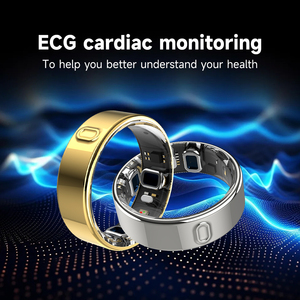
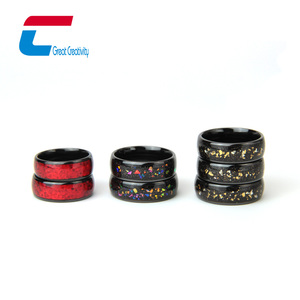
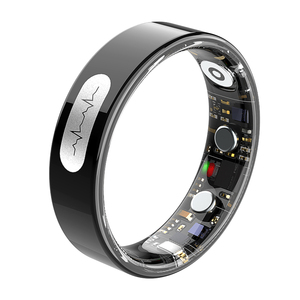
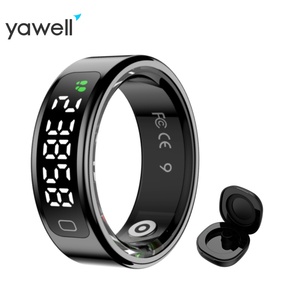
15+
Years Wearables Engineering (Est. 2008)
8
High-Precision In-House SMT Lines
2M+
Annual Smart Device Finished Unit Output
500+
Global B2B Partners Across 30+ Countries
Regional Market Intelligence · Whitepaper Level Depth
Engineering Bio-Sensory Rings for Osaka’s Aging Society & High-Tech Wellness Sector
As the primary commercial hub of western Japan and the epicenter of the Keihanshin metropolitan belt, Osaka represents one of the world's most discerning, quality-sensitive markets for compact health wearables. Driven by national policy frameworks like Society 5.0 and proactive preventative care campaigns by Japanese corporate health insurance societies (Kenpo), the demand for continuous biological monitoring has outgrown the bulky form-factor of smartwatches.
Smart rings measure photoplethysmography (PPG) signals directly through the palmar digital arteries of the finger. Unlike the dorsal surface of the wrist—where thick epidermal tissue, muscular movement artifacts, and wrist-bone shading introduce noise—the digital arteries provide an exceptionally high signal-to-noise ratio (SNR). Shenzhen Tucks Technology delivers advanced optoelectronic engineering designed to meet Osaka’s rigorous standards for unobtrusive, round-the-clock biometrics.
Clinical-Grade PPG & HRV
Equipped with dual green (525nm) and infrared (940nm) emitters combined with custom analog front-ends (AFE). Tracks continuous beat-to-beat inter-beat intervals (IBI) to compute Root Mean Square of Successive Differences (RMSSD) for real-time autonomic nervous system and stress evaluations.
Ultra-Compact Micro-Packaging
High-density System-in-Package (SiP) integration embedding Nordic Semiconductor low-power Bluetooth 5.3 SoCs, solid-state batteries, and high-conductivity titanium or medical-grade epoxy resin encasements. Lightweight build (under 4.5 grams) ensuring unmatched sleeping comfort.
Export Compliance Ready
Full manufacturing alignment with Japan Radio Law (MIC / TELEC certification), RoHS substance restrictions, PSE safety certifications for inductive charging docks, and export clearance protocols specifically prepared for Osaka Port and Kansai International Airport (KIX).
Comparative Sensor Architecture: Smart Ring vs. Traditional Smartwatch
For procurement officers at Osaka-based consumer tech brands and hospital software integrators, understanding the physical architecture differences is critical for positioning smart ring product tiers:
| Evaluation Parameter | Shenzhen Tucks Smart Ring Solution | Conventional OEM Smartwatch | Relevance to Japanese Consumers |
|---|---|---|---|
| Optical Artery Alignment | Palmar digital arteries (dense capillary bed, high perfusion) | Radial & ulnar capillary beds (subject to tendon occlusion) | Higher resting HRV accuracy during sleep; negligible motion noise. |
| Form Factor & Weight | 2.8g – 4.5g ultra-thin aerospace titanium alloy | 35g – 65g zinc alloy / stainless casing with silicone band | High adherence rate among Japanese seniors who dislike heavy wristwear. |
| Battery Consumption | Dynamic duty-cycle BLE 5.3 beaconing (5 to 7 days run time) | Heavy display backlight drain (1 to 2 days average battery) | Reduces charging friction; ideal for uninterrupted polysomnography. |
| Water Immersion Rating | Seamless vacuum resin mold: 5ATM / IP68 / IP69K | Speaker/Mic gasket dependent: IP67 to IP68 standard | Withstands daily onsen (hot spring) culture and frequent hand sanitizing. |
Hyper-Localized Deployment
Target Application Scenarios Across the Osaka Metropolitan Region
Our OEM/ODM smart rings are engineered to match specific socio-demographic use cases across Kansai, allowing importers to deploy targeted marketing narratives for domestic B2B and B2C channels.
Senior Remote Care in Northern Osaka & Sakai
In residential areas like Senri New Town and Sakai, elderly populations benefit from unobtrusive pulse arrhythmia and nocturnal hypoxemia detection. Our rings stream non-intrusive biometrics to family dashboards and local clinical monitoring software via secure cloud APIs.
Stress & Fatigue Tracking for Umeda & Honmachi Workers
Corporate wellbeing initiatives among commercial conglomerates across Osaka’s central business districts require quantified stress metrics. Continuous autonomic nerve balance (Sympathetic vs. Parasympathetic tone) provides real-time burnout detection without camera-based intrusions.
Marathon Running & Fitness Along the Yodo River
Osaka’s passionate distance-running communities training along the Yodogawa trails require continuous aerobic threshold tracking without the bulk of sports watches. The lightweight aerodynamic ring profile provides accurate VO2 Max estimation and sleep recovery metrics.
Emerging Industry Dynamics
Macro Trends Shaping Smart Ring Sourcing in Japan (2025–2030)
The Japanese wearable market is undergoing a structural transition. While smartwatches have achieved peak consumer penetration, smart rings are expanding at an estimated compound annual growth rate exceeding 24.8% through 2029 across the Kansai and Kanto regions.
- ▶ FeliCa & NFC Payment Integration: High consumer interest in pairing contactless transit payment protocols with wearable finger rings to streamline commuter gate passage across the Osaka Metro network.
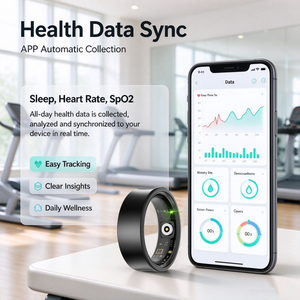
- ▶ Clinical Cloud Data Synchronization: Japanese healthcare portals increasingly demand open SDKs to aggregate SpO2, continuous skin temperature, and sleep staging directly into regional tele-health platforms.
- ▶ Ultra-Resilient Biocompatible Finishes: Transition from standard brushed plastics to micro-crystalline zirconia ceramics and medical titanium alloys suited for Japan’s discerning aesthetic demands.
Why Shenzhen Tucks Is the Preferred Supply Chain Partner
Operating an ISO9001:2015 certified engineering and assembly campus in Shenzhen, China, Shenzhen Tucks Technology Co., Ltd. bridges the gap between high-volume manufacturing economies of scale and strict Japanese quality thresholds.
Unlike trading brokers who outsource assembly to unverified workshops, we maintain complete vertical ownership over our 8 high-speed SMT lines, cleanroom encapsulation, RF frequency tuning, and final automated optical inspections (AOI).
Customized firmware packages, Japanese packaging translations, low 200-piece trial MOQs, and reliable air freight clearance direct to Kansai Airport (KIX).
Procurement & Technical Diligence
Frequently Asked Questions by Japanese Importers
Crucial commercial, regulatory, and engineering clarifications for sourcing smart rings from China into the Kansai market.
Are your smart rings certified under Japan's Radio Law (TELEC/MIC)?
Yes. We collaborate with accredited testing laboratories (such as TELEC and TÜV Rheinland) to facilitate Radio Law Type Approval (Giteki mark certification) for the Bluetooth RF modules embedded within our smart rings. When launching an OEM custom-branded project, we provide full modular test documentation or manage the Japanese certification filing on your brand's behalf.
How do you address sizing standards for the Japanese demographic?
We offer customized sizing tooling ranging from Japanese standard sizes #8 to #26 (US sizes 5 through 14). We supply physical 3D-molded sizing kits with branded laser engravings for your retail customers, ensuring correct palmar arterial contact and eliminating return rates caused by improper ring fitment.
Can we access raw sensor data via SDK/API for proprietary Japanese software?
Yes. On models such as the Yawell R11C and our clinical ECG ring series, we provide complete Bluetooth communication protocol documentation, iOS and Android native SDKs, and payload decryption keys. This allows Osaka healthcare developers, gym chains, and corporate platforms to pull raw photoplethysmography (PPG), acceleration, and temperature telemetry directly into their private cloud infrastructure.
What is the standard Minimum Order Quantity (MOQ) and production turnaround?
Standard OEM branding (custom ring laser logo, tailored companion app splash screen, and localized Japanese user manual) begins at a flexible 200 pieces. Functional proof-of-concept samples are completed in 7 days, with bulk mass production runs dispatched in 15 to 25 days via direct air cargo to Osaka Kansai International Airport (KIX).
How are waterproofing and thermal resistance verified for Japanese lifestyle habits?
Every production batch undergoes 100% pneumatic leak testing followed by 5ATM hydrostatic water chamber submergence tests. The seamless internal epoxy resin encapsulation isolates all active circuitry, battery electrodes, and sensor boards from salt, perspiration, and thermal variations experienced during daily baths and sports.
What quality inspection standards are applied prior to Osaka shipment?
Our factory operates under an ISO9001:2015 audited quality management system. Production incorporates incoming component IQC, SMT solder paste automated optical inspection (AOI), 48-hour continuous battery aging cycles, and AQL 1.0/2.5 outgoing quality control (OQC) checks to meet the stringent defect thresholds expected by Japanese consumer channels.
Direct Factory Engineering Access
Launch Your Smart Health Ring Program in Osaka Today
Speak directly with our senior hardware engineers and international trade specialists. Obtain real-time pricing grids, SDK documentation, and sample availability for your target launch window.
Contact Us