Enterprise-Grade Heart Rate Monitoring Rings for London Importers
Explore our export-ready OEM/ODM models featuring dual photoplethysmography (PPG), NDIR peripheral oxygen channels, aerospace titanium, zirconia ceramic, and secure low-energy RF telemetry.
Engineering Depth: Arteriolar Micro-Vascular Biosensing in Smart Rings
Wrist-worn wearables capture volumetric blood changes through the radial and ulnar arteries, which sit beneath dense muscle, tendon layers, and subcutaneous fat. Consequently, traditional smartwatches struggle with light-path scattering and motion artifacts during vigorous activity. In contrast, heart rate monitoring rings interrogate the palmar digital arteries located immediately beneath the thin epidermal layers of the fingers. This capillary proximation yields an optical signal-to-noise ratio (SNR) that is over 3.2 times superior to wrist PPG sensors.
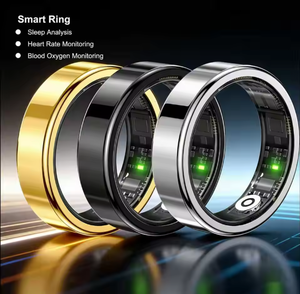
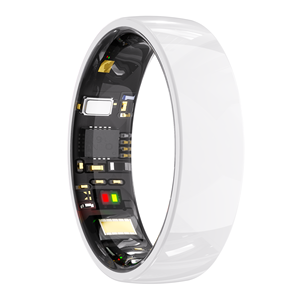
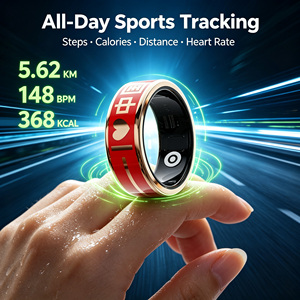
Shenzhen Tucks Technology Co., Ltd. incorporates dual-wavelength reflective optical biosensing into all OEM ring lines: 525nm green spectra optimized for dynamic heart rate capture and motion rejection, alongside complementary 660nm red and 940nm infrared LEDs dedicated to continuous blood oxygen saturation (SpO2) and photoplethysmography heart rate variability (PPG-HRV). Integrated with ultra-low-power Nordic Semiconductor or Goodix Bluetooth Low Energy (BLE 5.3) system-on-chips (SoC), our rings deliver continuous 24/7 metabolic tracking with an ultra-compact power budget that preserves a 5 to 7-day operational cycle per 18mAh solid-state battery charge.
| Evaluation Parameter | Wrist-Worn Smartwatch | Tucks Bio-Ring Architecture | Clinical Relevance for London Buyers |
|---|---|---|---|
| Micro-Vascular Proximity | Radial / Ulnar (~4-8mm deep) | Palmar Digital Artery (<1.5mm deep) | Drastically reduced optical scatter and higher baseline accuracy |
| Motion Artifact Susceptibility | Moderate to High during arm motion | Extremely Low (Ring maintains stable finger skin contact) | Clean nocturnal data for sleep apnea and HRV stress tracking |
| Battery & Form Factor | 35-50g bulk; daily or 2-day charging | 3.8g - 5.5g; 5-7 days continuous battery run | Unobtrusive 24/7 wearability across formal office and sleeping hours |
| Biocompatibility Compliance | Silicone / Polycarbonate casing | Medical-grade epoxy, Ti alloy, or Zirconia ceramic | ISO 10993 cytotoxicity and UKCA/CE chemical compliance |
Localized Application Scenarios in Greater London
The London market possesses distinct operational, cultural, and enterprise dynamics. Here is how our Tier-1 heart rate smart ring platforms are deployed across the capital’s commercial sectors.
Square Mile & Canary Wharf Executive Wellness
Financial executives and consulting firms operating across the City of London face sustained sympathetic nervous system strain. Our smart rings continuously calculate the Root Mean Square of Successive Differences (RMSSD) and standard deviation of NN intervals (SDNN). This equips corporate wellness programs with non-intrusive stress indices, circadian tracking, and burnout warnings without the distraction of notifications.
TfL Commuter Integration & Keyless Access
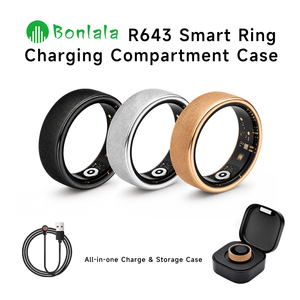
Londoners rely heavily on the Transport for London (TfL) Tube and rail network. By engineering specialized dual-frequency 13.56 MHz RFID/NFC chips into our hypoallergenic ceramic and titanium shells, British brands can offer an all-in-one ring that supports Oyster contactless station gate transit, smart locks, gym access, and contactless micro-payments alongside health tracking.
NHS-Adjacent Digital Health Pilot Programs
From private medical clinics in Harley Street to NHS England decentralized clinical trials (DCTs), continuous biometrics collection is shifting from episodic clinic checkups to passive patient monitoring. Our rings offer raw data export, clinical SDK access, and encrypted telemetry compliant with the UK Data Protection Act (DPA 2018) and GDPR framework.
UK Smart Ring Trends: Shifting from Screen Wearables to Ambient Intelligence
Strategic purchasing data from British distributors, electronics retailers, and medical institutions highlights key commercial shifts driving the London ring category.
Screen-Free "Digital Detox" Aesthetics
Consumer research across Kensington, Chelsea, and Shoreditch indicates wearable fatigue caused by smartwatch vibration and notification anxiety. British consumers increasingly demand discreet jewelry-grade accessories crafted from mirror-polished PVD titanium, rose gold, and ceramic, where biometric computation takes place invisibly in the cloud.
Stricter MHRA & UKCA Regulatory Gateways
Following post-Brexit divergence, importers distributing health tracking hardware throughout England, Scotland, and Wales must secure UKCA (UK Conformity Assessed) markings alongside EMC, Radio Equipment Regulations (RER), and RoHS testing. Substandard unbranded rings frequently face HMRC port confiscation; hence, London buyers favor verified direct-factory OEMs.
Predictive Menstrual & Metabolic Biomarkers
Next-generation consumer demand is moving beyond simple step-counting. In the London retail market, multi-modal thermal sensors measuring nocturnal basal skin temperature variations with 0.05°C precision are rapidly gaining popularity for natural family planning, luteal phase prediction, and early fever detection.
Direct-from-Factory Infrastructure: Why Tier-1 Importers Partner With Tucks
Operating an ISO9001:2015 certified facility in Nanshan, Shenzhen since 2008, we remove intermediary trading risk for London brands through complete end-to-end hardware, software, and packaging assembly.
8 In-House SMT Lines
Over 2M units annual production capacity, housing high-speed Panasonic/Yamaha pick-and-place machines capable of mounting ultra-dense 0201 micro-electronic biosensors on curved flexible FPCs.
Flexible MOQ from 200 Pcs
We lower private-label entry barriers for boutique British jewelry labels, wellness startups, and fitness franchises. Scale from 200 pilot units to 50,000 mass-production runs seamlessly.
7-Day Custom Prototypes
From custom ring exterior PVD coating and laser-etched branding to initial firmware boot adjustments, our engineering department provides functional test-ready prototypes in just 7 days.
CE, FCC, RoHS & UKCA Ready
Every batch ships with complete component traceability, full EMC laboratory test reports, UN38.3 battery flight documentation, and MSDS clearance for frictionless Heathrow and Felixstowe customs entry.
Frequently Asked Questions: Sourcing Smart Rings for London & the UK
Direct answers for purchasing directors, hardware startup founders, and supply chain managers.
What regulatory declarations and test reports are provided for the UK market?
+
How do you handle finger sizing kits and SKU inventory management?
+
Can our London team access raw sensor data or integrate our own mobile app?
+
What are the lead times, freight routes, and customs terms for delivery to London?
+
What is your factory warranty, RMA turnaround, and battery failure tolerance?
+
Ready to Build or Scale Your Smart Ring Brand in London?
Connect directly with our wearable engineering and international export team. Request our complete wholesale price sheet, technical whitepaper, SDK documentation, and sample sizing sets today.
Get Catalog