Flagship AI Wearable Modules & Sub-System Transceivers
Complementing AI audio-visual translation glasses with synchronized physiological feedback, discreet telemetry, and encrypted BLE 5.4 command triggers. Engineered in Shenzhen, calibrated for North American commercial deployment.
How Do AI Translation Glasses Work? The Complete Signal Pipeline
From micro-acoustic bone conduction capture to sub-second large language model inference, explore the mechanical, algorithmic, and optoelectronic stack driving real-time bilateral interpretation.
1. Spatial Dual-MEMS & Beamforming Acoustic Front-End
The signal chain begins at the spectacle temples. Two precision micro-electro-mechanical systems (MEMS) microphones use spatial beamforming algorithms to filter out ambient industrial noise, wind turbulence, and cross-talk, isolating speech within a narrow 30-degree cone centered on the speaker's mouth with SNR gains exceeding 24dB.
2. Edge VAD & Low-Latency Bluetooth 5.4 Uplink
Embedded low-power Voice Activity Detection (VAD) instantly segments raw audio into discrete semantic tokens. Instead of transmitting redundant silence, the on-board Nordic/Qualcomm wearable SoC compresses speech using LC3 high-efficiency codecs over an ultra-low latency BLE 5.4 pipe directly to a paired smartphone gateway or 5G mobile edge computing (MEC) node.
3. Hybrid Neural MT & Contextual Large Language Models
In the cloud or localized server cluster, automated speech recognition (ASR) converts phonemes to text, which is parsed by Transformer-based Neural Machine Translation (NMT) engines combined with domain-specific LLMs. This preserves colloquial nuance, professional terminology, and cultural idioms between English, Spanish, Mandarin, Japanese, and 120+ dialects in under 450ms.
4. Diffraction Waveguide HUD & Open-Ear Reverse-Phase Audio
Translated output delivers simultaneously through two discrete channels: textual closed captions projected into the user's peripheral field of view via micro-OLED optical waveguides (>1500 nits daylight clarity), and synthetic voice output channeled via directional open-ear micro-transducers featuring acoustic phase cancellation to prevent external eavesdropping.
| Hardware Sub-System | Conventional Consumer Smart Glasses | Tucks Enterprise AI Translation Eyewear | Operational Advantage |
|---|---|---|---|
| Acoustic Processing | Single omnidirectional condenser mic | Dual-beamforming MEMS + Bone-conduction VAD | Flawless recognition in 85dB+ noisy port/factory floors |
| Translation Latency | 1.8s – 3.2s (Cloud dependent) | < 480ms (Hybrid Edge-Cache + Dual Stream NMT) | Fluid, natural, face-to-face conversational velocity |
| Optical Waveguide | Monochromatic 480p / None (Audio only) | Diffractive Geometric Waveguide (Micro-OLED, 1080p) | Discreet teleprompting without blocking line of sight |
| Battery Runtime | 2 – 3 Hours continuous streaming | 6.5 Hours active NMT / 48 Hours standby (Pogo-pin case) | Full commercial work-shift operation without recharging |
| Companion Ecosystem | Standalone proprietary mobile app | Open BLE SDK + Smart Ring Gesture / PTT trigger | Hands-free, sterile industrial & medical operation |
Localized Application Scenarios Across Greater Los Angeles
As the primary commercial gateway between North America and the Pacific Rim, Los Angeles presents multi-lingual operational environments where instantaneous translation hardware delivers substantial productivity dividends.
San Pedro Bay Port Logistics (LA & Long Beach)
Handling over 30% of US containerized maritime imports, terminal superintendents, drayage truckers, customs brokers, and foreign vessel crews constantly encounter high-friction language barriers. Wearable AI glasses enable dockside foremen to read cargo manifests in real-time, inspect container seals, and communicate seamlessly in Spanish, Tagalog, Vietnamese, or Mandarin while keeping hands entirely free to operate machinery and handle safety gear.
Hollywood & Burbank Multinational Film Crews
Southern California's media production ecosystem relies on globally distributed talent. On live-action studio lots and virtual production stages in Culver City and Burbank, directors of photography, audio engineers, and VFX specialists communicate across distinct technical terminologies. AI translation eyewear allows instant translation of scripted directions, visual blocking cues, and audio terms without relying on bulky handheld walkie-talkies or intermediary translators.
Greater LA Healthcare & Clinical Triage Centers
In Los Angeles County public health facilities and hospital networks (e.g., LAC+USC Medical Center), triage nurses and ER physicians frequently care for patients across 80+ spoken languages. Prescription instructions, trauma symptoms, and triage assessments can be visually transcribed directly to the clinician's eye-line via HIPAA-compliant micro-waveguide glasses, minimizing diagnostic delays and eliminating cross-contamination risks from shared phones.
Downtown LA Fashion District & Wholesale Trade
The DTLA wholesale garment and fabric cluster brings together international textile fabricators, Latin American wholesale distributors, and local fashion entrepreneurs. Our AI translation frames allow buyers to rapidly conduct negotiations, inspect fabric densities while listening to translated pricing matrices, and coordinate containerized FOB/CIF shipping quotes on the go without missing subtle verbal context.
Localized Development Trends Shaping the LA Smart Wearables Market
The confluence of Silicon Beach venture funding, municipal bilingual mandates, and supply-chain digitization is transforming smart glasses from consumer novelty into enterprise infrastructure.
A. Rise of "Micro-Wearable" Symbiosis (Glasses + Smart Rings)
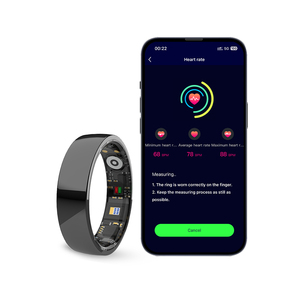
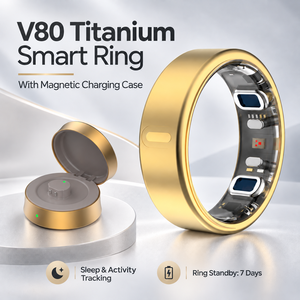
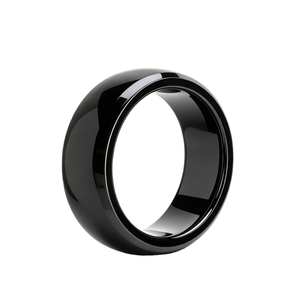
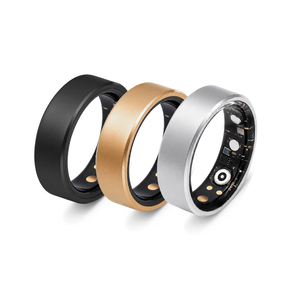
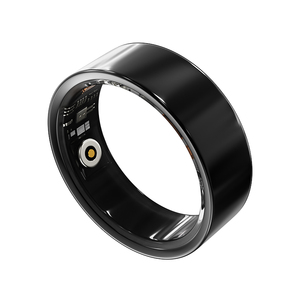
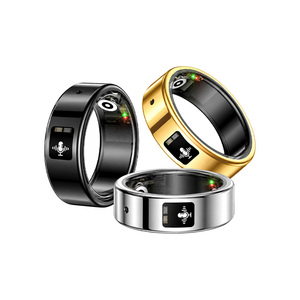
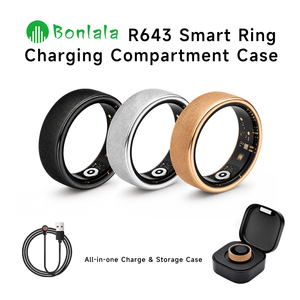
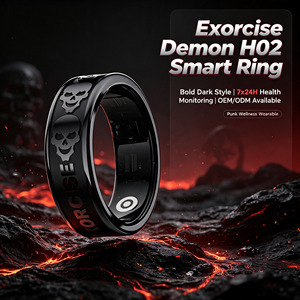
Local electronics distributors in Irvine, El Segundo, and Pasadena increasingly demand clustered wearable ecosystems. Instead of tapping the delicate frame of smart eyewear, enterprise workers pair glasses with biometric smart rings (such as our Nordic GH3228T sensor lines) featuring micro-capacitive gestures. A thumb-swipe on the ring acts as an invisible Push-to-Talk (PTT) interpreter trigger, optimizing ergonomic comfort during all-day shifts.
B. Stringent Local Data Governance & On-Premise LLM Caching
California's Consumer Privacy Act (CCPA) and health sector compliance require that audio streams are not permanently retained on external cloud servers. B2B buyers in Los Angeles are shifting toward hybrid architectures: local caching of frequently spoken industry idioms directly on device firmware, coupled with encrypted ephemeral token transfers that erase biometric audio imprints upon call termination.
C. Transition from Audio-Only to Geometric HUD Teleprompting
Earlier consumer smart glasses relied strictly on acoustic speakers, which faltered in noisy environments. The 2025-2026 trend across Southern California commercial sectors is diffractive optical waveguides. Users demand dual-mode assistance: translated audio fed via discreet bone-conduction/open-ear speakers, paired with an unobtrusive holographic green or full-color text ticker projected precisely into the upper quadrant of the lens.
Why Global Brands Partner with Shenzhen Tucks Technology Co., Ltd.
Headquartered in Nanshan District, Shenzhen—the global ground zero for advanced wearable electronics—Tucks delivers end-to-end manufacturing stability, rigorous ISO9001:2015 process controls, and competitive wholesale economics directly to Los Angeles importers, private labels, and distribution networks.
Fully Integrated In-House SMT Lines
Operating 8 advanced Surface Mount Technology (SMT) high-speed placement lines, we assemble complex multi-layer micro-PCBs in-house. This direct engineering oversight prevents third-party component substitution, ensures optimal soldering tolerances for high-density MEMS mic arrays, and yields an annual capacity surpassing 2,000,000 wearable units.
Comprehensive Regulatory Compliance
Shipping into the Port of Long Beach or LAX cargo hubs requires clean customs documentation. All Tucks hardware holds authentic ISO9001:2015, FCC Part 15 (US radio frequency compliance), CE, and RoHS certifications. We also arrange tailored BQB (Bluetooth SIG) listings, UL battery testing, and California Proposition 65 chemical compliance testing.
Rapid Prototyping & Flexible Entry (MOQ 200)
Unlike rigid contract assemblers requiring 10,000-unit commitments, Tucks supports agile market entry with standard pilot runs starting at just 200 pieces. Our engineering department delivers custom laser-engraved, firmware-flashed functional working samples within 7 business days, shortening the time from Los Angeles showroom pitch to mass fulfillment to just 15-25 days.
Full-Stack Firmware & SDK Customization
We do not supply locked, non-configurable gadgets. Our embedded software engineering team provides white-label companion Android/iOS application codebases, open BLE APIs, custom bootloader graphics, and deep BLE SDK integration, enabling your engineering team to route translation streams directly to proprietary enterprise LLMs.
Multi-Layer Quality & Hermetic Testing
Every eyewear and smart ring production lot undergoes five-stage automated optical inspection (AOI), acoustic chamber calibration, drop impact testing, salt-spray anti-corrosion verification, and rigorous IP68 / 5ATM hydrostatic chamber immersion to withstand coastal Southern California environments.
Global B2B Supply Chain Footprint
Serving over 500+ long-term commercial partners in more than 30 countries since 2008, our logistics division coordinates seamless DDP/FOB shipments with verified freight partners connecting Shenzhen Bao'an (SZX) to Los Angeles International (LAX) and direct ocean lanes to the Port of Los Angeles.
Frequently Asked Questions by Los Angeles Importers & B2B Buyers
Clear, direct answers regarding hardware lead times, FCC certifications, translation engine licensing, and white-label manufacturing contracts.