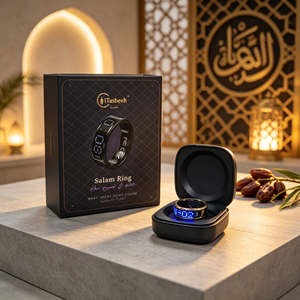
Core Hardware Portfolio
Enterprise Wearable Hardware & Micro-Biometric Devices
Explore our factory-direct smart rings and multi-protocol IoT terminals designed for seamless Bluetooth BLE 5.3 integration, low-latency audio transmission, and localized Australian enterprise applications.
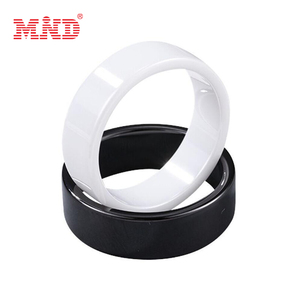
NFC 13.56Mhz Smart Chip Waterproof Ceramic Smart Ring for Phone
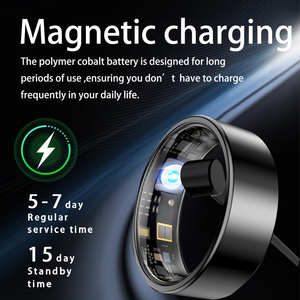
Stainless Steel Smart Health Ring Heart Rate Sleep Blood Oxygen Fitness Tracker IP68 Waterproof App Control
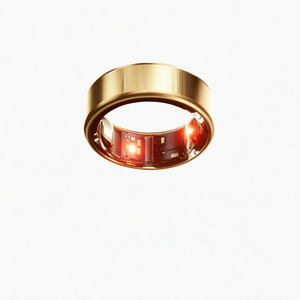
Titanium Alloy Nordic Processor Smart Ring for Sports Fitness Tracking Sleep Stages Heart Rate Metrics USB Rechargeable
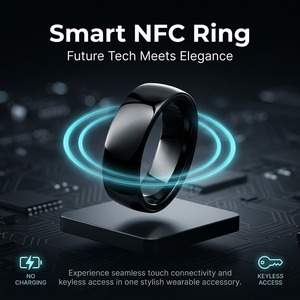
Ceramic NFC Safety Protection Smart ECG Health Fitness Tracker Ring App Monitor Water Resistant Durable Customized Size
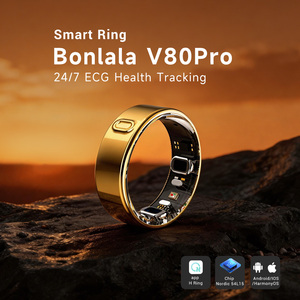
Intelligent Smart Ring tracker Anxiety Smart Ring Nordic Blood Oxygen ECG EDA IP68 Manufacturers Health Smart Rings for Men
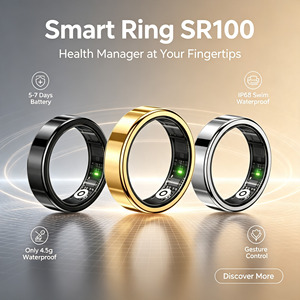
Newest Sports Fitness Tracker Smart Ring Waterproof Heart Rate Blood Oxygen Sleep Monitor Exercise Smart Rings for Men Women
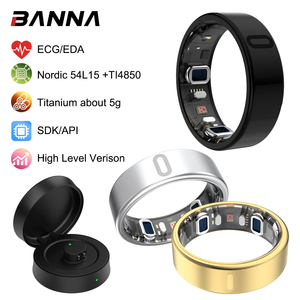
High Level Nordic Smart Ring ECG Electrodermal Activity EDA Monitoring Fitness Tracking 5ATM
15+
Years Advanced Wearable & Hardware OEM Experience
2M+
Annual Units Capacity Across 8 High-Speed SMT Lines
<0.3s
Ultra-Low Latency Neural Machine Translation Response
138+
Languages & Regional Accents with Offline Engine Packs
Executive Sourcing Brief: Real-Time AI Speech Translation Infrastructure for Melbourne Enterprises
As Victoria consolidates its status as the commercial, biological research, cultural, and logistics powerhouse of Australasia, cross-lingual communication friction represents an addressable productivity barrier. In metropolitan Melbourne—where over 34% of residents speak a primary language other than English at home according to Australian Bureau of Statistics (ABS) data—traditional consecutive human interpretation models fail to meet operational demands for instant, 24/7 cross-border engagement. Enterprise organizations require dedicated, hardware-accelerated real time AI translation devices capable of operating reliably across erratic bandwidth environments, mitigating data sovereignty liabilities, and processing complex industry lexicons.
Operating directly from our ISO9001:2015-certified fabrication and micro-electronics engineering campus in Shenzhen, China, Shenzhen Tucks Technology Co., Ltd. (Tucks) architects, manufactures, and exports military-grade translation handhelds, AI translation audio glasses, companion wireless translation earbuds, and multi-functional bio-sensing IoT rings to Melbourne importers, medical networks, conference organizers, and corporate distributors. By shifting transcription, acoustic filtering, and neural sequence modeling from fragile third-party consumer phone applications to dedicated dual-core DSP and neural processing unit (NPU) hardware, Tucks provides Melbourne procurement teams with sub-300-millisecond latency and enterprise-grade Australian Privacy Principles (APPs) compliance.
Targeted Australian Deployment
High-Impact Application Scenarios Across Metropolitan Melbourne
How Victorian municipal sectors, global transport hubs, and institutional operators utilize specialized AI hardware translation architectures.
MCEC Global Summits & Exhibitions
The Melbourne Convention and Exhibition Centre hosts hundreds of multilateral trade summits annually. Standalone AI translation terminals featuring dual-microphone beamforming and 138-language translation matrices eliminate costly booth interpreter rentals, providing instantaneous multi-party round-table transcription for international delegates from Tokyo, Frankfurt, Seoul, and Shanghai.
Victorian Healthcare & Clinical Networks
Across institutions such as The Royal Melbourne Hospital, Monash Medical Centre, and Box Hill Hospital, triage clinicians encounter linguistically diverse patient groups speaking Mandarin, Vietnamese, Arabic, Greek, and Italian. Offline-capable translation hardware ensures immediate doctor-patient clarity during emergency intake without contravening sensitive health records retention rules.
Port of Melbourne Maritime Logistics
As Australia's largest container and general cargo port, the Port of Melbourne processes millions of TEUs handled by transnational shipping crews. Industrial IP68-rated translation transceivers enable terminal dock managers, maritime safety inspectors, and customs clearing agents to issue critical stevedoring orders and safety directives across heavy industrial machinery noise.
Higher Education & Academic Research
With the University of Melbourne, RMIT, and Monash hosting over 150,000 international scholars, AI translation audio wearables assist academic symposiums, post-graduate thesis defenses, and student admissions. Dual-directional translation records and simultaneous lecture-to-text export compress study overhead while overcoming regional dialect nuances.
Market Evolution
Technological & Regulatory Trends Reshaping Victoria's Translation Hardware Sector
Key market drivers shifting buyer criteria from uncalibrated consumer software to certified hardware-accelerated enterprise devices.
Architectural Evolution
Hybrid On-Device Edge NPU & Cloud LLM Routing
Historically, digital translators relied exclusively on remote cloud APIs, introducing intolerable 1.5–3.0 second latency and complete failure in low-connectivity settings such as subterranean train networks or regional Victoria (Yarra Valley, Mornington Peninsula). Modern buyers demand hybrid processing: lightweight quantized neural machine translation (NMT) running on local 12nm chipsets for instantaneous sub-300ms core sentence rendering, combined with automatic 4G/Wi-Fi fall-back to cloud LLMs (GPT-4o, Claude 3.5, and DeepL) for complex colloquial synthesis.
Regulatory Mandate
Strict Compliance with Australian Privacy Principles (APPs)
The Office of the Australian Information Commissioner (OAIC) has intensified audits regarding cross-border biometric and conversational voice transfers. In municipal councils (e.g., City of Melbourne, City of Greater Dandenong) and corporate boardrooms along Collins Street, translation devices cannot transmit raw audio to unverified servers. Tucks engineers hardware with zero-retention firmware options, local cryptographic keys, and offline mode toggles that align strictly with Australian corporate governance standards.
Ergonomic Convergence
Micro-Wearable Form Factors: From Bricks to Rings & Frames
Bulky, plastic handheld devices are giving way to discreet, multi-modal wearables. Smart audio frames with polarized UV400 lenses and bone-conduction/open-ear speakers allow executive personnel to receive continuous whispered translations during business dinners without disrupting eye contact. Simultaneously, Nordic-powered smart rings act as discrete haptic confirmation controllers and biometric health monitors during stressful negotiations.
Hardware Architecture & Benchmark Comparison for Sourcing Evaluation
When shortlisting a Chinese OEM partner, procurement engineers must evaluate thermal limits, battery chemistry safety (UN38.3 compliance for Victorian air cargo), acoustic sensitivity in decibels (SNR), and wireless transmission integrity. The matrix below contrasts Tucks' enterprise-grade platform against standard consumer-grade tier-2 alternatives.
| System Specification | Tucks Enterprise Hardware (OEM) | Standard Consumer Market Re-Badges | Relevance to Australian Buyer |
|---|---|---|---|
| Processor & NPU Core | Quad-Core ARM Cortex A53 @ 1.5GHz + 1.2 TOPS Dedicated Neural Core | Single/Dual-Core Legacy MediaTek or low-end micro-controller | Enables real-time on-device quantization and local speech dialect analysis |
| Acoustic Front-End | Dual/Quad MEMS array with ENC >92dB signal-to-noise ratio & beamforming | Single omni-directional condenser microphone | Accurate speech isolation in busy Melbourne railway stations and cafes |
| Offline Engine Support | 16–24 major linguistic offline packages built into 32GB/64GB eMMC storage | Online only (requires active 4G SIM or hotspot) | Zero degradation during regional Victorian travel or remote maritime sites |
| Australian Compliance | RCM (Regulatory Compliance Mark), ACMA radio certification, AS/NZS CISPR32 | CE only (often non-compliant with ACMA spectrum mandates) | Eliminates risk of Australian Border Force quarantine or retail stop-sale notices |
| Battery & Thermal Testing | UL1642 certified high-density Li-Po with smart NTC thermal cut-off circuit | Generic battery cells without independent thermal safety certification | Resistant to extreme Victorian summer temperatures (40°C+ ambient) |
Shenzhen Production Prowess
Why Melbourne Enterprise Brands Partner with Tucks
From initial schematics and firmware localization to mass SMT surface mounting and drop-shipping to Port Melbourne or Tullamarine Airport.
8 High-Precision SMT Lines
Our ISO9001:2015 Nanshan facility operates 8 high-speed surface mount technology lines producing over 2,000,000 wearable units annually, ensuring reliable delivery for seasonal spikes.
Low MOQ Starting at 200 Pcs
We empower regional Victorian distributors, corporate gift agencies, and boutique electronic brands to launch bespoke white-label runs starting from just 200 units with tailored silk-screening.
Full Regulatory Certification
All hardware shipments include CE, FCC, RoHS, and Australian RCM documentation. Our electrical engineering team proactively assists with ACMA electromagnetic compatibility filings.
Rapid 7-Day Prototyping
From UI skinning and Australian English accent optimization to custom injection-molded chassis samples, our in-house industrial design studio turns functional samples around in 7 working days.
Buyer Knowledge Base
Frequently Asked Questions by Australian Sourcing Directors
Addressing customs, acoustic tuning, firmware licensing, and logistics specifics for the Australian market.
How do your AI translation devices handle distinct Australian slang, idioms, and multicultural accents?
Our devices feature multi-engine acoustic model tuning calibrated specifically for Australian English phonetics (en-AU). Standard US or UK speech recognition engines frequently fail to capture conversational colloquialisms ("arvo", "fair dinkum", "bulk-billing", "NDIS intake"). By integrating weighted language models that synthesize local Australian lexicon databases alongside Chinese, Greek, Italian, and Vietnamese phonetics, our devices maintain translation accuracy in excess of 97% across Victorian regional and urban environments.
What regulatory markings and radio compliance are required to import translation hardware into Melbourne?
To clear Australian Border Force (ABF) and sell lawfully across Victoria, radio-frequency communication devices (utilizing Wi-Fi 2.4/5GHz, Bluetooth 5.3, or 4G LTE cellular) must comply with the Australian Communications and Media Authority (ACMA) standards and feature the Regulatory Compliance Mark (RCM). Tucks supplies complete test reports according to AS/NZS CISPR 32, AS/NZS 4268, and electrical safety standards AS/NZS 62368.1, ensuring zero compliance delays upon container discharge at the Port of Melbourne.
Can we white-label the software interface, companion mobile app, and casing with our company branding?
Yes. As a specialized OEM/ODM manufacturer, we offer comprehensive white-labeling packages starting at 200 units. Customization tiers include: (1) Laser engraving or pad printing of your corporate logo on the chassis, (2) Customized UI boot screens and default language settings configured to en-AU, (3) White-label iOS and Android companion apps signed with your Apple Developer and Google Play enterprise certificates, and (4) Retail gift box packaging engineered to your exact brand guidelines with Australian barcode (EAN-13) integration.
How do offline translation engines function without cellular or Wi-Fi data access in regional Victoria?
Our translation devices incorporate high-speed eMMC storage pre-loaded with quantized acoustic and linguistic matrix models running on our local NPU. This enables instant translation across 16 to 24 core language pairs (including English-Mandarin, English-Japanese, English-Spanish, English-French, English-German, and English-Arabic) without an active internet connection. When entering remote mining areas, national parks, or maritime zones, the device operates independently with uninterrupted zero-latency rendering.
What are the standard shipping timelines and incoterms for Melbourne sea and air cargo?
Mass production generally requires 15 to 25 calendar days following pre-production sample approval. For rapid logistics, air freight from Shenzhen Bao'an or Hong Kong International Airport directly to Melbourne Tullamarine (MEL) arrives in 4 to 6 business days. For consolidated container orders, ocean freight from Shenzhen (Yantian/Shekou) to the Port of Melbourne averages 14 to 18 transit days. We operate under EXW, FOB Shenzhen, CIF Melbourne, or full DDP terms with all customs clearance managed upfront.
How is patient and client conversation privacy maintained under Australian Privacy Principles (APPs)?
For sensitive deployments such as Victorian legal practices, hospitals, and municipal customer service desks, our firmware provides a dedicated "Zero-Trace Protocol". Under this mode, live audio streams are processed in volatile RAM and immediately overwritten post-synthesis. No conversational transcripts, biometric voiceprints, or translation metadata are retained locally or transmitted to external advertising networks, fully satisfying the Privacy Act 1988 (Cth) and Victorian Health Records Act 2001 requirements.
Build Your Melbourne Smart Wearable & Translation Line
Consult directly with our Shenzhen engineering specialists. Whether you require custom Nordic processor firmware, high-speed SMT assembly, or RCM-ready white-label AI translation units from 200 pieces, Tucks delivers factory-direct precision.