Featured Smart Ring Architectures for Tokyo B2B Procurement
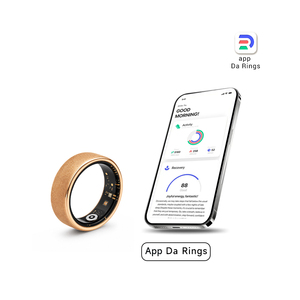
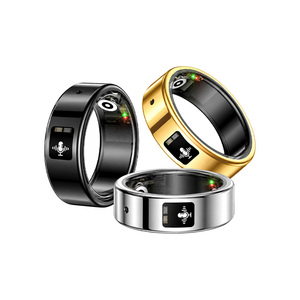
From ultra-light medical titanium sleep-trackers to dual-frequency NFC transit rings and AI voice recorders, each model features production-ready tooling, certified BLE stacks, and full API integration.
1. Decoding the Tokyo Smart Wearable Ecosystem: Strategic Vectors & Demands
The consumer and enterprise wearable landscape across the Tokyo Metropolitan Area (covering Marunouchi corporate headquarters, Shibuya tech ventures, and Kanagawa medical hubs) has entered a decisive paradigm shift. Traditional smartwatches, while functionally ubiquitous, increasingly collide with Japanese consumer expectations regarding business attire discretion, long-term sleep-tracking comfort, and unobtrusive continuous health telemetry. As Japan accelerates its nationwide Society 5.0 agenda, smart rings represent the primary form factor driving the transition from reactive medicine to proactive, everyday biological monitoring.
For Tokyo-based brand custodians, pharmaceutical innovators, and IT distribution leaders, sourcing from an established OEM/ODM factory requires a profound understanding of localized consumer psychographics. Japanese consumers exhibit world-leading standards regarding haptic finish quality, skin contact biocompatibility, and ultra-compact industrial design. A difference of 0.2mm in ring wall thickness or a marginal seam in the inner medical resin will directly impact acceptance rates in major Tokyo retail venues such as Bic Camera, Yodobashi Multimedia Akiba, and lifestyle boutiques in Ginza.
TELEC & Radio Law Precision
Wireless transmission within Japan's crowded 2.4GHz spectrum requires exact compliance with the Ministry of Internal Affairs and Communications (MIC). Our ring firmware integrates certified TELEC (Giteki) profiles, maintaining precise RF emissions and interference protection inside Tokyo subway interchanges.
APPI Compliant Data Silos
Under Japan's Act on the Protection of Personal Information (APPI), biometric records cannot be exported without stringent end-to-end cryptographic safeguards. Our OEM smart ring SDK facilitates local AWS Tokyo (ap-northeast-1) database endpoints with zero raw packet leakage.
JIS Z 2801 Antimicrobial Standards
High relative humidity during Tokyo summers necessitates resilient inner-casing materials. We cast medical-grade transparent epoxy resin adhering to Japanese Industrial Standards (JIS) for hypoallergenic contact, verified against long-term perspiration and skin lipids.
2. Localized Product Application Scenarios Across the Kanto Region
Deploying OEM smart rings into the Tokyo metropolitan fabric involves engineering targeted firmware profiles mapped to specific commercial and civic ecosystems:
A. Executive & Desk-Worker Wellness (Kenko Keiei Integration): In the financial centers of Otemachi and Nihonbashi, corporations provide non-invasive wellness rings to analyze circadian rhythm disruption, nocturnal SpO2 dips, and cumulative stress via Electrodermal Activity (EDA). The data syncs directly with private corporate health dashboards, incentivizing employee longevity without intrusive cameras or smartwatches.
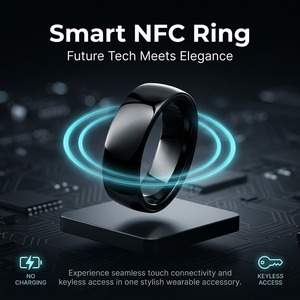
B. Transit, Keyless Entry & Contactless Micro-Transactions: With Tokyo being one of the densest transit networks worldwide, our engineering laboratory configures dual-frequency NFC chipsets embedded inside high-durability Zirconia ceramic bezels. These rings allow frictionless corporate turnstile access, residential smart lock operation, and integration with closed-loop prepaid payment infrastructures.
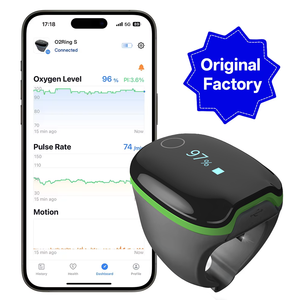
C. Super-Aging Demographic & Remote Domiciliary Monitoring: Japan’s demographic landscape presents an immense demand for passive elderly care across suburban Tokyo, Chiba, and Saitama. Our Wellue-architecture pulse oximeter rings feature integrated vibration warning motors that alert wearers during acute hypoxemic events (sleep apnea episodes), while streaming emergency BLE signals to nursing care gateways.
| Evaluation Parameter | Standard Global Consumer Rings | Tokyo Enterprise OEM Specification (Tucks) | Strategic Advantage for Tokyo Importers |
|---|---|---|---|
| Chassis Architecture | Stamped Aluminum / Polymer | Aerospace Grade 5 Titanium / Ceramic Nanopowder | Ultra-low density (<3.5g), anti-corrosion against onsen minerals |
| RF Transmitter Efficiency | Generic BLE 4.2 / 5.0 Broadcast | Nordic nRF52840 / BLE 5.3 Low-Power Mesh | Stable pairing in 300,000+ commuter density (Shinjuku Station) |
| Regulatory Readiness | FCC / CE Base Files Only | Pre-calibrated TELEC (Giteki), PSE battery safety test docs | Eliminates 3-5 months of customs and regulatory clearance latency |
| Software Ecosystem | Generic English/Chinese Cloud | White-label iOS/Android SDK, Native Tokyo Cloud Endpoint | Complete brand ownership, zero third-party platform licensing fees |
| Battery Chemistry | Cobalt-based 15mAh (Degrades 12mo) | High-Density Li-Polymer with Seiko Protection IC | Maintains >80% capacity after 500 charge cycles (~4-7 days per charge) |
3. Advanced Hardware Architecture: Nordic Silicon & Sensor Fusion
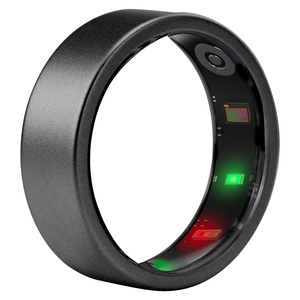
The engineering constraint of the smart ring form factor lies in the physical volume: encapsulating a high-efficiency microprocessor, RF antenna, multi-wavelength optical PPG sensor, analog front-end (AFE), 3-axis accelerometer, lithium pouch cell, and wireless charging induction coil within a ring band under 3.0mm thickness and 8.0mm width. Achieving this without thermal spikes during rapid wireless charging requires advanced multi-layer flexible PCB (FPCB) stacking and high-precision resin encapsulation.
At Shenzhen Tucks Technology Co., Ltd., our engineering laboratory deploys Nordic Semiconductor nRF52/nRF53 series architectures paired with Goodix or PixArt biological optical arrays. By writing custom microcode for dynamic LED emission power adjustment, our smart rings sample pulse rates, blood oxygenation, and skin temperature at sub-second intervals while consuming less than 18µA in standby mode. This guarantees that Tokyo executives enjoy uninterrupted 5 to 7 days of operation without bulky nightly charging cradles.
Why Tokyo Procurement Committees Partner with Shenzhen Tucks Technology Co., Ltd.
Founded in 2008, Shenzhen Tucks Technology Co., Ltd. has spent over 15 years as an elite tier-1 ODM/OEM manufacturing powerhouse in the smart wearable sector. Operating out of Shenzhen’s advanced electronics manufacturing cluster with direct air and sea logistics channels to Tokyo (Narita/Haneda), Tucks bridges cutting-edge hardware prototyping with strict industrial process controls.
Japanese procurement leaders routinely face challenges when dealing with trading intermediaries who lack proprietary SMT machinery or deep firmware debugging capabilities. Tucks operates an independent, ISO9001:2015-certified manufacturing complex featuring 8 automated SMT lines, class-10,000 cleanroom assembly bays, and an annual production capacity surpassing 2,000,000 units. We serve over 500 B2B enterprise partners across 30+ countries, delivering consistent, verifiable hardware quality that meets the rigorous demands of Japanese quality assurance audits.
Rapid Tooling & 7-Day Samples
Tokyo brands can test physical samples with bespoke laser logos, customized Japanese packaging, and localized test firmware in as few as 7 business days, drastically compressing go-to-market cycles.
Agile Low MOQ From 200 Units
Eliminate inventory exposure during pilot trials. We offer standard OEM customization starting at just 200 pieces per SKU, scaling seamlessly to 50,000-unit monthly runs on our 8 SMT assembly lines.
Full-Stack White Label App & SDK
Access turnkey iOS and Android source code pre-translated into natural Japanese (Kanji/Kana), featuring custom UI themes, corporate backend database integration, and localized analytics charts.
Tokyo B2B Smart Ring Sourcing: Frequently Asked Questions
Clear, technically documented answers addressing regulatory certification, customization scope, battery longevity, and supply chain logistics for Japanese importers.
Q: How do you handle TELEC (Giteki) certification for smart rings entering Japan?
Our smart ring motherboards utilize Nordic Semiconductor RF micro-architectures that come pre-calibrated for Japanese Radio Law requirements. We collaborate directly with accredited testing laboratories (such as TELEC and TÜV Rheinland Japan) to generate the technical conformity certification files. The unique Giteki R-mark and certification ID can be laser-engraved onto the inner resin or presented digitally within the companion smartphone software interface as permitted by MIC guidelines.
Q: What are the specific battery safety compliance rules (PSE) for smart rings in Japan?
In Japan, secondary lithium-ion batteries with an energy volumetric density exceeding 400 Wh/L are subject to the Electrical Appliance and Material Safety Act (PSE Law). Due to the ultra-compact scale of smart ring lithium cells (typically 14mAh to 22mAh), their energy density frequently falls below the compulsory threshold; however, Japanese enterprise buyers demand equal safety verification. We implement Seiko instrument protection ICs, UL1642-certified cells, and full UN38.3 vibration/shock testing documentation as standard protocol.
Q: Can our Tokyo development team obtain raw sensor data via custom APIs and SDKs?
Yes. For enterprise wellness programs, medical university clinical trials, and private platform integrators, we provide complete Bluetooth Low Energy (BLE) communication protocols, GATT service descriptors, and native iOS (Swift/Objective-C) and Android (Kotlin/Java) SDKs. Your software team receives direct access to raw photoplethysmography (PPG) waveforms, 3D accelerometer motion vectors, skin impedance levels, and inter-beat intervals (IBI) for proprietary algorithmic processing.
Q: What ring sizing options are available to match Japanese anthropometric data?
Finger dimensions in Japan differ slightly from standard US/European tooling charts, skewing toward slimmer profiles. We provide customized ring mold tooling ranging from US Size 6 (inner circumference 51.9mm) to US Size 13 (inner circumference 69.5mm), mapped cleanly to Japanese standard ring sizes #11 through #28. In addition, we supply white-label physical ring sizing kits with your custom logo for end-consumer retail pre-fitting.
Q: What is the standard production timeline and shipping speed to Tokyo / Yokohama?
Following final confirmation of industrial design, CMF (colors, materials, finishes), and packaging artwork, functional engineering samples are dispatched within 7 business days. Mass production runs for standard orders (500 to 5,000 units) require 15 to 25 calendar days. Utilizing direct express air logistics from Shenzhen (SZX) to Tokyo Haneda (HND) or Narita (NRT), shipments clear customs and arrive at your Kanto distribution hub within 48 to 72 hours.
Q: What IP-rating and chemical resistance guarantees do your smart rings possess?
Every production batch undergoes 100% pneumatic vacuum decay testing and pressurized water tank immersion, certified to IP68 and 5ATM (50 meters equivalent static pressure). The outer shell—whether aerospace titanium or high-density ceramic—is bonded with medical-grade UV curable resin resistant to daily hand washing, domestic detergents, cosmetics, and the mild sulfur content typical of Japanese onsen (hot spring) mineral waters.