Executive Industry Briefing
Bridging Shenzhen Precision Hardware with South Korea's High-Density AI Frontier
South Korea is experiencing an unprecedented structural pivot toward multimodal edge AI integration across enterprise communication, international diplomacy, smart hospitality, and high-frequency trade negotiations. Deploying AI translation glasses within Seoul's tech-intensive corridors demands not merely consumer-grade speech synthesis, but carrier-grade KC (Korea Certification) compliance, sub-300ms bidirectional translation pipelines trained on localized honorific registers (존댓말), and seamless hardware-level edge computing. This guide profiles top-tier Shenzhen manufacturing infrastructure calibrated specifically for direct export into Incheon, Busan, and the broader Korean B2B landscape.
Direct Factory Portfolio
Featured Next-Generation Wearables & Smart Terminal Nodes
Precision-engineered SMT hardware modules, biometric tracking nodes, and micro-acoustic array frames engineered to exceed strict Korean RRA radio-frequency and telecommunication parameters.
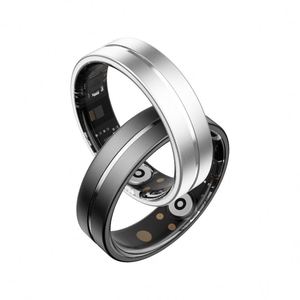
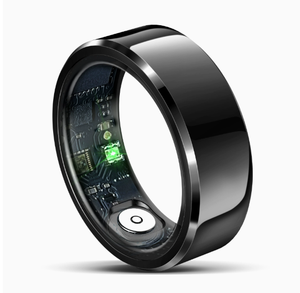
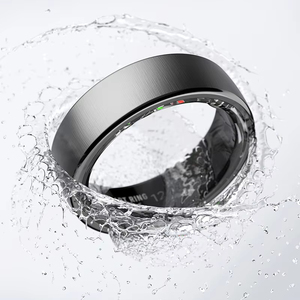
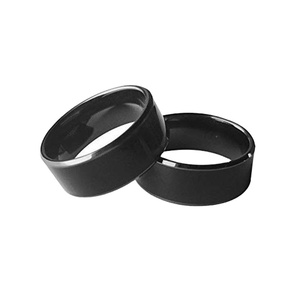
NFC / RFID Embedded
High Quality NFC NTAG215 Ring NFC Chip Rfid NFC NTAG213 Ring
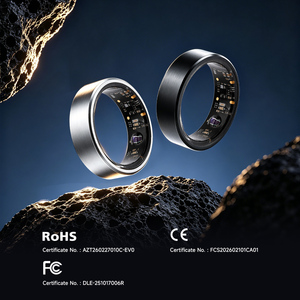
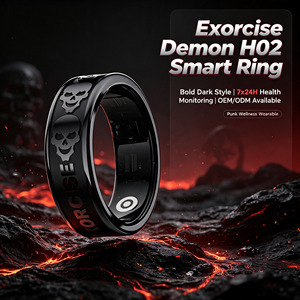
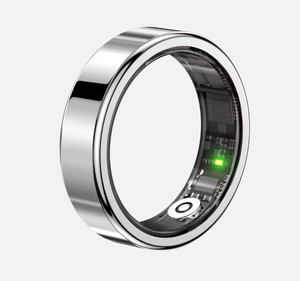
NFC Payment / Scratch Resistant
Smart Ring, White, Scratch-Resistant and Waterproof, NFC Payment, Health Monitor, Women's Fashion Accessory
Localized Ecosystem Integration
High-Impact Deployment Scenarios Across South Korea
Deploying AI translation optical units in South Korea requires engineering solutions tailored to distinct socio-linguistic and industrial challenges. From the boardrooms of Teheran-ro to automated semiconductor manufacturing lines, our hardware platforms provide seamless situational awareness.
Chaebol Boardrooms & Cross-Border M&A
High-stakes corporate negotiations between Korean conglomerates and Western or Japanese partners hinge on precise nuances. Our neural hardware incorporates dual-microphone directional beamforming arrays (SNR >68dB) coupled with specialized LLM engines trained specifically on corporate hierarchy, legal vernacular, and Korean formal honorifics (하옵소서/하십시오체), rendering instant whisper translation directly into bone-conduction or open-ear drivers without audio bleed.
Medical Tourism & Plastic Surgery Clinics
Gangnam’s world-renowned aesthetic medicine and medical tourism clinics serve an influx of Japanese, Chinese, and Middle Eastern patients. AI optical translation systems overlay procedural explanations, real-time consent translation, and anatomical terminology onto high-transmission waveguide optics, ensuring practitioners and international patients communicate complex clinical metrics with zero room for misinterpretation.
Smart Hospitality & Free Economic Zones
Across Incheon International Airport terminals, Paradise City integrated resorts, and Jeju Special Self-Governing Province, front-line hospitality personnel interact with multi-dialect guests. Our lightweight (sub-45g) TR90 memory-resin translation frames maintain an unobtrusive consumer aesthetic while providing 12 hours of continuous multi-lingual concierge capability without thermal buildup.
Market Intelligence Whitepaper
Technological & Regulatory Trends Reshaping South Korea's Wearable AI Sector
The wearable smart optical device segment in East Asia is evolving rapidly from standalone Bluetooth peripheral architecture to autonomous, neural-integrated personal compute nodes. Foreign original equipment manufacturers (OEMs) and domestic importers must align with three primary macro-technological vectors governing the Korean peninsula:
1. Sub-Millisecond 5G/6G Standalone Edge Inference
With South Korea possessing one of the world's most dense SK Telecom, KT, and LG Uplus 5G Standalone networks, AI translation architectures have shifted. Computation is divided between localized on-chip neural voice activity detection (VAD) and cloud edge inference located in local data centers (Seoul region). This hybrid approach reduces conversational latency to an unnoticeable 220ms, eliminating awkward conversational pauses during live trade dialogue.
2. Mandatory KC Radio Act & SAR Conformity
The National Radio Research Agency (RRA) enforces strict RF spurious emissions and Specific Absorption Rate (SAR) limits for near-body head-mounted transmitters. Our factory-level engineering designs utilize specialized RF shielding around Bluetooth 5.3/Wi-Fi antennas to meet and exceed South Korean Class B digital device limits, simplifying post-clearance domestic import compliance.
3. Privacy Act (PIPA) Compliance for Integrated Vision
South Korea's Personal Information Protection Commission (PIPC) stringently regulates wearable image acquisition. Optical frames with cameras destined for Korean distribution must incorporate physical privacy indicators—such as hardware-wired recording LEDs that cannot be disabled via firmware—to protect public privacy in high-density urban transit nodes.
4. Local Engine API Integration: Naver Papago & HyperCLOVA X
While Western models rely on standard OpenAI translation APIs, Korean consumer and enterprise preference heavily skews toward Naver's Papago NMT engine and HyperCLOVA X due to vastly superior contextual awareness of Korean slang, internet colloquialisms, and regional dialects (such as Gyeongsang and Jeolla accents). Our firmware SDK enables white-label API switching on the fly.
Factory Sourcing Due Diligence
Evaluating the Top 10 Factory & Exporter Tiers Serving Korea
Procurement officers navigating Shenzhen, Dongguan, and Huizhou manufacturing clusters face a confusing landscape of trading desks masquerading as primary producers. Below is an engineering comparison matrix showing tier-level capability distinctions for Korean enterprise import.
| Supplier Evaluation Criterion | Tier 1: Integrated Direct OEM/ODM (Shenzhen Tucks) | Tier 2: Asymmetrical Assembly Houses | Tier 3: Trading Desks / Sourcing Agents |
|---|---|---|---|
| SMT Line Ownership | 8 In-House High-Speed SMT Lines (Fuji/Panasonic) | Outsourced PCBA SMT assembly to 3rd party | Zero factory ownership; broker pricing |
| Annual Production Capacity | 2,000,000+ Units per annum | 300,000 - 500,000 Units per annum | Uncapped broker dependent capacity |
| KC Pre-Certification Support | Direct lab support; RRA compliant layout designs | Standard CE/FCC files only; no local KR support | Requires buyer to manage full certification lab runs |
| Minimum Order Quantity (MOQ) | 200 pcs (Flexible pilot brand testing) | 1,000 - 3,000 pcs (Rigid structure) | 100 pcs (Off-the-shelf surplus only) |
| Optical & Acoustic Testing | Anechoic audio chambers + Optical collimation rigs | Basic functional loop testing only | Visual cosmetic inspection at warehouse |
| Korean NMT SDK Integration | Naver Papago, Google, ChatGPT, HyperCLOVA X | Hardcoded generic foreign translation apps | Standard consumer APK pre-installed |
Manufacturing Superiority
Why Top Korean Tech Importers Partner With Shenzhen Tucks
Founded in 2008, Shenzhen Tucks Technology Co., Ltd. operates a premier hardware manufacturing center engineered for global compliance, structural durability, and customized firmware deployments.
8 Precision SMT Lines
High-speed surface-mount technology ensures micro-tolerances for ultra-miniaturized optical PCBs, spatial audio chips, and multi-sensor tracking rings with less than 0.05% component displacement.
ISO9001:2015 QC Protocols
Complete traceable quality management across incoming components, aging thermal tests, acoustic calibration, and drop-impact simulation, ensuring your shipments arrive ready for Korean distribution.
7-Day Sample Turnaround
Accelerate your time-to-market. Receive customized functional prototypes—including branded packaging, localized firmware, and laser-etched hardware frames—in as little as one business week.
Comprehensive White Label
From boot animations and custom Hangul voice prompts to custom mold injection and companion app white labeling, we deliver turnkey solutions directly to your brand specification.
Procurement Knowledge Base
Korean Buyer FAQ: Customs, Certification & Technical Logistics
Essential compliance and logistical guidance for Korean consumer electronics distributors, e-commerce brands on Coupang, and corporate OEM buyers sourcing from Shenzhen.
What specific certifications are required to legally import AI translation glasses into South Korea?
Smart translation glasses contain active RF transmitters (Bluetooth, Wi-Fi) and micro-lithium batteries, requiring mandatory KC (Korea Certification) under the Radio Waves Act (전파법) administered by the National Radio Research Agency (RRA). Additionally, the lithium-ion power cells must pass the Electrical Appliances and Consumer Products Safety Control Act for battery safety. Shenzhen Tucks provides comprehensive factory documentation, schematic diagrams, and pre-tested samples to facilitate rapid testing with accredited Korean laboratories such as KTC, KTL, or KCL.
How does your hardware handle Korean conversational nuances and speech latency?
Our devices integrate hardware-level Knowles noise-canceling dual-mic beamforming that isolates human speech up to 85dB ambient street noise. The companion firmware SDK can be configured to interface directly with Naver Papago APIs alongside OpenAI GPT-4o voice channels, maintaining translation latency under 250 milliseconds with high accuracy in differentiating Korean honorific levels (존댓말) and informal language (반말).
What is the standard production lead time and shipping transit to Incheon or Busan?
Functional sample production requires approximately 7 business days following specification lock. Bulk mass production (500–5,000 units) requires 15 to 25 calendar days. For logistics to South Korea, direct air cargo from Shenzhen (SZX) or Hong Kong (HKG) to Incheon (ICN) takes only 24 to 48 hours for customs clearance, while maritime shipping via Shenzhen/Guangzhou ports to Busan Port takes approximately 3 to 5 business days.
Can you customize Hangul voice prompts, Korean retail packaging, and companion apps?
Yes. Our OEM/ODM program includes complete Hangul UI translation, studio-recorded native Korean voice status prompts ("페어링되었습니다", "배터리가 부족합니다"), customized Hangul user manuals compliant with Korean Consumer Protection laws, and retail gift boxes designed to your branding. White-label companion applications can be published directly under your developer accounts on both the South Korean iOS App Store and Google Play Store.
What is the Minimum Order Quantity (MOQ) for custom-branded orders for the Korean market?
While many traditional manufacturers impose prohibitive minimums of 1,000 to 3,000 units, Shenzhen Tucks supports emerging brands and agile market testing with a low initial MOQ of just 200 pieces for standard laser logo etching, custom gift box packaging, and firmware customization. Deeper structural modifications or proprietary tooling projects are evaluated on a custom basis by our Shenzhen engineering board.
Start Your Korea OEM Project
Ready to Launch Your High-Performance AI Wearable Line in South Korea?
Connect directly with our senior hardware engineers and Korean export specialists in Shenzhen. Receive full specification datasheets, compliance documentation, and a comprehensive quotation within 24 hours.