Featured OEM Smart Ring & Biometric Wearable Lineup
Engineered for high biometric accuracy, extreme cold-temperature resilience, and seamless Bluetooth 5.3 SDK app integration for Toronto enterprises and Canadian brand distributors.
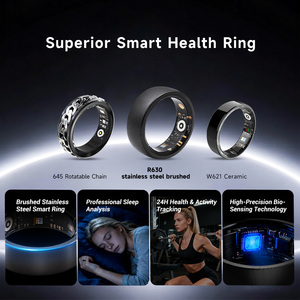
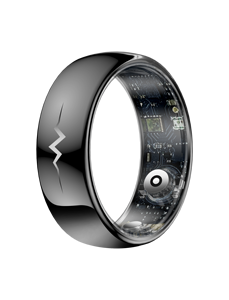
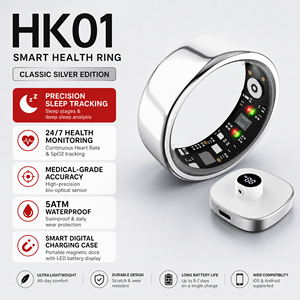
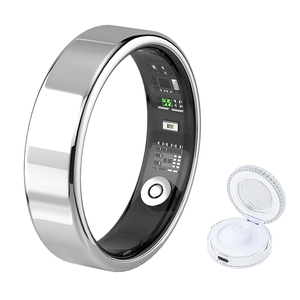
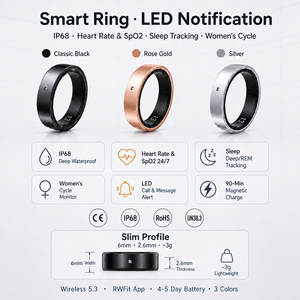
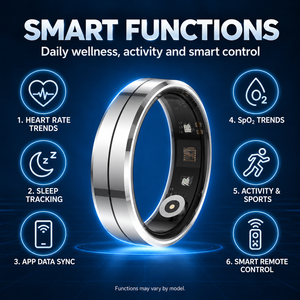
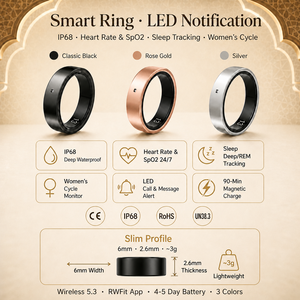
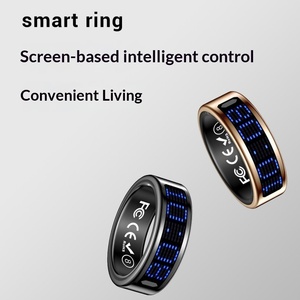
Executive Industry Brief: Sourcing Wearables for the Greater Toronto Area (GTA)
The Greater Toronto Area represents Canada's undisputed economic engine, housing the nation's most active MedTech incubators across the MaRS Discovery District, elite corporate corridors along Bay Street, and an outdoor-oriented consumer demographic accustomed to extreme seasonal temperature variances. As the wearable ecosystem evolves from basic step counters into clinical-grade physiological tracking rings, high-definition AMOLED smartwatches, and camera-integrated AI eyewear, Canadian procurement executives face unique hurdles: navigating strict Innovation, Science and Economic Development Canada (ISED) radio frequency approvals, complying with the Personal Information Protection and Electronic Documents Act (PIPEDA), and avoiding catastrophic winter battery discharge.
Shenzhen Tucks Technology Co., Ltd. (operating as Tucks) provides direct-from-factory OEM/ODM manufacturing solutions engineered to solve these structural supply chain challenges. Backed by 15+ years of wearable manufacturing excellence since 2008, 8 automated SMT lines, an annual capacity exceeding 2,000,000 units, and full ISO9001:2015 quality management, Tucks offers Toronto hardware startups, corporate wellness aggregators, and national consumer electronic retailers a reliable pathway to launch custom branded wearable product lines without intermediate trading-company markups.
Toronto Procurement Takeaway: Tier-1 Chinese manufacturing partners must deliver more than basic hardware assembly. True B2B value for the Canadian market demands native ISED (IC) radio test reports, bilingual packaging compliance (French/English) under the Consumer Packaging and Labelling Act, sub-zero battery electrolyte stabilization, and open BLE SDKs for private cloud data sovereignty.
The Top 10 Engineering Benchmarks for Smart Wearable Factories Serving Toronto
When Canadian supply chain directors audit wearable manufacturers in Shenzhen, distinguishing between small assembly brokers and enterprise-grade factories requires a rigorous technical evaluation. Below are the 10 non-negotiable manufacturing and compliance capabilities that define the top tier of smart wearable factories capable of reliably serving the Toronto and Ontario marketplace:
1. Sub-Zero Battery Thermal Chemistry
Toronto winters routinely register -20°C. Elite factories deploy specialized low-temperature electrolyte lithium-polymer cells capable of sustaining discharge without acute voltage collapse or BMS auto-shutdown.
2. In-House Surface-Mount Technology (SMT)
True OEM factories own their high-speed Yamaha and Fuji SMT lines. Tucks operates 8 dedicated lines, ensuring micro-pitch placement accuracy for 01005 passives and multi-layer flexible circuit boards.
3. ISED (Industry Canada) RF Compliance
Standard FCC certification is insufficient for retail sale in Ontario. Verified suppliers formulate RF matching networks tuned to satisfy ISED RSS-247 and RSS-102 SAR emission constraints out of the box.
4. ISO9001:2015 & Rigorous Quality Gating
Production cannot rely on final sample audits alone. The best factories implement IQC (incoming raw material), IPQC (in-process automated optical inspection), and 100% aging burn-in for all circuit boards.
5. Full SDK & Private Cloud Data Control
To adhere to Ontario’s PHIPA and Canada’s PIPEDA regulations, enterprise clients must avoid third-party Chinese public clouds. Tier-1 suppliers provide proprietary SDKs for localized AWS Montreal routing.
6. Medical-Grade Multi-Wavelength PPG Optics
Wearable rings and watches require clinical correlation. High-tier suppliers utilize multi-channel photoplethysmography sensors incorporating 525nm green, 660nm red, and 940nm infrared LEDs for real-time SpO2.
7. Titanium Alloy & Biocompatible Resins
All-day contact with human dermis necessitates medical-grade materials. Top facilities utilize aerospace-grade TC4 titanium, 316L medical stainless steel, and hypoallergenic medical epoxy encapsulation.
8. Canadian Bilingual UI/UX Localization
Federal packaging laws mandate English and Canadian French on commercial retail packaging and documentation. Tier-1 manufacturers support dual-language firmware packs and localized quick-start guides.
9. Low Pilot Batch Minimums (MOQ 200 pcs)
Toronto startup ecosystems require rapid prototyping. While commodity plants demand 3,000 units, advanced factories like Tucks offer 200-piece pilot runs, allowing agile go-to-market testing.
10. IP68 & 3ATM/5ATM Hydrostatic Testing
From swimming in Lake Ontario to daily showers, liquid ingress protection requires dedicated high-pressure vacuum testing chambers on the factory floor rather than intermittent third-party audits.
Hardware & Production Matrix: Tucks OEM vs. Commodity Assembly Desks
Comparing procurement options across the Pearl River Delta reveals vast differences in engineering support, quality assurance, and Canadian compliance readiness.
| Evaluation Parameter | Shenzhen Tucks Technology (Direct OEM) | Third-Party Sourcing Agent | Standard Commodity Assembly Plant |
|---|---|---|---|
| Direct SMT Line Ownership | 8 dedicated high-precision SMT lines (In-House) | None (Brokered to third parties) | 2–3 generic lines (Often shared/subcontracted) |
| Minimum Order Quantity (MOQ) | Flexible 200 units for branded OEM runs | Variable (Dependent on broker markup) | Strict 1,000 to 3,000 units minimum |
| Canadian Regulatory Files | ISED (IC), CE, FCC, RoHS, BQB certified | Unverified or non-compliant FCC only | Basic CE mark only, rarely IC certified |
| Sample Production Speed | 7 days for fully functional customized units | 20–30 days due to multi-layer communication | 14–21 days for standard stock samples |
| Cold Climate Reliability | Validated -20°C low-impedance battery cells | Generic consumer Li-ion (Subject to freeze shutdown) | Standard commercial grade (0°C to 45°C rated) |
| Software & SDK Architecture | Native iOS/Android SDKs, Open API for AWS/Azure | Black-box closed apps with generic Chinese cloud | Closed proprietary app, no custom data extraction |
Localized Deployment Scenarios: How Toronto Brands Utilize Tucks Hardware
Wearable devices engineered by Tucks serve distinct end-market use cases throughout Ontario's diverse socio-economic and clinical sectors:
Corporate Stress & HRV Monitoring on Bay Street
Financial service institutions and law firms throughout downtown Toronto are investing heavily in preventative mental health. Our sleek smart rings monitor autonomous nervous system balance via continuous Heart Rate Variability (HRV) analysis, allowing corporate wellness platforms to flag burnout risks without interfering with formal executive wear.
MedTech R&D at MaRS Discovery District & UHN
Toronto is home to the University Health Network (UHN) and groundbreaking digital health incubators. By utilizing Tucks open-architecture BLE 5.3 SDKs, local clinical researchers capture raw photoplethysmography data, peripheral blood oxygenation, and skin temperature trends for remote clinical trials and decentralized chronic care programs.
Sub-Zero Urban Commuting & Winter Sports
Whether navigating blizzards along the Gardiner Expressway, cross-country skiing at Horseshoe Valley, or running through high-wind downtown waterfront corridors, our ruggedized smartwatches and smart rings utilize specialized high-density polymer housings and sealed O-rings that prevent condensation fogging and freeze-induced circuit fractures.
Regulatory Pathways: Navigating Canadian Import Laws (ISED, CBSA, PIPEDA)
Importing smart wearable hardware into Ontario through the Canada Border Services Agency (CBSA) requires strict adherence to federal and provincial mandates:
Customs & Tariffs (CBSA Harmonized System): Smartwatches and biometric sensor rings typically import under HS Code 8517.62.00 (Machines for the reception, conversion and transmission or regeneration of voice, images or other data). Under prevailing Canadian tariff schedules, smart wearables from MFN (Most Favoured Nation) origins generally benefit from duty-free treatment, subject to provincial 13% Harmonized Sales Tax (HST) upon commercial clearance at Pearson International Airport (YYZ).
1. ISED Radio Standards Specifications (RSS): Any wearable transmitting via Bluetooth Low Energy or Wi-Fi must obtain an ISED Certificate of Conformity. Tucks hardware architectures utilize pre-certified Nordic Semiconductor and Realtek BLE chipsets whose RF test parameters simplify obtaining Canadian technical acceptance certificates (TAC).
2. Health Canada Guidance on Software & Wellness Devices: Unless a brand claims diagnostic capability for cardiac arrhythmia or systemic hypoxemia, general wellness wearables (tracking fitness, recovery, and sleep stages) fall outside the strict Medical Device Regulations (MDR) Class II/III licensing, significantly lowering market entry friction for Toronto retail distributors.
3. PIPEDA Data Protection Architecture: Canadian data privacy principles demand explicit consumer consent and end-to-end data encryption. Tucks firmware engineers support customized Bluetooth AES-128 cryptographic pairing, ensuring that health metrics transmitted between the ring or watch and the host smartphone cannot be intercepted over open frequencies in public transit settings.
Enterprise Advantage: Why Shenzhen Tucks Technology is the Preferred Partner
Since its founding in 2008 in Shenzhen's high-tech Nanshan manufacturing cluster, Shenzhen Tucks Technology Co., Ltd. has established itself as an authoritative leader in connected wearable solutions. Our operational footprint is built on direct manufacturing accountability, removing commercial brokers and offering transparent engineering access to Canadian B2B buyers:
8 Dedicated SMT Board Lines
State-of-the-art automated production enables simultaneous high-speed placement of micro-SoCs, biosensors, and RF power regulators with zero external contractor bottlenecks.
Rapid 7-Day Sample Turnaround
From initial design brief and laser-etched brand identity to localized firmware loading, functional prototypes are completed and dispatched via express air courier within 7 business days.
End-to-End White-Label Customization
Custom laser-engraved rings, branded smartwatch startup logos, custom-molded silicone/leather/Milanese straps, and full luxury packaging tailored to Canadian retail standards.
Frequently Asked Questions: Smart Wearable Procurement for Toronto
Essential operational and compliance clarifications for procurement teams evaluating manufacturing partnerships: