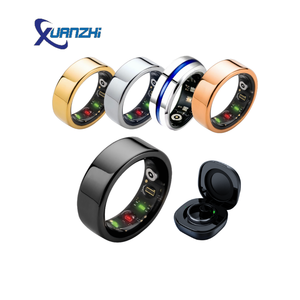
Factory Inventory & Base Models
High-Accuracy AI Smart Ring & Audio Transceiver Platforms
Explore our export-ready sensor platforms and white-label hardware architectures, optimized for micro-acoustic clarity, low-latency DSP compute, and continuous biometric inference.
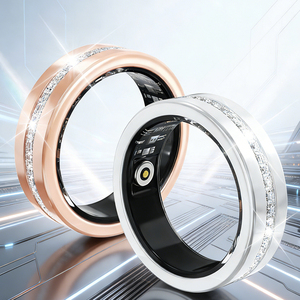
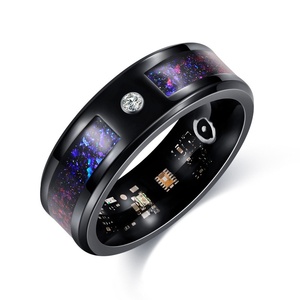
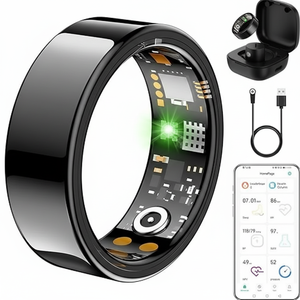
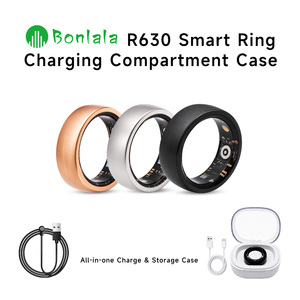
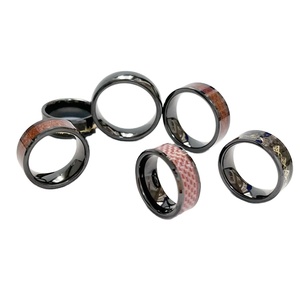
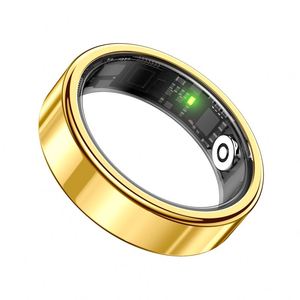
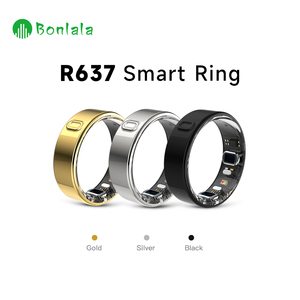
Shenzhen Direct Manufacturing
Why Tier-1 Global Importers Select Our Smart Wearable Facility
Shenzhen Tucks Technology Co., Ltd. brings together 15+ years of wearable hardware assembly, surface mount technology (SMT), and end-to-end edge-AI acoustic engineering.
15+
Years Industry Experience
8
High-Speed SMT Lines
2M+
Annual Unit Output
200
Low MOQ Threshold (Units)
Proprietary Acoustic Tuning
Our acoustic labs feature certified anechoic chambers and Brüel & Kjær head-and-torso simulators (HATS) for precision beamforming array calibration and ENC tuning to suppress high ambient noise.
Multi-Engine AI Stack Integration
Firmware architecture pre-configured to interface with Google Cloud, DeepL, Microsoft Azure Speech, and OpenAI endpoints, achieving localized sub-200ms round-trip cross-language latency.
Turnkey Regulatory Assurance
Eliminate customs rejection and channel barriers. Every production batch provides complete CE (RED), FCC ID, RoHS, BQB Bluetooth SIG licensing, and UN38.3 lithium cell transport compliance documentation.
Technology White Paper
Engineering Trends: The Next Horizon in Translation Acoustics
A comprehensive architectural breakdown of advancements in natural language processing (NLP), hybrid edge-cloud topologies, and ultra-compact form factors.
1. Edge-Inference Hybrid Models
Historically, translation earbuds functioned strictly as wireless audio forwarders, routing uncompressed audio streams to a smartphone host for cloud inference. Current next-generation solutions incorporate embedded Neural Processing Units (NPUs) directly within low-power audio System-on-Chips (SoCs). By performing localized Wake-Word Detection (WWD) and offline token translation for standard global dialects, latency is reduced to sub-300ms thresholds while protecting user privacy.
2. Environmental Noise Suppression
Accurate neural machine translation relies on clean upstream voice isolation. Our systems employ dual- and quad-MEMS microphone arrays integrated with directional beamforming algorithms and deep neural network environmental noise cancellation (DNN-ENC). By filtering out non-human spectral interference (e.g., transit chatter, mechanical whine), the Word Error Rate (WER) is curtailed by up to 34% in harsh 80dB+ environments.
3. Zero-Latency Conversational Duplex
Traditional push-to-talk methods introduce unnatural pauses during professional interactions. The industry standard is shifting toward Full-Duplex simultaneous translation. Utilizing dual-antenna Bluetooth 5.4 architectures, both parties can converse simultaneously, with dynamic side-tone monitoring and bi-directional acoustic routing preventing cross-talk audio looping.
| Architecture Vector | Legacy Bluetooth Translators | Modern Cloud NMT Earbuds | Next-Gen Edge-AI Neural Transceivers |
|---|---|---|---|
| Acoustic Latency | 1200ms – 2500ms | 500ms – 800ms | < 200ms (Edge-Processed) |
| Offline Language Pairs | None (Cloud Dependent) | 4 – 8 Dialects | 16+ Full Matrix Pairs |
| Microphone System | Single Omni-MEMS | Dual Beamforming MEMS | Dual MEMS + VPU (Bone Conduction Sensor) |
| SoC Process Node | 40nm / 55nm Legacy Audio | 22nm Low Power DSP | 12nm FinFET Multi-Core NPU Architecture |
| Power Consumption Profile | ~12mA Active Streaming | ~8mA Active Transmit | ~4.2mA Adaptive Compute Load |
Procurement Roadmap
Strategic Sourcing Guidelines: Scalable Hardware in 2026
Key metrics and operational benchmarks for procurement directors evaluating supplier capabilities in cross-border consumer audio.
Tokenized Software Monetization
Hardware margins in consumer electronics continue to compress. Leading global brands leverage white-label applications to offer subscription-based high-tier LLM translation services (e.g., real-time meeting transcription, document summarization, and corporate dialect packs). Selecting an OEM supplier with customizable SDK and companion app infrastructure provides vital recurring software revenue.
Unified Wearable Ecosystems
Siloed audio accessories are transitioning toward integrated personal area networks (PANs). High-accuracy biometrics—such as the PPG heart-rate and continuous HRV sensors featured in our smart ring platforms—are being synchronized with audio transceivers and AI glasses. Sourcing from a single OEM manufacturer consolidates Bluetooth protocol management and ensures seamless multi-device connectivity.
Supply Chain Decarbonization
Global regulatory frameworks such as the EU Corporate Sustainability Due Diligence Directive (CSDDD) require auditable tier-1 traceability. Sourcing decisions now mandate the integration of recycled post-consumer plastics (PCR), cobalt-free battery chemistries, and closed-loop water treatment within manufacturing facilities to simplify border carbon adjustments.
Procurement Inquiries
Frequently Asked Questions for B2B Importers
Direct technical and commercial answers regarding lead times, firmware customization, white-label licensing, and production minimums.
What is the baseline Minimum Order Quantity (MOQ) for custom OEM translation earbuds?
Our standard production MOQ starts at 200 units for catalog-standard hardware configurations using stock chassis tooling. Customized silkscreen branding, customized packaging, and localized boot-audio profiles can be implemented at this tier. For bespoke industrial tooling (ID/MD modifications), custom PCB layout designs, or custom companion app builds, baseline MOQs typically commence at 1,000 to 3,000 units depending on component sourcing requirements.
Which translation engines are embedded, and how are API data costs handled?
Our smart audio architectures are vendor-agnostic. We maintain robust SDK integration hooks for Google Cloud Speech-to-Text, DeepL API, Microsoft Azure Speech Services, iFlytek, and emerging OpenAI/Whisper real-time frameworks. Importers can choose between utilizing our factory-hosted, multi-engine server infrastructure (supported via monthly/annual token licensing) or redirecting all API queries directly to their brand's private cloud endpoints.
What is the standard production lead time from sample sign-off to bulk dispatch?
Pre-production functional samples—incorporating specified firmware, language tables, and cosmetic treatment—are delivered within 7 to 10 working days. Following customer sign-off and golden sample sign-off, bulk production runs across our automated SMT lines typically take 15 to 25 business days, including a mandatory 72-hour burn-in and acoustic frequency-response QC testing matrix.
Do your translation hardware products support fully offline, zero-network environments?
Yes. Our latest generation of dual-core DSP/NPU audio architectures supports embedded offline translation arrays. Currently, our localized firmware packages support up to 16 major global language pairs (including English, Mandarin, Spanish, French, German, Japanese, Korean, and Russian) without needing an active 4G/5G cellular link or local Wi-Fi connectivity.
What international compliance certifications are available for immediate export?
All of our core wearable assemblies, including smart rings and audio transceivers, are engineered to comply with global import regulations. We supply comprehensive technical compliance files including CE (RED), FCC Part 15, RoHS Directive 2011/65/EU, REACH, BQB qualification, and battery safety test reports (UN38.3, MSDS, IEC 62133) for seamless air and ocean logistics clearance.
Begin Your Custom Wearable Engineering Brief
Discuss your technical specifications, request an engineering sample, or audit our Shenzhen factory lines. Our technical sales team provides detailed quotations and feasibility assessments within 24 hours.
Inquire Now