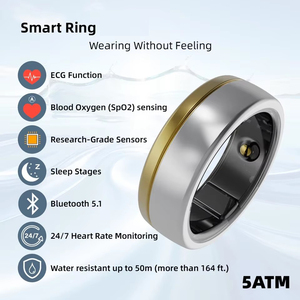
Next-Generation Wearable Portfolio
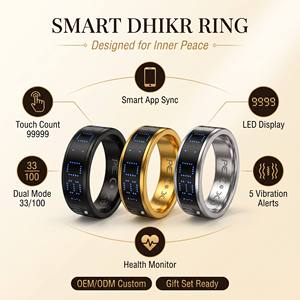
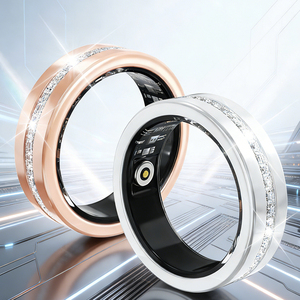
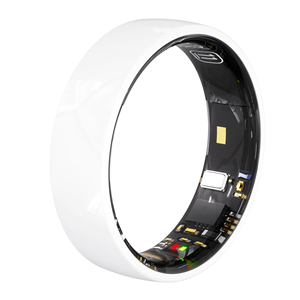
Featured Micro-Form Biometric & Smart Terminal Deployments
Factory-direct OEM/ODM wearable architectures engineered with medical-grade titanium, Nordic semiconductor SoCs, and full API integration for enterprise smart ecosystems.
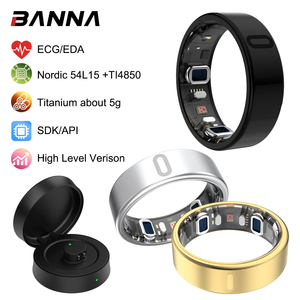

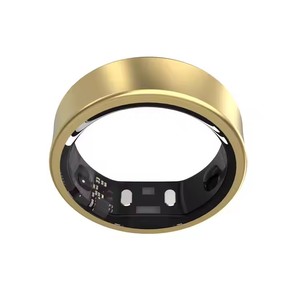
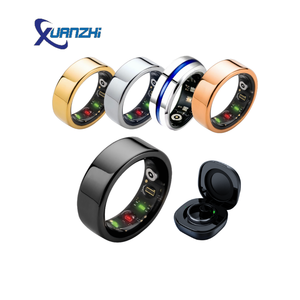
Manufacturing Supremacy & Proven Reliability
Industrial Foundations of Shenzhen's Premier Wearable Exporter
Established in 2008, Shenzhen Tucks Technology Co., Ltd. operates a vertically integrated production infrastructure, eliminating supply chain intermediaries for Tier-1 global brands.
15+ Yrs
Dedicated OEM/ODM Wearable Experience
8 Lines
High-Speed Precision SMT Production Lines
2.0M+
Annual Finished Device Export Capacity
500+
Tier-1 B2B Partners Across 30+ Nations
ISO9001:2015 Stringent QC Ecosystem
Every batch undergoes automated 100% optical inspection (AOI), high-temperature aging chambers, drop-impact stress validation, and automated helium leak waterproof detection (IP68 and 5ATM ratings).
Full CE, FCC, RoHS, and REACH documentation packages accompany all export lots, guaranteeing seamless passage through North American, European, and Australian customs clearance.
7-Day Rapid Prototyping Cycle
Agile engineering protocols allow our R&D engineering hub in Nanshan District, Shenzhen, to turn industrial ID/MD blueprints into fully functional working prototypes within seven business days.
Supported by in-house high-precision CNC tooling, custom mold-making facilities, and flexible SMT retooling capabilities that minimize pilot production lead times from months down to weeks.
Deep Firmware & Full-Stack SDK Customization
B2B procurement teams receive complete developer access, including Bluetooth BLE SDKs, custom communication protocols, customized boot screens, localized cloud servers, and white-label iOS/Android apps.
Hardware supports direct MQTT, HTTPS, and WebSocket integrations, allowing smart wearables to transmit data directly to private health, military, or industrial telematics backends.
Engineering Whitepaper & Strategic Roadmap
Technological Evolutionary Trajectory of AR Glasses & Micro-Wearables
An in-depth technical analysis of optical convergence, distributed spatial intelligence, and biometric edge computing driving international hardware tenders through 2026–2030.
Diffractive Waveguide & Micro-OLED Fusion
The global augmented reality sector is pivoting away from bulky Birdbath optical architectures toward surface-relief diffractive (SRG) and holographic optical waveguides coupled with sub-0.3-inch Micro-OLED and Micro-LED light engines.
This leap achieves greater than 85% ambient optical transmittance, luminous efficiencies surpassing 3,000 nits eye-level brightness for direct sunlight readability, and full prescription lens integration under a total frame weight of less than 48 grams.
Sub-Centimeter Spatial Computing & SLAM
Real-time edge localization is moving toward integrated ultra-wideband (UWB) and dual monochrome 6-DoF SLAM (Simultaneous Localization and Mapping) camera modules running on sub-watt DSP coprocessors.
This empowers field enterprise personnel in logistics, industrial assembly, and remote telemedicine to anchor virtual work instructions, 3D digital twins, and biometric overlays onto physical environments without noticeable rotational latency (MTP latency < 15ms).
Multi-Modal Ambient Biological Telemetry
AR glasses and micro-wearables (such as smart rings and smart watches) are converging into a unified PAN (Personal Area Network). By offloading continuous PPG, EDA (Electrodermal Activity), and micro-gesture tracking to smart rings, the master terminal preserves battery life.
Sub-millimeter gesture recognition—such as micro-pinches and thumb-flicks—now allows seamless HUD interaction without raising arms, eliminating user fatigue in clinical, defense, and prolonged manufacturing environments.
Architectural Comparison: Waveguide Paradigms for Enterprise vs. Consumer AR
Procurement directors must balance cost structures against optical efficiency and yield rates. The table below outlines technical metrics validated within Tucks' Shenzhen cleanroom facilities:
| Optical System | Field of View (FOV) | Transmittance | Luminance Yield | Form-Factor Weight | Target Deployment Segment |
|---|---|---|---|---|---|
| Surface-Relief Waveguide (SRG) | 30° – 40° | > 85% | Up to 3,500 nits | 42g – 52g | All-Day Consumer, Enterprise Telematics |
| Geometric Reflective Waveguide | 40° – 50° | > 80% | Up to 2,000 nits | 58g – 68g | High-Fidelity Military, Surgical Navigation |
| Polarized Birdbath Lens | 45° – 52° | 25% – 35% | Up to 600 nits | 75g – 95g | Immersive Cinema, Fixed Workstation Displays |
Strategic Sourcing Intelligence
Global Procurement Trends Shaping AR & Smart Wearable Contracts
Navigating regional regulatory mandates, local cloud data sovereignty, low-MOQ contract agile manufacturing, and modular architecture lifecycle requirements.
Decoupled Architecture & Data Sovereignty
Global enterprise purchasers increasingly reject hard-locked proprietary platforms in favor of decoupled hardware. Corporate and government tenders now require firmware that can bypass overseas cloud instances.
Tucks provides dedicated firmware variations designed to point biometric telemetry and video streams to European GDPR-compliant private AWS/Azure clusters, local on-premises intranet appliances, or private corporate endpoints without telemetry leakage.
Low Entry-Barrier Pilot Batch Procurement
The traditional model requiring 10,000-unit minimum commitments is giving way to high-mix, low-volume (HMLV) sourcing strategies. B2B buyers require agile initial trial production runs starting at 200 units to calibrate consumer reaction and regional carrier compliance.
Our Shenzhen facility supports full private-label packaging, laser chassis engraving, bespoke application initialization, and firmware calibration at our 200-unit baseline, reducing financial risk for growing hardware companies.
Biocompatibility & Eco-Certified Materials
Stricter EU Green Deal directives and international skin-contact regulations (REACH SVHC, RoHS, California Proposition 65) demand verified biocompatibility across the entire material stack.
Our OEM manufacturing integrates surgical-grade aerospace titanium alloys, high-density bio-neutral zirconia ceramics, and hypoallergenic PVD physical vapor deposition treatments, backed by independent SGS and TÜV testing reports for every production lot.
Buyer Knowledge Base
Frequently Asked Questions for B2B Smart Wearable Sourcing
Clear, definitive answers to technical, commercial, regulatory, and production questions encountered by procurement professionals importing from China.
Q: What is the standard MOQ for customized OEM smart wear and AR projects?
Our standard minimum order quantity (MOQ) begins at 200 units for standard housing configurations with custom silkscreen logos, customized boot screens, and specialized packaging. For deep ODM projects requiring unique tooling molds or modified PCB layouts, MOQs start from 1,000 units depending on the complexity of the internal electronics.
Q: How does Tucks guarantee intellectual property (IP) safety for custom ODM blueprints?
We execute binding bilateral Non-Disclosure Agreements (NDAs) subject to international jurisdiction before reviewing technical specifications. Furthermore, our SMT firmware flashing processes utilize proprietary hardware-encrypted key vaults, preventing internal code copying or third-party leakage across our production floor.
Q: What testing and quality procedures are conducted prior to factory dispatch?
Every manufactured device passes through a mandatory 48-hour continuous battery burn-in cycle, micro-voltage drop verification, multi-axis automated drop tests, salt-spray corrosion chambers, and pressurized helium air-leak chambers to verify IP68 or 5ATM waterproof integrity. A formal Quality Assurance (QA) inspection dossier is provided with each delivery.
Q: Can firmware accommodate native third-party API and enterprise backend integration?
Yes. We supply comprehensive Bluetooth Low Energy (BLE 5.0/5.2/5.3) API documentation along with native Android and iOS SDK libraries. Our in-house firmware development team can also tailor the transmission payload to push raw hex-packet sensor data directly to your designated private cloud infrastructure via standard MQTT or RESTful protocols.
Q: What are the standard lead times for custom prototypes versus mass production?
Fully functional engineering verification test (EVT) prototypes are produced and dispatched within 7 working days following CAD/firmware sign-off. Full mass-production runs typically take between 15 to 25 calendar days, contingent on component procurement timelines for high-spec items like Nordic nRF chips and specialized titanium housings.
Q: Which export compliance certifications accompany the shipped products?
All Tucks products conform strictly to international export criteria and carry CE (RED), FCC ID, RoHS, and WEEE certifications. Battery modules include UN38.3, MSDS, and IEC62133 safety clearances for seamless, uninterrupted sea and air-freight transport worldwide.
Accelerate Your Smart Wearable Roadmap with Direct Factory Support
Partner directly with Shenzhen Tucks Technology Co., Ltd. for end-to-end wearable engineering. Receive our comprehensive hardware portfolio, engineering whitepapers, and a transparent configuration-based price quotation within 24 hours.
Get Catalog