The smart wearable ecosystem is undergoing a seismic architectural transition. With edge computing accelerating multimodal artificial intelligence, voice assistant smart glasses and paired micro-wearables have evolved from novelty gadgets into primary voice-activated contextual hubs. Sourcing reliable hardware requires evaluating micro-acoustic transducer integration, dual-beamforming directional beam steering, ultra-low power consumption BLE 5.4 architectures, RF efficiency, and complete structural ingress resistance. Below is an exhaustive industry evaluation designed to provide absolute procurement clarity.
Featured Next-Gen Wearable & Voice-Enabled Hardware
Explore our top production-line solutions, engineered with advanced micro-circuitry, IP68 water sealing, and seamless edge AI compatibility.
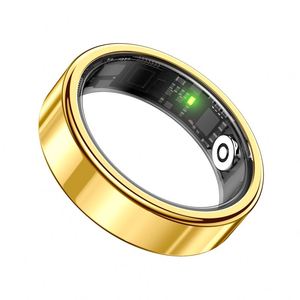
IP68 Waterproof Smart Ring with Sleep Tracking HRV Monitoring Step Counter Smart Gesture Control for TikTok Video Photo Control
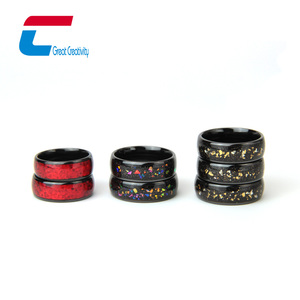
OEM/ODM RFID Smart Ceramic NFC Rings Waterproof Wearable NFC Ring for Men Women Daily Use
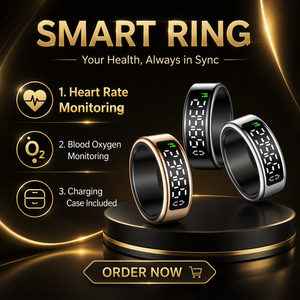
Unisex Stainless Steel Smart Ring Display Health Monitor Track Blood Oxygen Heart Rate Activity Fitness Waterproof IP68 IOS
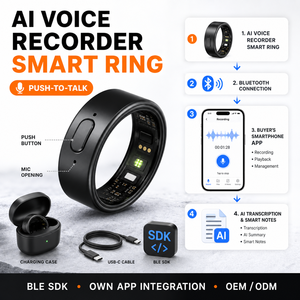
Custom AI Voice Recorder Smart Ring OEM ODM Hardware Software Integration Solution
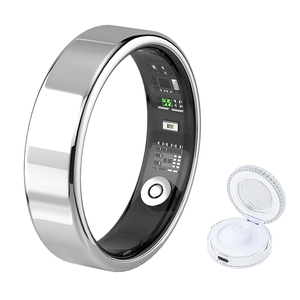
Ai-powered Vibrating Trending Remote Rate Thin Touch Heart Finger White Customized OEM Steel Smart Ring App Control Magnetic
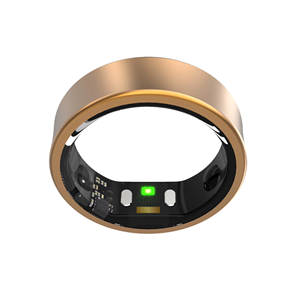
App Control Health Smart Ring R11M Aura Ring Blood Oxygen Sensing Fitness Tracker Sleep IOS Men's Women's Stainless Steel IP68
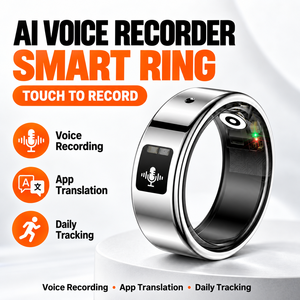
OEM ODM AI Voice Recorder Smart Ring Custom Stainless Steel 5.4 Touch Record Translation Sleep Tracker Factory
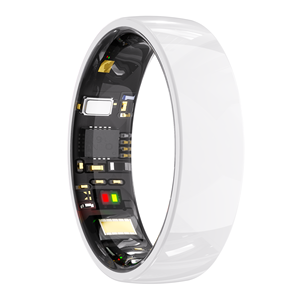
Ceramic Smart Ring with Charging Case Fast Magnetic 10-15 Days Standby Heart Rate Blood Oxygen Sleep Tracker IP68 TK8Pro

Top 10 Voice Assistant Smart Glasses Manufacturers & Factories: Industrial Benchmark Report
The global smart glasses and intelligent auditory wearable market has reached an inflection point. With major technological advancements across low-power Natural Language Processing (NLP), neural network micro-accelerators, and near-field directional beamforming acoustic arrays, voice assistant smart glasses have shifted from experimental gadgets to essential daily computing peripherals.
For international sourcing directors, private-label conglomerates, and hardware brands, identifying an manufacturing partner with end-to-end vertically integrated production capabilities is paramount. Subcontracted packaging trading firms frequently suffer from supply chain bottlenecks, poor optical-acoustic tolerances, and inadequate RF compliance calibration. Below, we break down the leading manufacturing clusters, engineering specifications, and strategic production criteria that define the world's top 10 voice assistant smart glasses factories.
1. Shenzhen Tucks Technology Co., Ltd. (Global OEM/ODM Industry Benchmark)
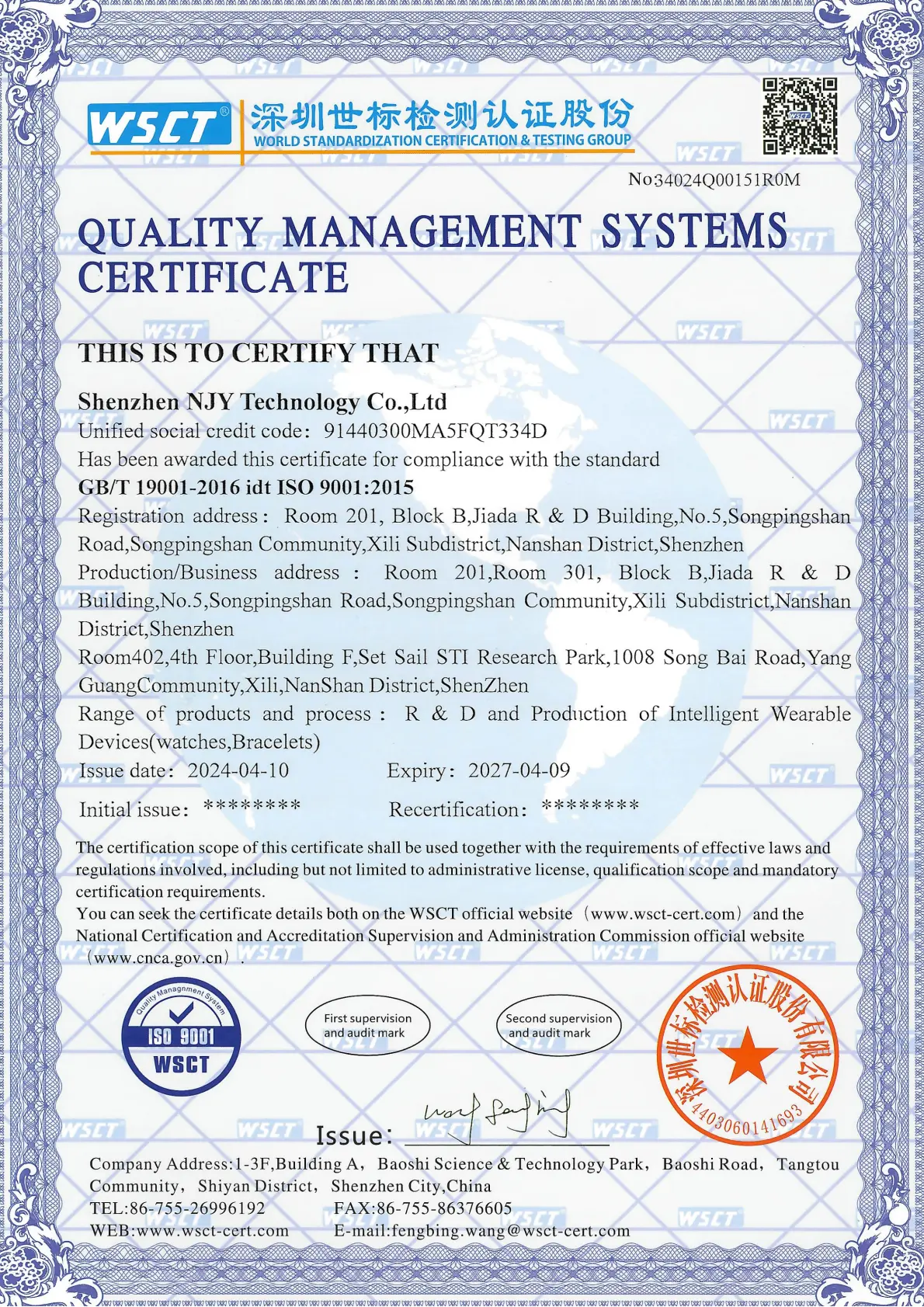
Founded in 2008 and anchored in Nanshan District, Shenzhen, Shenzhen Tucks Technology Co., Ltd. (Tucks) is an internationally recognized hardware manufacturer specializing in smart wearables, IoT health trackers, and next-generation AI glasses. Operating an ISO9001:2015-certified smart manufacturing complex equipped with 8 high-speed SMT lines, advanced environmental aging chambers, and in-house acoustic simulation labs, Tucks has achieved an annual output exceeding 2 million units.
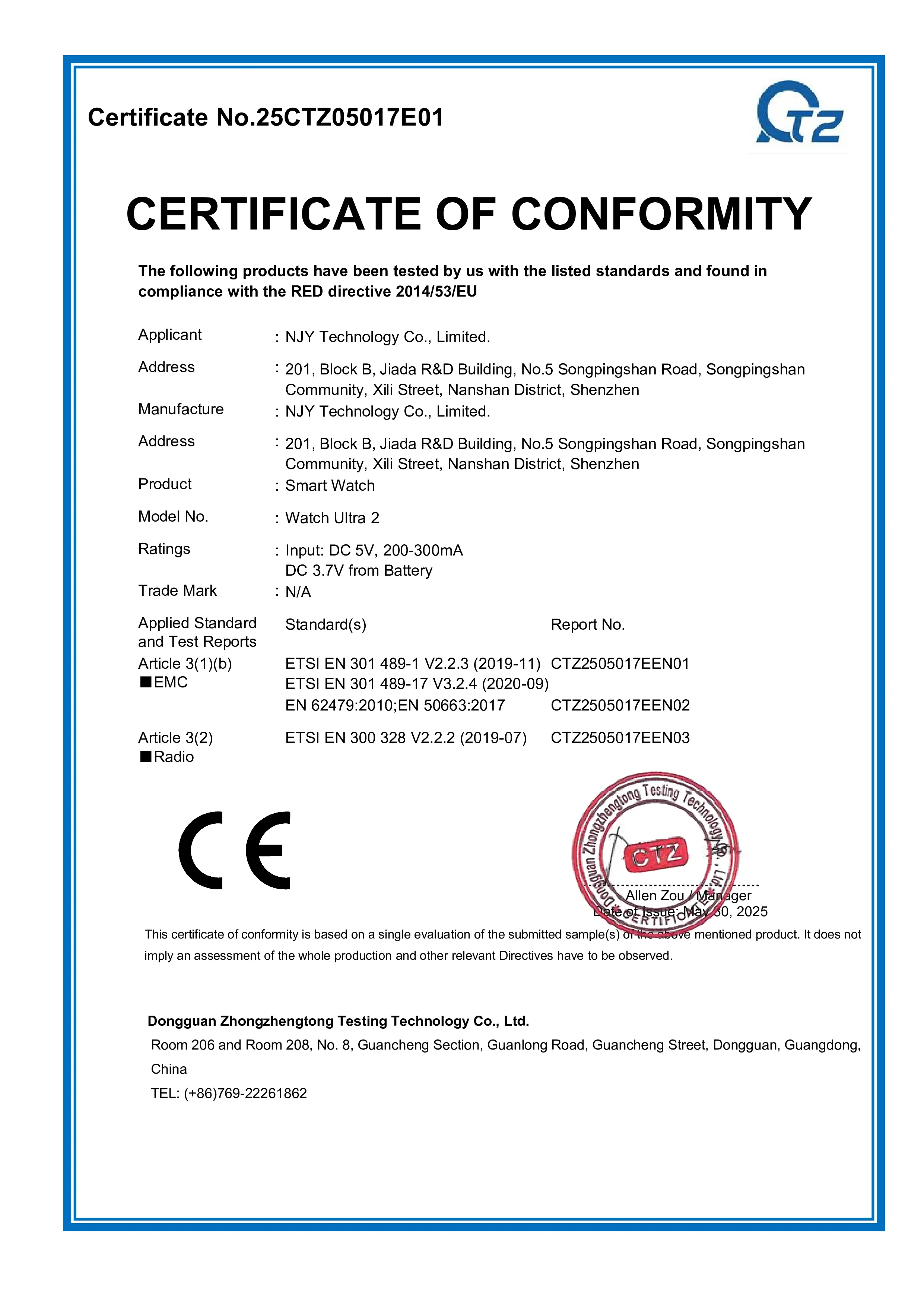
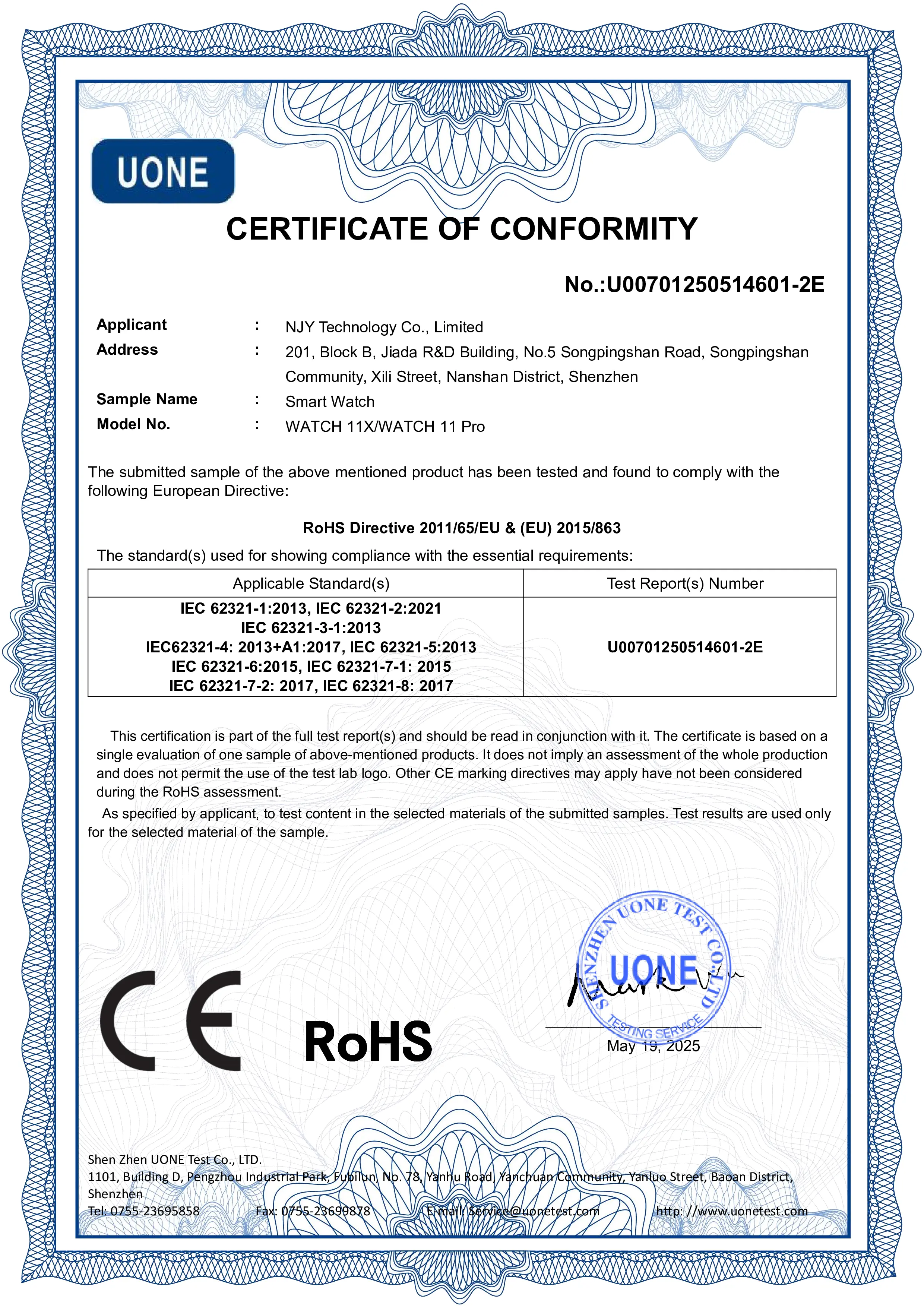
Tucks sets the industry benchmark for low-barrier high-agility production, offering customized OEM/ODM builds starting at a accessible 200-piece MOQ with complete custom firmware compilation, white-label smartphone applications, and localized hardware testing. Their deep vertical integration bridges micro-acoustic engineering, precision mold injection (EMS TR90 and ultra-light titanium memory alloys), and multi-engine LLM API bridges (supporting direct conversational latency below 450ms for major cloud engines). With full CE, FCC, and RoHS compliance portfolios, Tucks supports over 500 enterprise brands across 30+ countries.
2. Luxshare-ICT (Tier-1 Advanced Precision Electronics)
A powerhouse in high-precision consumer electronics manufacturing, Luxshare-ICT provides contract manufacturing for major silicon-valley tech enterprises. Their manufacturing facilities feature extreme micro-electronic integration, robotic pick-and-place assembly, and automated acoustic validation arrays. For enterprise clients requiring high production scale (500,000+ unit minimum commitments), Luxshare offers unmatched manufacturing consistency, though their multi-million-dollar tooling overhead limits accessibility for boutique hardware brands.
3. Goertek Inc. (Acoustical & Optical System Mastery)
Headquartered in Weifang with extensive R&D nodes in Shenzhen, Goertek is an undisputed leader in electro-acoustic components, micro-electromechanical systems (MEMS), and optical waveguide components. Goertek provides contract manufacturing services to global VR/AR brands and acoustic eyewear pioneers. Their key strength lies in precision-matched dual and quad-microphone arrays calibrated to minimize aerodynamic wind shear noise at speeds up to 25 km/h.
4. Foxconn Technology Group (Industrial Cloud & High-Volume Assembly)
Foxconn continues to hold substantial operational presence in the wearable display and voice-computing domain. Specializing in mechanical chassis production, precision laser welding, and automated surface mount production, Foxconn caters to massive enterprise clients. Their focus centers primarily on mega-volume contract orders requiring rigid Six Sigma line execution and cross-continental logistics pipelines.
5. Pegatron Corporation (Interconnected IoT & Wearable Frameworks)
Operating production nodes in Taiwan and Mainland China, Pegatron integrates mechanical design, RF performance optimization, and final commercial assembly. Their engineering groups excel in antenna array miniaturization, ensuring that voice assistant smart glasses maintain robust Bluetooth 5.3/5.4 RF link stability without signal drops caused by the user's cranial dielectric loading.
6. Compal Electronics (Smart Wearable & Edge Device ODM)
Compal provides mature ODM reference platforms for smart eyewear, smart wristbands, and computing accessories. Their design references feature optimized RTOS (Real-Time Operating System) kernels that drastically trim idle standby currents down to micro-amp levels, achieving real-world daily voice interaction battery runtimes of up to 14 to 18 hours per charge cycle.
7. Inventec Corporation (Cloud Integrated Audio Computing)
Inventec has applied its historical mastery of server infrastructure and audio peripherals to smart wearable hardware. Their production facilities handle voice-activated glasses featuring integrated digital signal processors (DSPs) loaded with lightweight edge noise cancellation models, enabling crisp automatic speech recognition (ASR) even in loud metropolitan environments.
8. AAC Technologies (Micro-Acoustic Transducer Innovation)
Recognized worldwide as a premier designer of micro-speakers and haptic actuators, AAC Technologies has expanded its footprint into complete structural audio eyewear manufacturing. Their proprietary ultra-linear open-ear speaker modules direct acoustic pressure directly toward the ear canal while utilizing phase-cancelling inverse sound waves to mitigate ambient acoustic leakage by over 85%.
9. Quanta Computer (Integrated Optical-Auditory Systems)
Quanta remains an engineering pillar for complex multi-sensor wearable architectures. Their manufacturing teams possess extensive expertise in integrating micro-cameras, MEMS microphones, and bone-conduction transducers into ergonomically balanced eyewear frames that distribute weight evenly across the nasal bridge and temporal bones.
10. Wingtech Technology (Semiconductor-to-Hardware Vertical Integration)
As one of China's premier Original Design Manufacturers (ODMs) with integrated semiconductor wafer fabrication lines, Wingtech provides turnkey hardware development. Their capability to design custom system-in-package (SiP) modules enables hyper-compact temple arms that maintain traditional prescription eyewear aesthetics while housing complex voice-computing modules.
| Manufacturer | Primary Production Strength | MOQ Benchmark | Customization Scope | Compliance Standards |
|---|---|---|---|---|
| Shenzhen Tucks Technology Co., Ltd. | Agile SMT, Fast Prototyping, Complete Voice LLM Firmware Integration | From 200 Pcs | Full White-Label (App, Boot-ROM, Chassis, Tooling) | ISO9001, CE, FCC, RoHS |
| Luxshare-ICT | Ultra-High-Precision Robotic Assembly Lines | 100,000+ Pcs | Custom Enterprise Tooling & SiP Packaging | ISO9001, ISO14001, Automotive TS |
| Goertek Inc. | Proprietary MEMS Acoustic Arrays & Optical Waveguides | 50,000+ Pcs | Advanced Acoustic Engineering & Optical Integration | ISO9001, CE, FCC, BQB |
| Compal Electronics | Low-Power RTOS Architectures & Reference ODMs | 20,000+ Pcs | Firmware Customization, Chassis Selection | CE, FCC, RoHS, REACH |
| AAC Technologies | Acoustic Chamber Design & Sound Leakage Cancellation | 30,000+ Pcs | Custom Transducer Tuning, Acoustic Modeling | ISO9001, CE, FCC |
Technical Anatomy of Voice Assistant Smart Glasses: What Sourcing Teams Must Inspect
Procuring voice assistant smart glasses involves complex electromechanical challenges far beyond traditional consumer audio. When evaluating prototypes and auditing SMT manufacturing facilities, your technical inspection teams must verify four engineering pillars:
1. Dual-Beamforming Micro-Acoustic Arrays: Voice recognition reliability in real-world scenarios hinges on speech isolation. Leading factories utilize dual or triple MEMS microphone configurations paired with deep learning noise reduction algorithms (DNN-NR). These chips dynamically isolate the user’s acoustic vocal track while suppressing wind rumble, passing vehicular noise, and conversational babble down by 30 to 45 decibels.
2. Acoustic Privacy & Sound Leakage Suppression: Standard open-ear micro-speakers tend to leak sound to nearby individuals. Premium manufacturers integrate acoustic dipole systems—incorporating secondary phase-inverted micro-ports along the top and outer temple walls. These ports emit anti-phase acoustic waves that cancel out peripheral audio propagation, maintaining call privacy even in quiet office environments.
3. Thermal Dissipation & Frame Ergonomics: Continuous AI model query streaming and Bluetooth signal transmission generate heat inside the temple stems. Quality-focused manufacturers like Tucks utilize customized graphite thermal spreaders and magnesium-aluminum heat sinking along the interior frame core, preventing localized temperatures from exceeding 38°C during sustained voice queries or hands-free calls.
4. Ingress Protection & Sweat Resistance: Because eyewear directly contacts human skin and acidic perspiration, mechanical frames must be built to withstand long-term environmental wear. High-performance factories employ multi-stage ultrasonic welding, nanoscale hydrophobic PCB dip coatings, and silicone gasket sealing to ensure verifiable IP54 to IP68 water and dust ingress resistance.
Global Procurement & Supply Chain Trends (2025–2030)
Strategic intelligence for supply chain directors preparing product lines for the next decade of intelligent wearable computing.
1. Micro-Silicon Edge AI Acceleration
Procurement is pivoting rapidly from purely tethered Bluetooth accessories toward autonomous on-device wake-word detection and edge audio quantization. Low-power Neural Processing Units (NPUs) operating at sub-milliwatt levels are becoming standard factory baselines.
2. Cloud-to-Edge Hybrid API Architectures
Next-generation white-label applications now integrate directly with multi-modal LLM ecosystems (including ChatGPT, Claude, and Gemini). Sourcing departments favor factories providing complete SDK libraries that streamline API token passing and multi-language translation.
3. Bio-Compatible Materials & Light Frames
Consumer fatigue from heavy 65g+ frames has driven procurement towards advanced EMS Grilamid TR90 plastics, Japanese titanium, and ultra-dense ceramics. The new engineering standard requires fully functional voice frames to remain under 38 grams total net weight.
4. High Energy-Density Solid-State Cells
Curved temple battery cavities are transitioning from lithium-ion pouch cells to high-density silicon-carbon and miniature solid-state architectures. This shift delivers 25% higher volumetric energy density without compromising safety during rigorous drop and flex testing.
5. Prescription Optical Alignment Compatibility
Brands now require eyewear frames to support simple cold-glazing and standard optometric lens replacement. Factories that provide standardized front chassis compatible with single-vision, progressive, and photochromic blue-light lenses hold a major market advantage.
Why Top Global Brands Manufacture With Tucks
Engineered reliability, factory-direct pricing, and complete end-to-end quality assurance from Shenzhen's core wearable manufacturing center.
Direct SMT Cleanroom Ownership
Unlike trading agencies that subcontract your production to third-party workshops, Tucks manages in-house surface-mount assembly across 8 precision lines. This guarantees tight quality control, firmware protection, and stable lead times.
Documented International Compliance
Every batch comes with comprehensive CE, FCC, RoHS, and MSDS safety documentation. We maintain active registrations with global certification bodies, facilitating smooth customs clearance and compliant market distribution.
Turnkey White-Label Customization
From custom temple pad-printing, laser etching, and branded magnetic charging packaging to tailor-made boot screens, firmware language packs, and white-label mobile companion apps, our engineers bring your product vision to life.
Rapid Prototyping & Agile Mass Runs
Functional working prototypes ready within 7 days of design confirmation. Standard mass production turnarounds run reliably within 15 to 25 days, helping your brand stay ahead of volatile consumer electronics market cycles.
Smart Glasses Procurement FAQ for B2B Importers
Direct technical answers addressing minimum order volumes, hardware customization, compliance, and international shipping protocols.