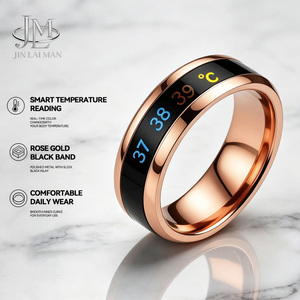
Thermal Array
Stainless Steel
Seamlessly bridging human-machine interaction through tactile bio-telemetry, ultra-compact RF circuitry, and optical spatial processing.
As the global consumer electronics market shifts from passive screen notifications toward conversational, spatial, and ubiquitous intelligence, China AI smart glasses wholesale suppliers & exporters have emerged as pivotal architectural partners for Tier-1 technology brands, eyewear corporations, and telecom disruptors. Modern wearable manufacturing is no longer a race for lower marginal bill-of-materials (BOM) cost; it represents a high-stakes convergence of multi-modal AI edge inference, sub-millimeter precision optoelectronics, micro-acoustic waveguide engineering, and complex battery chemistry.
For international supply chain directors, industrial brand strategists, and OEM product owners, procuring from Shenzhen's tier-1 ecosystem provides uncompromised economies of scale combined with agile industrial iteration. The transition toward multimodal Generative Pre-trained Transformers (GPT-4o, Gemini Live, Claude 3.5) integrated directly into spatial frames necessitates a rigorous reevaluation of supplier capabilities across wafer-level packaging, thermal dissipating magnesium-aluminum alloys, optical engine alignment, and privacy compliance frameworks (CE, FCC, RoHS, GDPR).
Selecting an appropriate AI smart eyewear or wearable hardware base directly dictates your post-launch customer lifetime value (LTV), warranty claims, and margin sustainability. Our Tier-1 manufacturing pipelines segment hardware into distinct market-driven operational vectors:
1. Multimodal AI Voice & Conversational Translation Glasses: Featuring dual or quad beamforming MEMS microphone arrays with proprietary wind-noise suppression and open-ear spatial resonance cavities. Built on ultra-low-power Bluetooth 5.3/5.4 audio SoCs (such as BES, Qualcomm, or Realtek), these frames communicate directly with cloud-hosted LLMs to offer real-time bi-directional audio translation, semantic web searches, continuous meeting transcriptions, and automated task prioritization. Ideal for corporate productivity verticals, travel platforms, and luxury business gifting.
2. Edge Vision First-Person Perspective (POV) AI Glasses: Equipped with sub-miniaturized 12MP to 4K Sony CMOS sensors, 1080p optical stabilization, high dynamic range (HDR) color matrices, and dedicated Image Signal Processors (ISP). These models allow creators, field engineers, and telehealth clinicians to execute hands-free spatial streaming, optical character recognition (OCR), situational hazards analysis, and instant contextual queries over high-bandwidth Wi-Fi 6 / BT 5.3 dual-mode bridges.
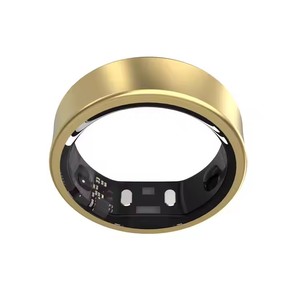
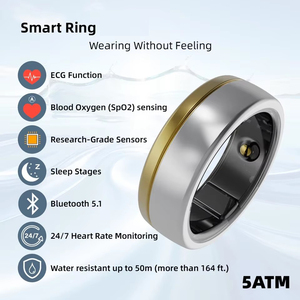
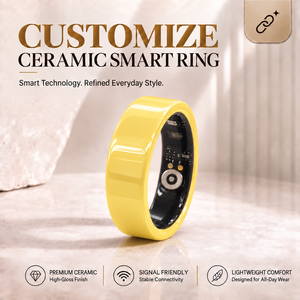
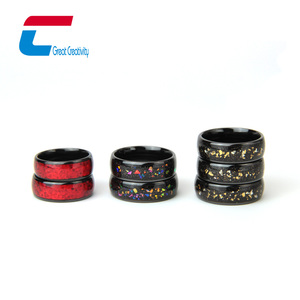
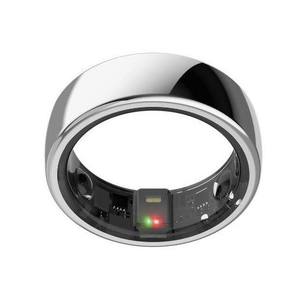
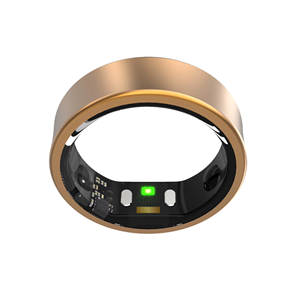
3. Bio-Metric Synchronized Hybrid Smart Ecosystems: Combining optical eyewear interfaces with complementary tactical form factors—such as medical-grade titanium smart rings and micro-SMT fitness trackers. By cross-referencing continuous optical PPG heart-rate variability (HRV), peripheral SpO2, galvanic skin temperature, and sleep fragmentation metrics from peripheral smart rings with the contextual gaze and ambient audio of smart glasses, enterprise developers can deploy hyper-personalized health and wellness dashboards without creating user interface fatigue.
| Classification Vector | Optic & Sensor Package | Micro-Processor SoC | Thermal & Weight Profile | Target Retail Domain |
|---|---|---|---|---|
| Conversational AI Voice | Dual MEMS + Bone Conduction / Air Directional | Ultra-Low-Power BLE 5.3 SoC (Dual Core) | < 38g / Passive Alloy Heatsinking | Business Mobility, Travel, Smart Retail |
| Spatial POV Vision AI | Sony 12MP–16MP CMOS / EIS Ultra-Wide | Quad-Core Edge NPU + Dedicated ISP | < 48g / Integrated Copper Shim System | Content Creators, Field Logistics, Telemedicine |
| Optical Waveguide AR | Micro-OLED / Micro-LED + Diffractive Waveguide | Spatial Computing XR2 / Dual OS Architecture | < 65g / Magnesium Core Frame Struct | Industrial Inspection, Navigation, Remote Assistance |
| Sub-Surface Bio Ring Sync | Dual-Wavelength PPG + Titanium PVD Surface | Sub-Microamp Nordic BLE 5.2 / 5.4 IC | < 4.5g / Resin Encapsulated 5ATM | Holistic Digital Health, Athlete Monitoring |
Procurement teams navigating the electronics industrial base of China must look ahead to structural transitions in component manufacturing, firmware integration, and geopolitical supply chain redundancies:
Decentralized Hybrid On-Device & Cloud Edge Inference: Current AI eyewear hinges heavily on cellular tethering and cloud API handshakes. The next generation of Chinese export hardware leverages 2nm to 4nm low-power Neural Processing Units (NPUs) integrated directly into the temple stems. These micro-cores run quantized TinyML SLMs (Small Language Models of 1B-3B parameters) locally, enabling zero-latency voice recognition, wake-word activation, offline spatial OCR, and emergency SOS processing without an active Internet uplink.
Micro-LED and Resin Diffractive Surface Relief Gratings (SRG): Bulky birdbath prisms and reflective optical architectures are rapidly obsolete. Tier-1 Chinese exporters are shifting capital expenditure into diffraction optical waveguide injection molding. By imprinting nanometer-scale grating structures directly onto ophthalmic-grade, shatter-resistant resin lenses matched to monochrome or full-color Micro-LED light engines (yielding over 100,000 nits of source brightness), the industry has cracked the formula for AI eyewear indistinguishable from designer prescription frames.
Micro-Solid-State & Fast-Charging Silicon-Anode Battery Formulations: Traditional lithium-polymer pouches present structural form-factor restrictions and thermal degradation over repeated charging cycles. Chinese advanced research institutes and supply networks are integrating curved, temple-contoured solid-state batteries and silicon-carbon anodes. This elevates volumetric energy density past 750 Wh/L, allowing 14 to 18 hours of intermittent AI multimodal operation with ultra-safe thermal profiles that pass stringent airline transport regulations (UN38.3, MSDS).
The manufacturing evolution of AI eyewear closely mirrors the industrial curve seen in smartphones and smart rings: consolidation, standardization, and architectural democratization. Where early market entrants struggled with audio leakage, imprecise hinge tolerances, and disjointed companion applications, current export lines boast standardized modular architectures.
Software Development Kits (SDK) and Open API Middleware: Enterprise importers are no longer captive to closed proprietary software. Our white-label export frameworks furnish turnkey, fully-documented iOS and Android native SDKs, WebAssembly integration hooks, and localized low-latency LLM connectors. Whether routing conversational voice payloads through OpenAI ChatGPT Enterprise, Microsoft Azure, Google Gemini, or on-premises enterprise vector databases, importers maintain complete control over end-user data security, data governance, and subscription billing monetization.
Ultrasonic SMT Line Packaging & Ergonomic Biocompatibility: As smart glasses approach sub-40-gram targets, standard PCB substrates give way to 10-layer Rigid-Flex hybrid HDI boards folded directly into acetate, TR90, or ultra-resilient beta-titanium temples. Precision automated robotic dispensers apply medical-grade UV-curing conformal coatings, guaranteeing IP54 to IP68 sweat and water resistance ratings while maintaining skin contact biocompatibility that complies seamlessly with ISO 10993 international cytotoxicity benchmarks.
Headquartered in Nanshan District, Shenzhen—the epicenter of global smart device engineering—Shenzhen Tucks Technology Co., Ltd. eliminates trading intermediaries and provides verifiable production transparency.
Operating 8 modern automated SMT high-speed lines and 200+ specialized technicians, delivering over 2,000,000 wearable units annually to absorb dramatic retail seasonal peaks without supply bottlenecking.
Audited strictly under ISO9001:2015 quality management procedures. All production batches ship complete with genuine CE, FCC, RoHS, BQB, and UN38.3 battery dossiers ready for clearance and global retail shelving.
From precision laser frame engraving and bespoke acoustic tuning to customized boot animations, multilingual firmware localization, optical prescription lens inserts, and white-label companion mobile apps.
Shorten your product launch window with 7-day functional engineering prototypes, low 200 pcs initial volume commitments, and stable 15–25 day complete mass production pipelines backed by an integrated local supply chain.
Direct technical and operational insights addressing common supplier evaluation, regulatory compliance, and cross-border logistics inquiries.
Whether you require rapid deployment of a proven 200-piece pilot run or bespoke ODM ground-up hardware engineering, our Shenzhen factory engineers stand ready to configure your technical quotation within 24 hours.