Top China Translation Earbuds Manufacturer Suppliers & Exporters
OEM/ODM Wearable Engineering & Edge-AI Integration: Low-Latency Multilingual Inference, Dual-Mic Beamforming, and Global Tier-1 Export Solutions Directly from Shenzhen.
15+ Yrs
Wearables & Acoustics OEM Heritage (Est. 2008)
8Lines
In-House High-Precision SMT Production Infrastructure
2M+ Units
Annual Production Capacity with ISO9001:2015 QC
200PCS
Flexible Tiered Pilot MOQ for International Brands
Enterprise Hardware Catalog
Featured Next-Generation Smart Wearable & Voice Terminals
Factory-direct OEM base units designed for enterprise field deployment, hands-free multilingual productivity, and specialized biometric IoT architectures.
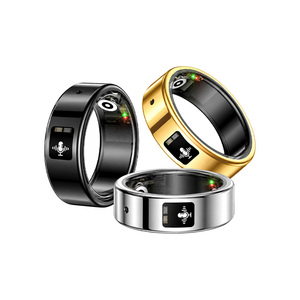
BLE 5.4 · AI Voice
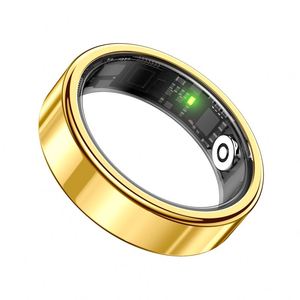
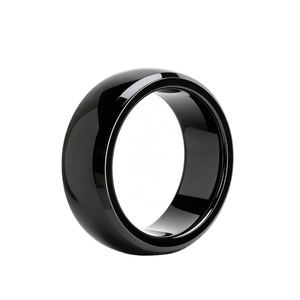
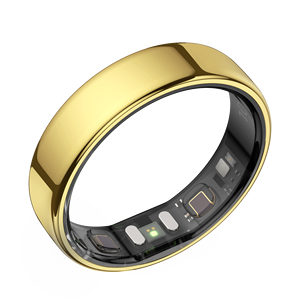
Custom Hardware Design Portable Field Work Recorder with BLE V5.4 AI Smart Voice Ring for Mobile Professionals
Information Gain Whitepaper: Engineering High-Fidelity Translation Earbuds in Shenzhen
Global commercial procurement of translation earbuds has evolved from simple consumer TWS repackaging into demanding enterprise telecommunications engineering. An authentic China translation earbuds manufacturer must solve the multi-vector challenge of acoustic capture, ambient signal suppression, neural speech processing, and low-latency synthetic text-to-speech feedback. In high-stakes business discussions, international negotiations, and cross-border logistics, an intelligibility drop of even 5% or an audio lag greater than 800 milliseconds leads to degraded user trust and commercial friction.
At our ISO9001:2015-certified Shenzhen production plant, we overcome these hurdles by fusing dual/quad beamforming MEMS microphones with embedded DSP noise mitigation algorithms. By deploying hybrid Environmental Noise Cancellation (ENC) alongside bone conduction voiceprint sensors, our translation earbud modules capture clean human vocal formants even across 85dB high-noise public environments (such as railway terminals, exhibition halls, and airports). The captured digital stream is packaged via Bluetooth Low Energy (BLE 5.3 / 5.4) protocols, ensuring zero packet loss and optimized battery drain during prolonged continuous bidirectional interpretation.
144+ Languages with 70+ Regional Dialects / Offline Engines
Inference Pipeline
Third-party Public API dependent
Proprietary Edge SDK + Low-Latency Cloud Hybrid Server Clusters
Battery Longevity (Continuous)
3.5 – 4 Hours per charge
7.5 – 9 Hours continuous AI translation session
Market Intelligence
Future B2B Procurement Trends in Voice Translation Technology
Procurement directors and brand owners must align their product roadmaps with upcoming regulatory standards, offline computing paradigms, and multidevice edge ecosystems.
1. Edge-AI & Offline LLM Translation Engines
Enterprise procurement is shifting rapidly from cloud-dependent API systems to localized edge computing. Future translation earbuds incorporate onboard NPU (Neural Processing Unit) acceleration capable of running quantized, lightweight 0.5B to 1.5B translation models directly on the mobile hub or storage-integrated charging cases. This ensures high-accuracy interpretation during flights, remote mining environments, and areas with strict privacy safeguards where cloud uploading is strictly forbidden.
2. Enterprise Data Compliance (GDPR & ISO27001)
International corporate buyers and government agencies require documented adherence to global privacy laws. Modern procurement requires audio data stream zero-retention policies, where captured voice data is processed instantaneously in volatile RAM and immediately discarded without telemetry logging. Sourcing from a factory that provides white-label companion software compliant with EU GDPR and California CCPA ensures seamless customs and commercial entry into tier-one jurisdictions.
3. Multi-Node Ecosystem Synchronization
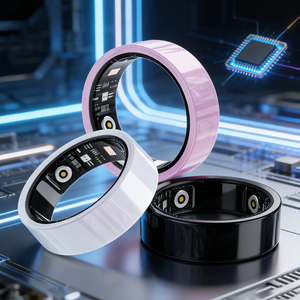
Single-point acoustic wearables are transitioning toward interconnected ecosystems. By integrating translation earbuds with smart rings, biometric bands, and heads-up AI glasses, users obtain multi-modal sensory inputs: tactile gesture verification via a smart ring for rapid channel toggling, real-time visual heads-up subtitles on smart eyewear, and discrete directional earbud audio feedback, maximizing battery life and user discretion across enterprise scenarios.
The Evolution of Translation Wearables: 2024 to 2028 Paradigm Shift
Phase 1: Basic App-Tethered Half-Duplex (Legacy Systems): Early translation earbuds functioned merely as standard Bluetooth headsets relaying sound to a smartphone app. Users were forced to hit touch targets alternately, creating awkward pauses, missing critical tonal nuances, and generating extreme acoustic echo in conference rooms.
Phase 2: Simultaneous Full-Duplex Bi-Directional Streaming (Current Enterprise Standard): Modern architectures developed by top China OEM exporters feature independent dual-channel audio streams. Each participant wears one earbud. Advanced acoustic separation filters out cross-talk, enabling simultaneous speaking and translation with real-time continuous voice output without manual button presses.
Phase 3: Context-Aware Multimodal Neural Acoustic Nodes (Upcoming 2026+ Horizon): The convergence of Large Language Models (LLMs) with high-density physical packaging allows translation earbuds to understand situational context, corporate terminology, legal jargon, and sentimental inflection. Furthermore, integration with BLE v5.4 and Auracast broadcast protocols will enable one-to-many enterprise event translations without cumbersome RF receiver rentals.
Shenzhen Manufacturing Benchmark
Why Top Global Brands Partner with Shenzhen Tucks Technology Co., Ltd.
Operating an advanced ISO9001:2015 manufacturing complex in Nanshan, Shenzhen, we eliminate trading intermediaries and deliver end-to-end hardware-software excellence.
Direct SMT & Acoustic Engineering
With 8 high-speed SMT surface-mount lines, automated optical inspection (AOI), and RF anechoic testing chambers, our direct factory ownership ensures that your translation earbud firmware, antenna performance, and dual-mic tuning match tier-one telecommunication standards.
Full Export Compliance Guarantee
We protect importers from border delays and compliance litigation. Every OEM production lot is backed by valid CE, FCC ID, RoHS 2.0, BQB Bluetooth qualification, and UN38.3 battery transport safety documentation ready for swift customs clearance.
Rapid Pilot Prototyping (7 Days)
Accelerate your market entry. We deliver functional customized prototypes—complete with laser-etched brand marks, customized firmware pairing ID, and localized multilingual companion test builds—within 7 business days, scaling to mass runs in 15–25 days.
Procurement Clarity
Frequently Asked Questions: Sourcing Translation Earbuds from China
Critical answers to questions concerning software API licensing, acoustic calibration, custom mold investments, and minimum orders.
What is the standard Minimum Order Quantity (MOQ) for custom OEM translation earbuds?
Our standard entry-level OEM program starts at just 200 units for standard tooling base products. This tier includes laser-etched branding, localized packaging, customized firmware pairing designations, and white-label mobile app integration. For fully customized industrial ID tooling, bespoke acoustic chamber modifications, or proprietary silicon architecture development (ODM), volume targets typically start at 1,000 to 3,000 units depending on technical complexity.
How are translation API costs and recurring server expenses handled for private label brands?
We offer flexible software deployment models. Clients can either leverage our turnkey low-latency translation server infrastructure (which integrates leading engines like Google Cloud, Microsoft Azure, DeepL, and Baidu Speech via an optimized routing layer) on a lifetime device-bundled or monthly token basis, or integrate their own corporate API endpoints through our open Android/iOS SDK libraries, giving brands complete financial sovereignty over translation licensing.
Can your translation earbuds operate in fully offline mode without active internet connectivity?
Yes. We provide offline linguistic packages supporting major global commercial language pairs (including English, Mandarin, Spanish, French, German, Japanese, Korean, Russian, and Arabic). These neural translation models are pre-compiled and compressed to execute locally within the companion smartphone app or dedicated offline hub storage, guaranteeing uninterrupted performance during in-flight business meetings or in network-constrained maritime and tactical operational areas.
What acoustic testing protocols are conducted during mass assembly to prevent latency and packet drops?
Every production unit passes through a multi-stage quality assurance gate. This includes SoundCheck automated acoustic frequency response analysis, artificial ear simulator testing for Total Harmonic Distortion (THD < 1% at 1kHz), RF vector network antenna matching, high-pressure waterproof testing, and an uninterrupted 8-hour thermal aging cycle under full BLE telemetry load to verify zero component failure before packaging.
Which certifications accompany bulk export shipments destined for North America and the European Union?
All baseline models manufactured by Shenzhen Tucks Technology Co., Ltd. are fully certified with CE (EMC, LVD, RED directives), FCC Part 15 subpart C/B, RoHS 2.0 hazardous material compliance, and REACH chemical standards. Lithium-polymer battery cells feature certified battery protection circuits (PCM), MSDS reports, and UN38.3 test summaries, ensuring unhindered sea freight, air cargo, and Amazon FBA fulfillment processing.
Build Your Private Label Translation Line with China's Premier Wearable Factory
Consult directly with our Shenzhen hardware engineers. Receive a comprehensive OEM cost quotation, software architecture matrix, and complete prototype production timeline within 24 hours.