State of the Language Translation Earbuds Market: The Convergence of Edge-AI & Acoustic Engineering
The global demand for language translation earbuds and multi-lingual voice communication devices has experienced a structural paradigm shift. Where legacy translation peripherals relied exclusively on cloud-tethered smartphones introducing catastrophic round-trip delays (often exceeding 2.5 to 4.0 seconds), tier-one manufacturing ecosystems have integrated advanced Neural Processing Units (NPUs) and dual Digital Signal Processors (DSPs) directly on the silicon die. Sourcing procurement teams now assess hardware based on latency optimization, beamforming array isolation, and acoustic signal-to-noise ratios (SNR).
As language models transition from server-dependent API calls to hybrid edge-computing frameworks, translation earbuds must sustain computational loads without triggering thermal throttling within restricted ear-canal geometries. Contemporary system-level designs combine low-power Bluetooth 5.3/5.4 transceivers, dedicated beamforming array microphones, and onboard flash arrays holding condensed multi-language phonetic dictionaries. The objective for high-volume B2B brands is seamless, bi-directional, synchronous simultaneous interpretation operating below the human conversation discomfort threshold of 250 milliseconds.
Evaluation Parameter
Legacy Cloud Translation Hardware
Next-Gen Edge-AI Acoustic Solutions
End-to-End Latency
2,200ms – 4,500ms (Network Dependent)
180ms – 450ms (Edge-NPU & Predictive Hybrid)
Offline Language Support
Unavailable or Poor Quality Vocabulary
Up to 16 Language Pairs Embedded On-Chip
Microphone System Topology
Single Omni-directional MEMS (-42dBV)
Quad/Dual Beamforming Array + Bone Conduction VPU
Acoustic Isolation
Passive Silicone Only
Hybrid ANC (-45dB) + Deep Neural Net (DNN) Noise Suppression
Ecosystem Interoperability
Proprietary Closed Smartphone App
Open C-API / SDK for Cross-Platform Enterprise Sync
Future Procurement Trends: What Global Importers & B2B Distributors Must Anticipate (2025–2030)
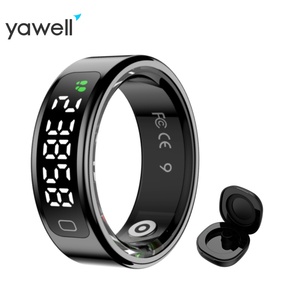
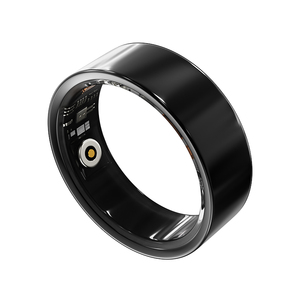
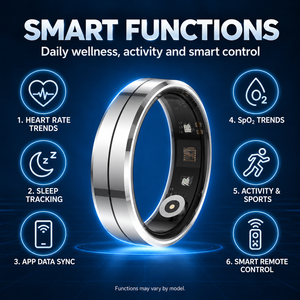
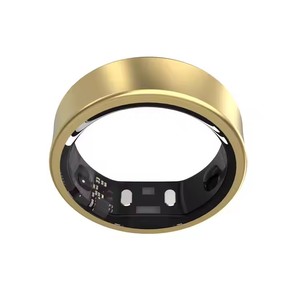
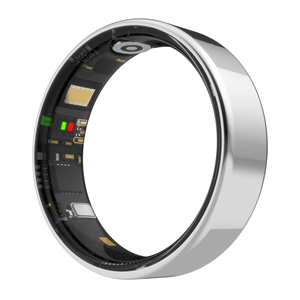
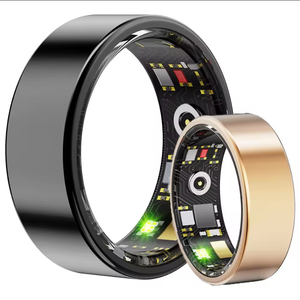
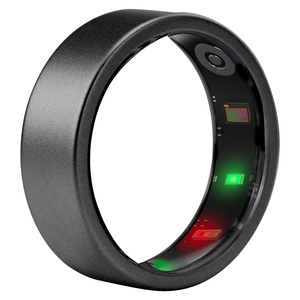
Enterprise procurement professionals navigating consumer electronics and wearable technology must recognize that acoustic hardware can no longer be acquired as an isolated silo. Supply chain convergence has unified audio translation hardware with biometric health surveillance, such as real-time continuous photoplethysmography (PPG) sensors, body temperature transducers, and electrodermal responsiveness circuits. Leading original design manufacturers (ODMs) are bundling personal translation algorithms into multi-form-factor ecosystems, enabling simultaneous translation outputs to route seamlessly between in-ear drivers, micro-OLED displays in AI smart glasses, and tactile status notifications on companion smart rings.
Furthermore, component procurement mandates are tightening around algorithmic security and data compliance. In both European (GDPR) and North American jurisdictions, voice data recorded during enterprise translations cannot be unconditionally transmitted across unsecured third-party servers. Consequently, procurement tenders are formally rejecting generic white-label distributors in favor of primary factories capable of baking cryptographic on-device data redaction into the flash firmware, coupled with complete hardware-level SDK control for corporate server routing.
Evolutionary Engineering Roadmaps: From Voice Translation to Ambient Generative Telemetry
The technological roadmap for translation acoustics centers on three distinct hardware innovations: MEMS Speaker Transducers, Voice Vibration Sensors (VPU), and Multi-Modal Ambient Telemetry. Conventional balanced armature or dynamic coil drivers are physically vulnerable to moisture intrusion and mechanical drop shocks. Advanced solid-state silicon MEMS drivers, manufactured directly on silicon wafers, offer sub-millisecond impulse response times, near-zero phase distortion, and absolute environmental immunity, creating pristine acoustic clarity for synthetic translated speech.
Equally vital is the physical elimination of environmental interference in high-noise arenas such as airports, manufacturing floors, and international conferences. By coupling bone-conduction voice pick-up sensors that track cranial bone vibration directly with wide-band acoustic MEMS arrays, translation algorithms bypass environmental noise spikes entirely. The DSP receives clean, uncorrupted vocal tract oscillations, raising speech recognition engine accuracy above 98.4% even in 90dB ambient SPL industrial conditions.
Verified Manufacturing Capacity
Industrial Engineering & Factory Capabilities: Built in Shenzhen
Eliminating middleman trading risk through direct integration with verified SMT automated production lines, certified compliance, and deep firmware customization.
PILLAR 01
Scalable SMT Production Engine
Operating 8 fully-automated surface-mount technology (SMT) lines yielding over 2,000,000 wearable units annually, absorbing seasonal demand swings without delivery lag.
PILLAR 02
Audited International Compliance
Production facilities operating under verified ISO9001:2015 frameworks with turnkey export dossiers: CE, FCC, RoHS, and BQB certifications pre-cleared for global customs.
PILLAR 03
Firmware, App & SDK Customization
Comprehensive white-label programs encompassing custom boot logos, dynamic localized language packs, dedicated companion app UI skinning, and cloud server API integration.
PILLAR 04
Agile Time-to-Market Cycles
Rapid functional prototypes engineered within 7 working days, low entry MOQs starting at 200 units, and stabilized full mass production delivery guaranteed in 15–25 days.
Procurement Knowledge Base
Frequently Asked Questions: Sourcing Language Translation Wearables
Essential technical, logistical, and licensing insights required prior to issuing requests for quotation (RFQs).
How do translation earbuds manage real-time speech translation without cloud network access?+
Edge-capable translation earbuds utilize compressed acoustic model neural nets pre-flashed into high-density NAND memory on the motherboard or within the companion charging enclosure. When cellular or Wi-Fi data is unavailable, incoming speech is processed locally by dedicated DSP speech-to-text algorithms and synthesized via on-device dictionaries, allowing mission-critical interpretation across standard languages with zero data connectivity.
What are the baseline minimum order quantities (MOQs) for custom branding and ODM modifications?+
Standard white-label programs—which include precision laser engraving, localized packaging art, custom boot sequences, and app logo matching—begin at an accessible baseline of 200 units per model. Full structural ODM re-tooling (involving unique acoustic enclosure molds, bespoke MEMS chamber tooling, or ground-up PCBA design) typically requires a minimum batch volume of 1,000 to 3,000 pieces depending on casing metallurgy.
Which regulatory compliance dossiers are provided with high-volume shipments?+
All standard base models exit our Shenzhen cleanrooms with complete certification packages ready for immediate import clearance. These include European Conformity (CE-RED), United States Federal Communications Commission (FCC Part 15), Restriction of Hazardous Substances (RoHS 2.0), battery transportation safety dossiers (UN38.3, MSDS), and formal Bluetooth SIG qualification listings (BQB).
How is acoustic signal clarity safeguarded in dense, loud international environments?+
Acoustic clarity relies on dual or quad MEMS microphone spatial beamforming combined with Bone Conduction Voice Pick-Up (VPU) sensors and Deep Neural Network (DNN) ambient filtration algorithms. The system triangulates vocal vibrations emanating from the speaker's vocal tract while computationally phase-cancelling external peripheral noise up to 45dB, preserving vocal accuracy even within congested transit hubs.
What is the standard production timeline from sample sign-off to container dispatch?+
Following technical specification lock and artwork file submission, fully functional pre-production prototypes are dispatched for buyer sign-off within 7 business days. Upon sample approval and deposit clearing, automated SMT board mounting, acoustic sealing, cleanroom assembly, 100% QA pressure and water testing, and secondary aging cycles conclude mass production runs in 15 to 25 calendar days.
Ready to Scale Your Wearable & Translation Audio Line?
Direct factory engineering consultation, immediate BOM component estimates, and complete white-label OEM specification sheets ready within 24 hours.