Smart Ecosystem Lineup
Featured Hardware & Micro-Sensory Peripherals
Our high-precision wearable micro-assemblies complement heads-up augmented reality interfaces, delivering zero-latency biometric telemetry and hands-free gesture control for field professionals across New Zealand.

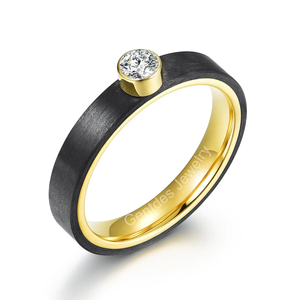
Manufacturer OEM ODM Steel Gesture Moissanite Smart Ring IP68 Waterproof Thin Fitness Tracker Heart Rate Blood Oxygen Monitoring
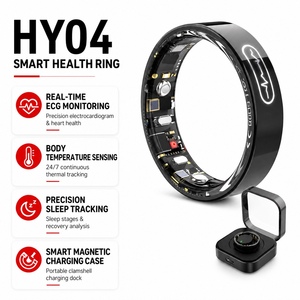
HY04 ECG Smart Ring Heart Rate Body Temperature Blood Oxygen Blood Pressure HRV Sleep Monitor Stainless Steel 5.3
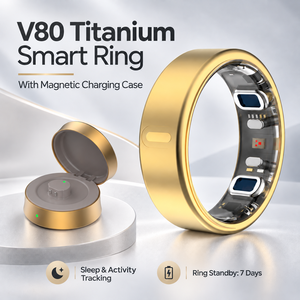
Premium Titanium Smart Ring OEM ODM Health Wearable with AI Sleep Insights, HRV and Stress Monitor, 5ATM IP68, Magnetic Charging
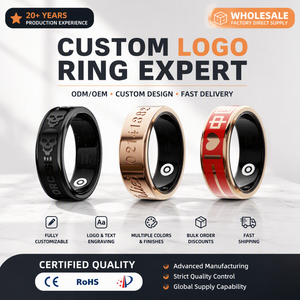
H02 Skull Design Smart Fitness Ring Activity Tracker with Heart Rate Blood Oxygen Sleep Analysis and NFC Camera Remote Control
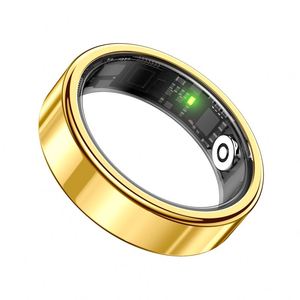
IP68 Waterproof Smart Ring with Sleep Tracking HRV Monitoring Step Counter Smart Gesture Control for TikTok Video Photo Control
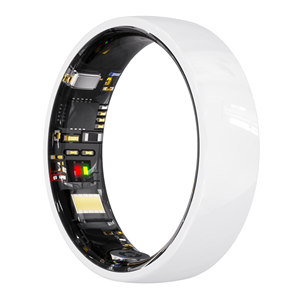
White Ceramic Smart Ring for Women Pink Black Heart Rate Blood Oxygen Sleep Stress HRV Monitor IP68 Waterproof 3g Light TK8Pro
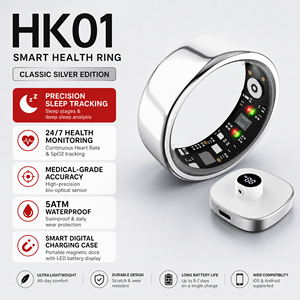
HY01 Smart Ring Fitness Tracker with Heart Rate Blood Oxygen Sleep HRV Monitoring Bluetooth 5.3
15+
Years of Precision OEM / ODM Excellence
8 Lines
High-Speed SMT Surface Mount Capacity
2M+
Annual Smart Wearable Unit Output
200 Pcs
Agile Minimum Order Quantity (MOQ)
Industry White Paper & Architectural Standard
Engineering Optical See-Through (OST) AR Glasses for New Zealand's Microclimates
Deploying Augmented Reality (AR) and Mixed Reality (MR) hardware in New Zealand demands an engineering paradigm distinct from conventional European or North American consumer rollouts. Bounded by the Roaring Forties, Aotearoa experiences sudden maritime atmospheric shifts, extreme microclimate variations, and exceptionally intense solar ultraviolet (UV) radiation due to thin atmospheric ozone levels. When Kiwi field engineers in Christchurch, agricultural specialists in Marlborough, or stevedores at the Port of Tauranga equip head-mounted spatial computing displays, consumer-grade optics inevitably fail under harsh daylight conditions and rapid ambient humidity fluctuations.
Shenzhen Tucks Technology Co., Ltd. bridges this technological deficit by manufacturing high-yield, custom-designed AR smart glasses that integrate surface-relief grating (SRG) diffractive waveguides paired with high-efficiency Micro-OLED and MicroLED optical engines. Emitting peak optical luminance upwards of 3,500 to 5,000 nits at the waveguide pupil, our display architectures maintain razor-sharp heads-up graphical overlays even under direct 100,000-lux New Zealand summer sunlight. Simultaneously, electrochromic dimming lenses intelligently toggle tint levels in less than 80 milliseconds, preserving high-contrast computer vision graphics without fatiguing user eyesight.
Furthermore, localizing spatial hardware for New Zealand requires holistic hardware-software convergence. We synthesize local Bluetooth and Wi-Fi transmission conformance (AS/NZS 4268) with ruggedized IP67/IP68 ingress sealing. Utilizing aviation-grade magnesium-aluminium alloy bridge structures and carbon-fibre reinforced temple stems, our industrial AR glasses deliver sub-75-gram ergonomics. This ensures all-day shifts can be executed across remote forestry tracts, maritime docks, and deep-pit geothermal installations without user strain.
Sub-5000 Nit Daylight Waveguides
Binocular diffractive waveguides delivering true 1080p-per-eye fidelity, 45° to 52° Field of View (FOV), and transmissive glass coatings engineered to overcome intense southern hemisphere solar lux.
Edge-AI Vision & 6DoF SLAM
Dual grayscale tracking cameras coupled with a Sony 16MP RGB visual sensor, empowering onboard low-power spatial meshing, precise metric object anchoring, and real-time gesture telemetry.
AS/NZS 1337.1 Safety Compliance
Optional ANSI Z87.1 and AS/NZS 1337.1 medium-impact ballistic lens certifications, providing certified optical eye protection across heavy machinery, mining, and civil infrastructure jobsites.
Aotearoa Localized Deployment
Industrial AR Applications Built for New Zealand Enterprise
Discover how tailored optical headwear transforms mission-critical operational workflows across high-growth domestic sectors, from automated agritech to offshore infrastructure maintenance.
Agritech & Viticulture
Autonomous Canopy Inspection & Yield Telemetry
Across the vineyard valleys of Marlborough and orchards of Hawke's Bay, agricultural technicians use custom AR smart glasses equipped with multispectral optical filters. Field agronomists visualize real-time NDVI (Normalized Difference Vegetation Index) maps directly overlaid onto grapevine canopies, identifying botrytis infection and soil nitrogen deficiencies without carrying cumbersome handheld tablets. Voice-directed notes automatically synchronize via local 5G or Starlink satellite backhaul to Auckland data centers.
Key ROI: 34% reduction in seasonal vine-inspection cycles.
Energy & Field Utilities
Substation & Geothermal Plant Remote Diagnostics
New Zealand's electricity transmission grids and Taupō volcanic zone geothermal facilities demand rapid, hands-free technical intervention. Utilizing Tucks custom enterprise AR glasses, field maintenance engineers leverage "See-What-I-See" encrypted WebRTC video streaming. Off-site senior engineers in Wellington beam spatial schematics, high-voltage wiring diagrams, and real-time step-by-step HUD repair sequences directly onto the technician's retina, dramatically accelerating restoration times during grid anomalies.
Key ROI: 48% reduction in travel overhead for tier-3 specialist engineers.
Logistics & Port Authorities
Container Telematics & High-Density Warehousing
At high-volume freight junctions such as Ports of Auckland and Port of Tauranga, straddle carrier drivers and stevedores navigate complex multi-tier container yards with AR heads-up route guidance. Embedded barcode and 2D datamatrix scanning engines integrated into our smart frames recognize freight markings from up to 8 meters away in pitch-dark container hulls, feeding inventory positioning immediately into terminal management software (TOS).
Key ROI: 99.8% pick accuracy and elimination of paper logistics logs.
Compliance & Procurement Architecture
New Zealand Market Trends & Import Compliance
Ensuring seamless commercialization and legal market distribution through complete compliance with New Zealand and Australasian safety frameworks.
REGULATORY 01
RCM & AS/NZS 4417
Full Regulatory Compliance Mark (RCM) certification ensuring electrical safety and Electromagnetic Compatibility (EMC) conformance under Australian and New Zealand single-framework rules.
REGULATORY 02
RSM Radio Licensing
Radio Spectrum Management (RSM) compliance for 2.4GHz, 5GHz, and Wi-Fi 6E frequency assignments, safeguarding short-range spatial data links against local telemetry interference.
TREND 03
Cellular eSIM Integration
Surging demand for standalone cellular AR glasses compatible with Spark, One NZ, and 2degrees 4G/5G networks, eliminating the requirement for tethered smartphone gateways.
TREND 04
Indigenous Cultural AR
Rapid adoption across cultural institutions and tourism operators in Rotorua and Queenstown utilizing immersive outdoor spatial audio and visual overlays to narrate Māori heritage.
Factory-Direct Advantage
Why Top Australasian Brands Source from Tucks Technology
Leveraging Shenzhen's premier microelectronics supply chain with rigorous ISO9001:2015 engineering controls and agile pilot production runs.
ADVANTAGE // 01
8 High-Speed SMT Lines
Equipped with precision Panasonic high-density pick-and-place lines capable of mounting ultra-compact 01005 passives and 0.3mm pitch BGA micro-processors required for streamlined AR temples.
ADVANTAGE // 02
Flexible 200-Unit MOQ
Kiwi B2B innovators avoid excessive capital tie-ups. We support bespoke hardware modifications, housing color matching, and laser branding starting at an accessible 200 pieces.
ADVANTAGE // 03
7-Day Rapid Prototyping
From 3D CAD schematic confirmation to functional CNC-machined working samples with optical engine alignment in just 7 business days, shortening validation testing by months.
ADVANTAGE // 04
End-to-End Firmware & SDK
Complete white-label Android Open Source Project (AOSP) or RTOS customization. We provide Unity and Unreal Engine SDKs, BLE peripheral APIs, and custom boot animations tailored to your brand.
Technical Specification Comparison: AR Display Technologies
Evaluation of optical display architectures available for custom OEM production destined for New Zealand field use.
| Optical Engine Architecture | Field of View (FOV) | Luminance Output | Transmissivity | Optimal NZ Deployment Scenario |
|---|---|---|---|---|
| Diffractive Surface Waveguide (Micro-OLED) | 45° - 50° | 2,500 - 4,000 Nits | 85% Optical Clarity | All-day industrial maintenance, telecom line repair, and logistics. |
| Geometric Reflective Waveguide (MicroLED) | 38° - 42° | Up to 6,000 Nits | 88% High Clarity | High-ambient sunlight viticulture, search & rescue, marine navigation. |
| Birdbath Optical Prism (OLED) | 50° - 55° | 1,800 - 2,200 Nits | 40% (Requires Shading) | Indoor training simulation, engineering CAD review, tele-health consultations. |
| Monocular HUD Audio Smart Temple | Non-Optical HUD | N/A (Spatial Audio) | 100% (Safety Lenses) | Outdoor construction sites, hazardous workshops requiring open-ear audio & camera. |
Procurement Knowledge Base
Frequently Asked Questions for New Zealand Buyers
Essential technical, logistical, and compliance considerations when establishing an OEM/ODM AR glasses pipeline from our Shenzhen manufacturing hub.
What certifications are required to commercially sell AR glasses in New Zealand?
Hardware must satisfy the Regulatory Compliance Mark (RCM) criteria under AS/NZS 4417, which validates EMC standards and electrical safety. In addition, integrated Bluetooth and Wi-Fi modules must comply with New Zealand Radio Spectrum Management (RSM) guidelines. Our facility delivers complete RCM, CE, FCC, and RoHS compliance dossiers for customs clearance.
How do your optical engines perform under New Zealand’s high solar UV and glare?
We manufacture diffractive waveguides paired with ultra-bright Micro-OLED and MicroLED light engines outputting up to 5,000 nits. To neutralize blinding ambient glare, we incorporate fast-acting electrochromic dimming lenses that drop transmissivity to 15% in direct sunlight, guaranteeing high contrast UI visibility without external clip-on sunglass attachments.
What is the standard turnaround time for custom OEM batches to New Zealand?
Functional working prototypes (incorporating custom logo engraving, boot firmware, and tailored chassis styling) are assembled and dispatched within 7 business days. Mass production typically requires 15 to 25 business days following pilot approval. Air-freight transit to Auckland, Wellington, or Christchurch averages 3 to 5 business days via DHL/FedEx Express.
Can we integrate custom machine learning or spatial software into your hardware?
Yes. We provide complete Board Support Packages (BSP) for Android and Linux distributions. Clients receive developer SDKs compatible with Unity, Unreal Engine, and OpenXR, facilitating seamless integration of proprietary AI computer vision algorithms, barcode scanning engines, and specialized remote assistance platforms.
How does your factory manage lithium-ion battery transport regulations to NZ?
All integrated lithium polymer battery cells undergo stringent UN38.3, IEC 62133, and MSDS safety certifications. We pack and ship all head-mounted devices in accordance with IATA Dangerous Goods Regulations (PI967 Section II, batteries contained in equipment), facilitating unhindered air customs entry via Auckland International Airport.
Can you manufacture prescription lens adapters for field personnel?
Yes. We engineer magnetic and snap-on prescription lens frames (from -8.00D to +4.00D astigmatism compensation) that mount directly behind the primary optical waveguide. This ensures technicians who wear corrective eyewear can operate the AR HUD with zero optical aberration and complete peripheral situational awareness.
Accelerate Your Hardware Project
Ready to Launch Your Proprietary AR Glasses Line in New Zealand?
Collaborate directly with Shenzhen Tucks Technology Co., Ltd. engineering leads. From initial optical feasibility blueprints to complete mass-scale production runs within 25 days—our team is standing by to serve your commercial goals.